1850s
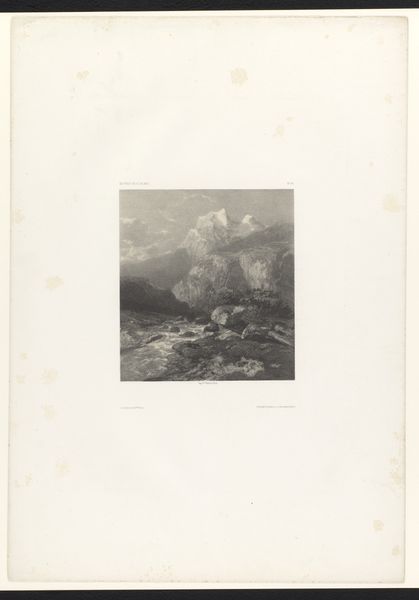
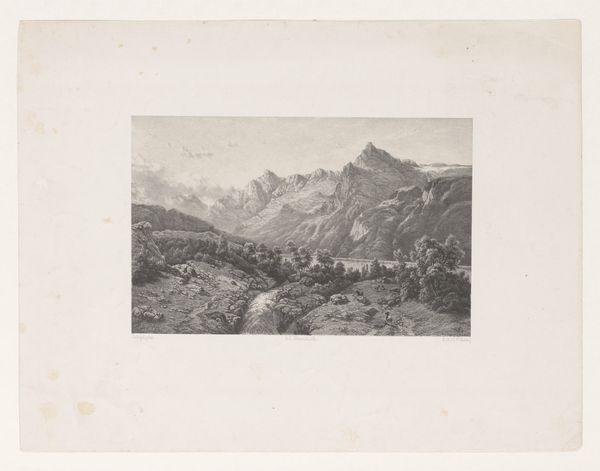
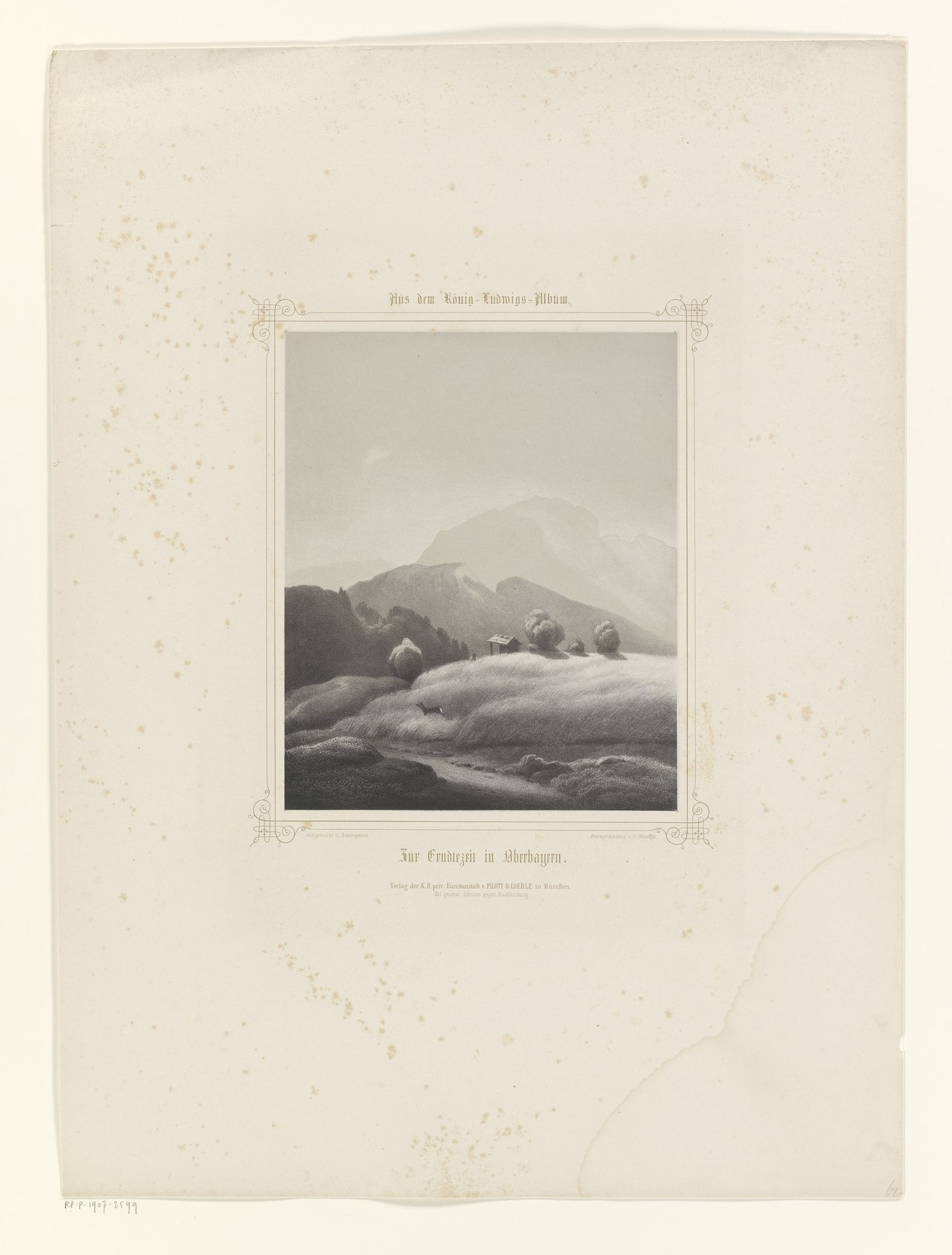
Berglandschap in Opper-Beieren

Listen to curator's interpretation
Curatorial notes
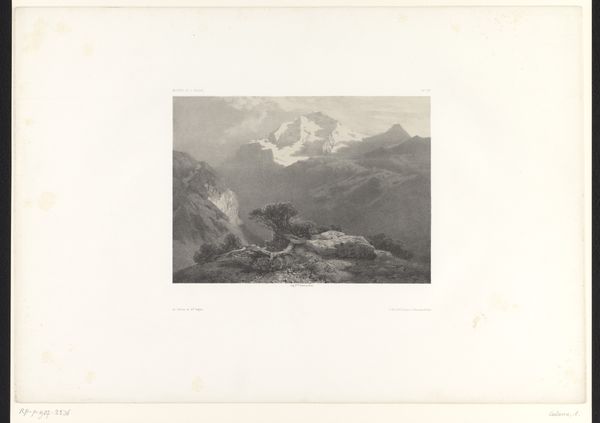
This is Johann Wölfle’s Berglandschap in Opper-Beieren print. The eye is immediately drawn to the framed central image: a vista of soft, rolling hills beneath a towering mountain range. The stark monochrome palette contributes to a serene and timeless atmosphere, yet also hints at something austere. Wölfle masterfully uses light and shadow to create depth and volume. Notice how the subtle gradations of tone in the hills contrast with the sharply defined edges of the distant peaks. This contrast directs our gaze into the composition, simulating depth and distance. The soft shapes of the trees in the midground, echoed by similar forms in the hills, create a visual rhythm that guides us through the landscape. The artwork engages with the Romantic tradition, where nature becomes a space for contemplation and the sublime. By depicting the immensity of the mountains against the gentler forms of the cultivated lowlands, Wölfle sets up a dialogue between the natural and the human. This subtle balance, achieved through formal means, invites us to reflect on our place within the natural world. Remember that the way we see and interpret art is always evolving, influenced by our own experiences and perspectives.