About this artwork
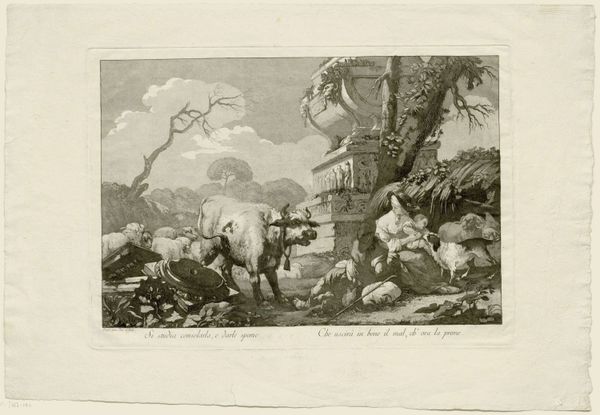
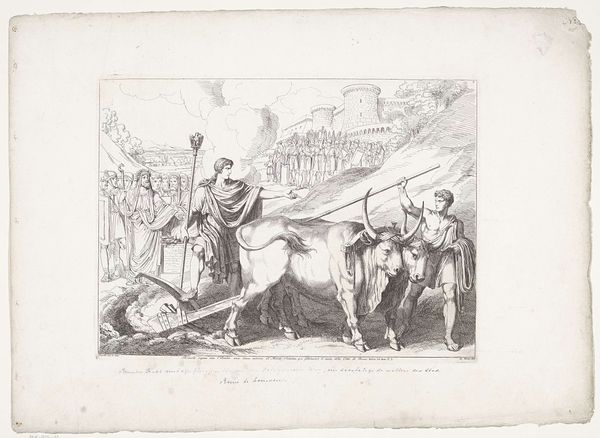
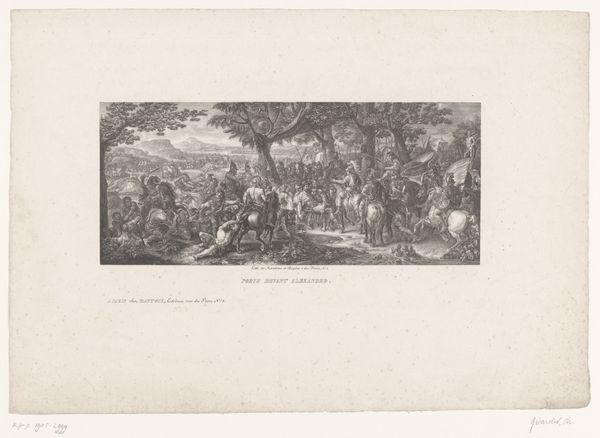
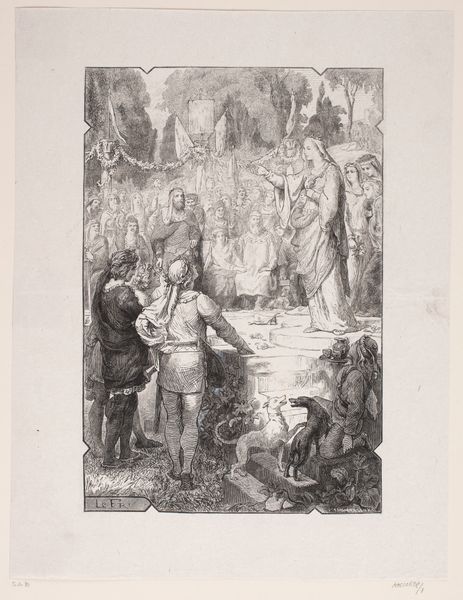
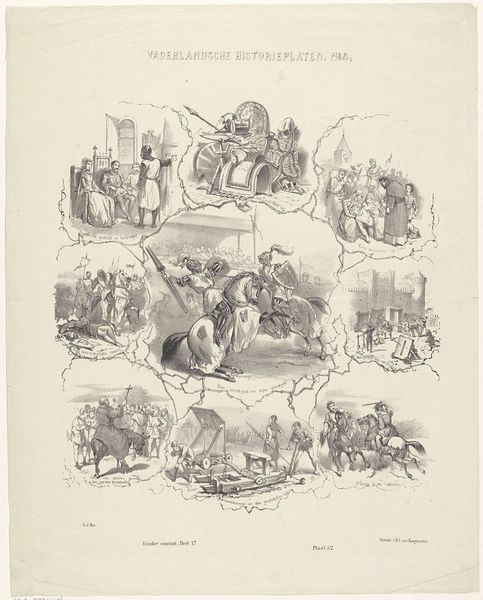
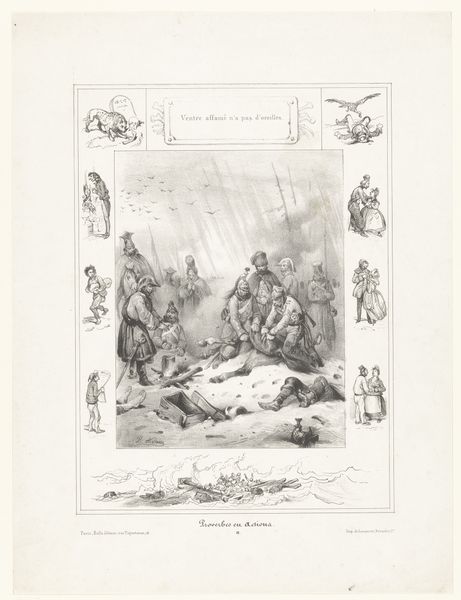
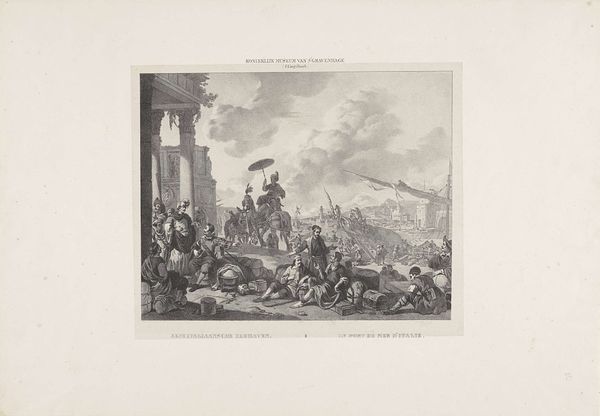
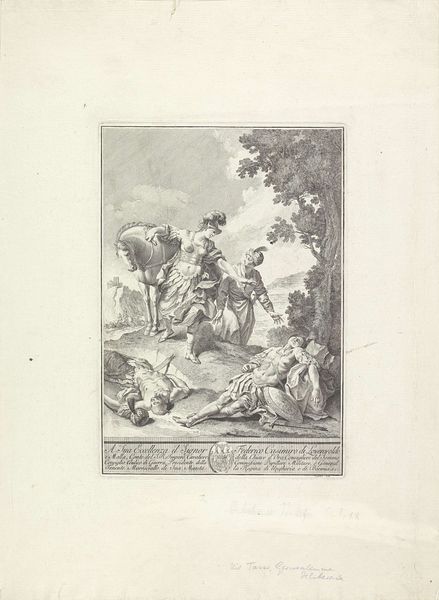
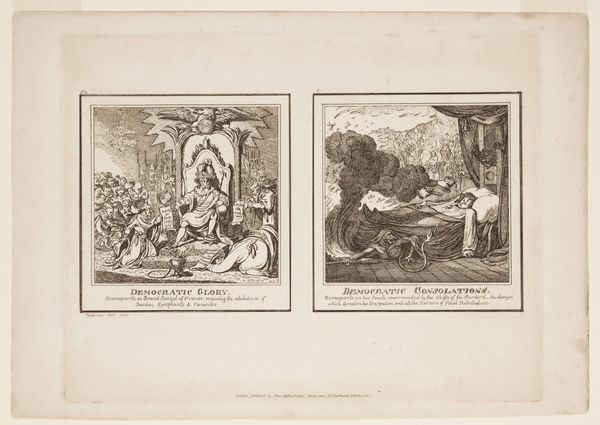
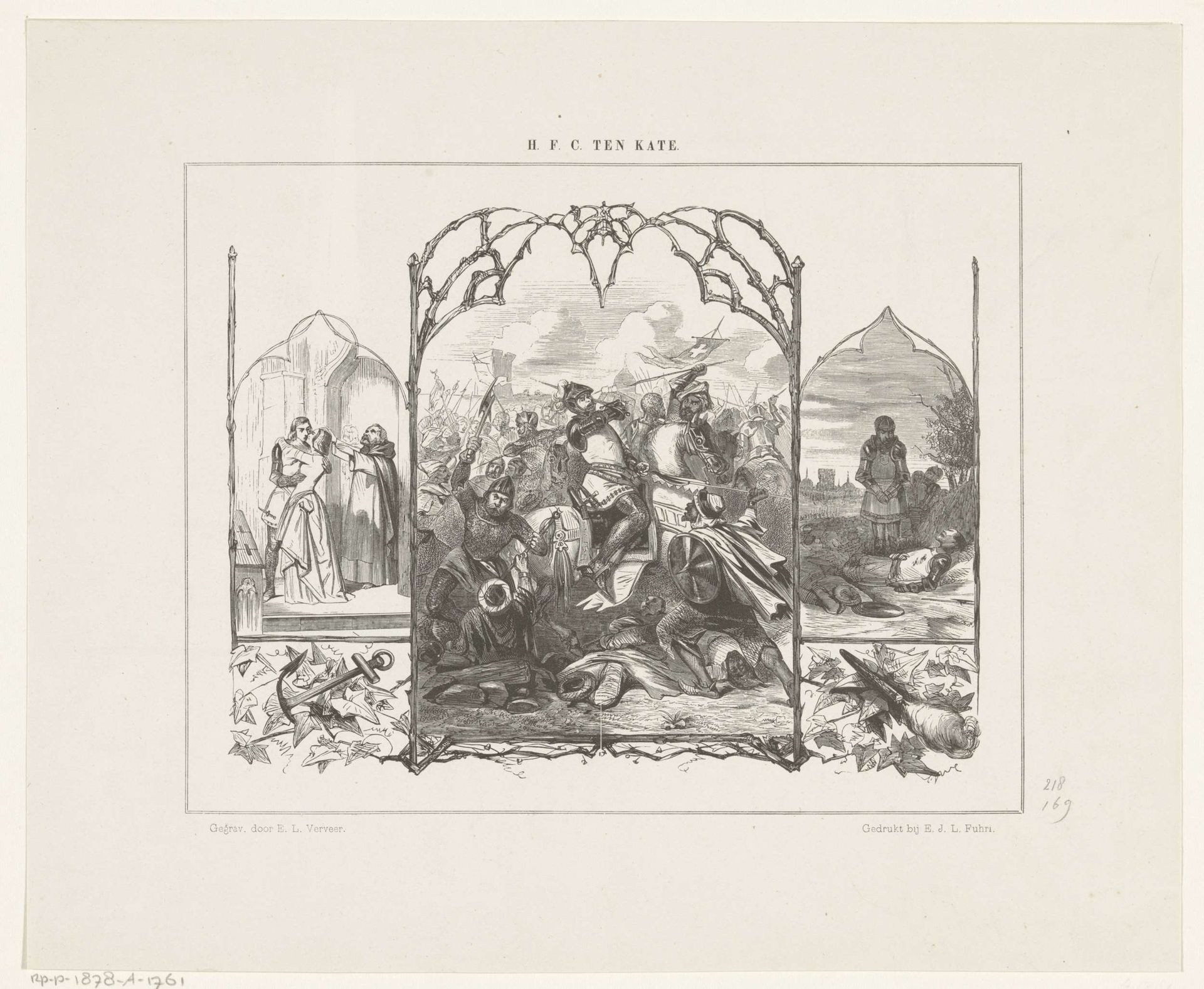
Elchanon Verveer created this print, "Triptych with scenes from the Crusades," with etching. Its composition is immediately striking: three distinct panels tell a fragmented story. The linear precision of the etching technique lends a crispness to each scene. Consider how Verveer uses the triptych form to evoke historical narratives while fragmenting them. Each panel is framed, yet continuous, suggesting a sequence that invites our interpretation. The central panel bursts with the chaos of battle, contrasting sharply with the more intimate scenes on either side. Note the bare trees that weave through the composition, binding the panels together and perhaps hinting at the barrenness of conflict. This work reflects a broader 19th-century fascination with historical romanticism. Verveer isn't just depicting events but also exploring how we perceive and construct history through visual storytelling. It's a reminder that art shapes our understanding and that meaning arises from the interplay of form and narrative.
Drieluik met taferelen uit de kruistochten 1836 - 1878

Elchanon Verveer
1826 - 1900Location
RijksmuseumArtwork details
- Medium
- print, engraving
- Dimensions
- height 248 mm, width 301 mm
- Location
- Rijksmuseum
- Copyright
- Rijks Museum: Open Domain
Tags
medieval
narrative-art
old engraving style
figuration
line
history-painting
engraving
Comments
No comments
About this artwork
Elchanon Verveer created this print, "Triptych with scenes from the Crusades," with etching. Its composition is immediately striking: three distinct panels tell a fragmented story. The linear precision of the etching technique lends a crispness to each scene. Consider how Verveer uses the triptych form to evoke historical narratives while fragmenting them. Each panel is framed, yet continuous, suggesting a sequence that invites our interpretation. The central panel bursts with the chaos of battle, contrasting sharply with the more intimate scenes on either side. Note the bare trees that weave through the composition, binding the panels together and perhaps hinting at the barrenness of conflict. This work reflects a broader 19th-century fascination with historical romanticism. Verveer isn't just depicting events but also exploring how we perceive and construct history through visual storytelling. It's a reminder that art shapes our understanding and that meaning arises from the interplay of form and narrative.
Comments
No comments