About this artwork
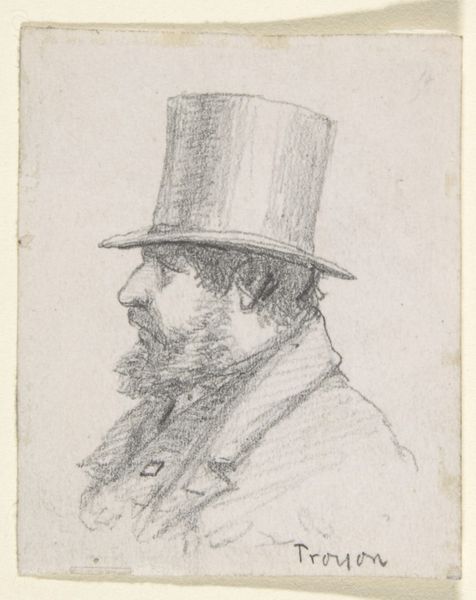
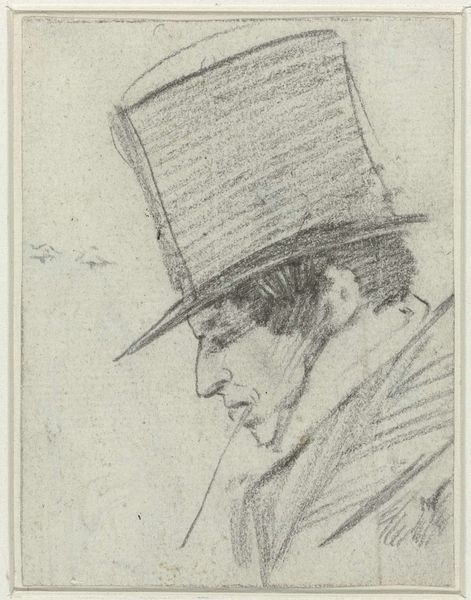
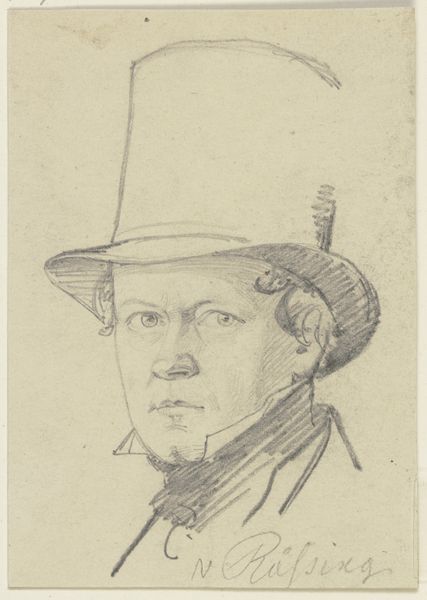
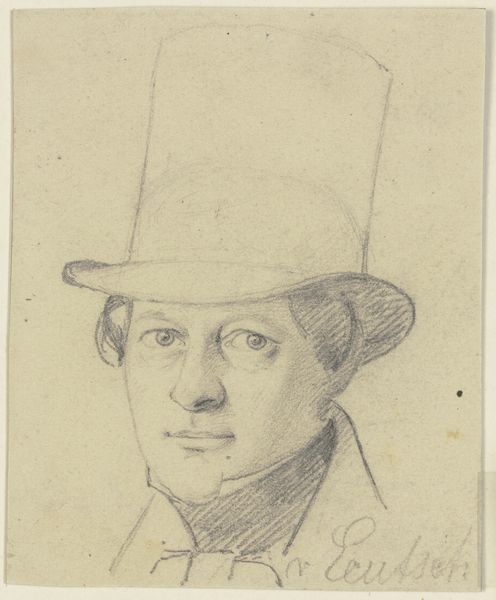
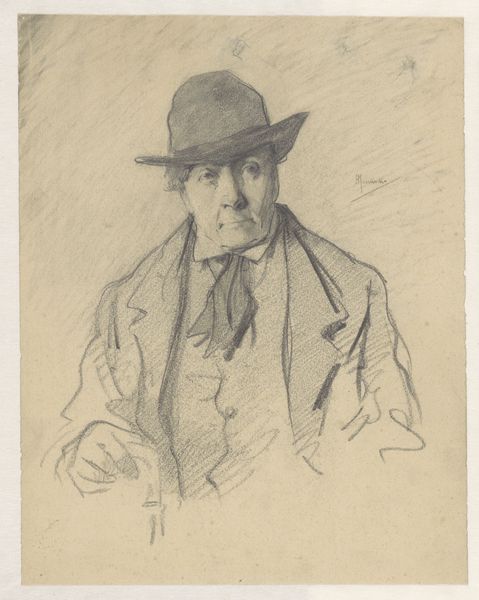
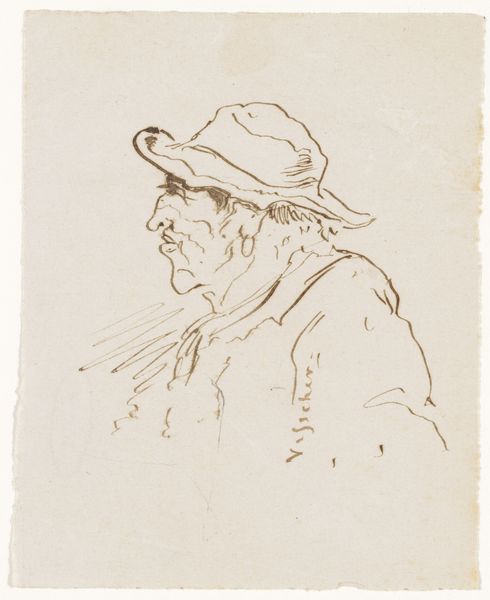
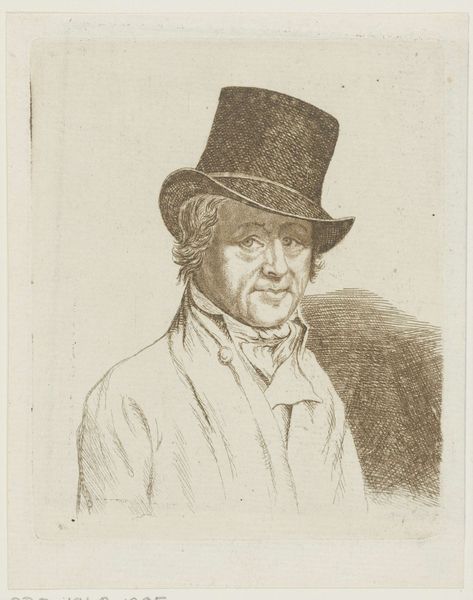
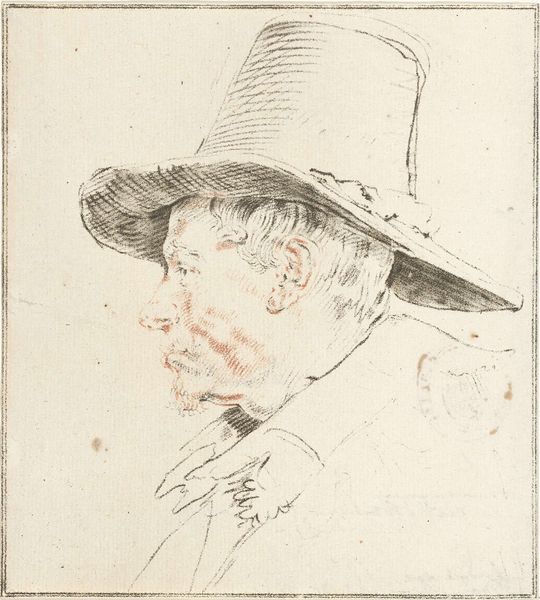
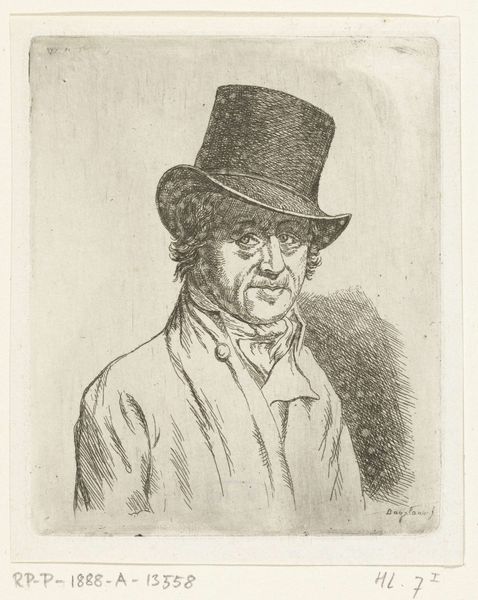
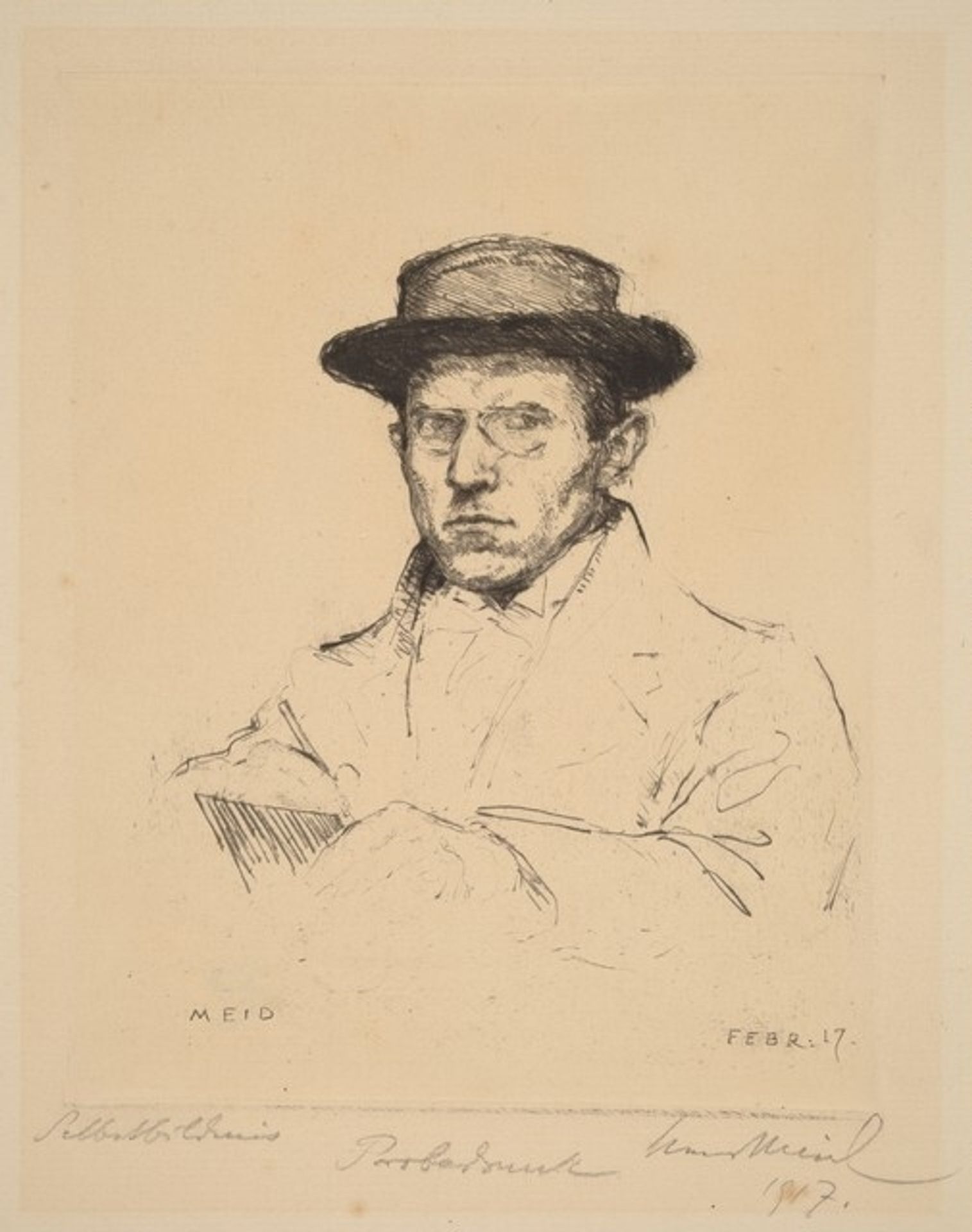
Editor: This is "Selbstbildnis," a self-portrait by Hans Meid from 1917, rendered as a print. There's a starkness to it; the lines are so precise yet convey a somewhat melancholic feeling. What do you see in this piece, especially from a formalist perspective? Curator: Initially, the interplay of line and tone commands attention. Note the economy of means. Meid achieves remarkable volume and depth using what appears to be a drypoint technique, perhaps even etching. Observe the cross-hatching, particularly in the shadowed areas beneath the hat and around the eyes. Editor: It's interesting how the hat casts such deep shadows. Is that a conscious effort to conceal, or just a stylistic choice? Curator: Consider how the hat's brim bisects the face, creating a division between light and shadow. This division isn’t merely representational, but also functions as a structural element, enhancing the geometry of the composition. This strategic obscuration invites speculation. What does it mean to partially conceal oneself within a self-portrait? What statements might be suggested via line? Editor: So, beyond just the literal depiction, it's about how the artist uses light and shadow to guide the viewer's eye and create a certain mood. I never would have thought to examine it that closely. Curator: Exactly. Consider how the use of line and shading contributes to the overall expressive quality. The texture, created solely with line variation and density, provides a visceral experience separate from mere representation. By analyzing the artist’s choice of medium and handling of line, we can deconstruct meaning. Editor: That gives me a lot to think about, thank you. Looking at it now, it is not just an image but a construction of lines, shapes, and shadows which work together. Curator: Precisely. Art is a complex equation of form, intent, and, most importantly, reception.


Artwork details
- Medium
- Dimensions
- plate: 16.5 × 13 cm (6 1/2 × 5 1/8 in.) sheet: 34.7 × 22 cm (13 11/16 × 8 11/16 in.)
- Copyright
- National Gallery of Art: CC0 1.0
Tags
pencil drawn
amateur sketch
light pencil work
pencil sketch
charcoal drawing
portrait reference
idea generation sketch
pencil drawing
portrait drawing
pencil work
Comments
No comments
About this artwork
Editor: This is "Selbstbildnis," a self-portrait by Hans Meid from 1917, rendered as a print. There's a starkness to it; the lines are so precise yet convey a somewhat melancholic feeling. What do you see in this piece, especially from a formalist perspective? Curator: Initially, the interplay of line and tone commands attention. Note the economy of means. Meid achieves remarkable volume and depth using what appears to be a drypoint technique, perhaps even etching. Observe the cross-hatching, particularly in the shadowed areas beneath the hat and around the eyes. Editor: It's interesting how the hat casts such deep shadows. Is that a conscious effort to conceal, or just a stylistic choice? Curator: Consider how the hat's brim bisects the face, creating a division between light and shadow. This division isn’t merely representational, but also functions as a structural element, enhancing the geometry of the composition. This strategic obscuration invites speculation. What does it mean to partially conceal oneself within a self-portrait? What statements might be suggested via line? Editor: So, beyond just the literal depiction, it's about how the artist uses light and shadow to guide the viewer's eye and create a certain mood. I never would have thought to examine it that closely. Curator: Exactly. Consider how the use of line and shading contributes to the overall expressive quality. The texture, created solely with line variation and density, provides a visceral experience separate from mere representation. By analyzing the artist’s choice of medium and handling of line, we can deconstruct meaning. Editor: That gives me a lot to think about, thank you. Looking at it now, it is not just an image but a construction of lines, shapes, and shadows which work together. Curator: Precisely. Art is a complex equation of form, intent, and, most importantly, reception.
Comments
No comments