Copyright: Charles Bell,Fair Use
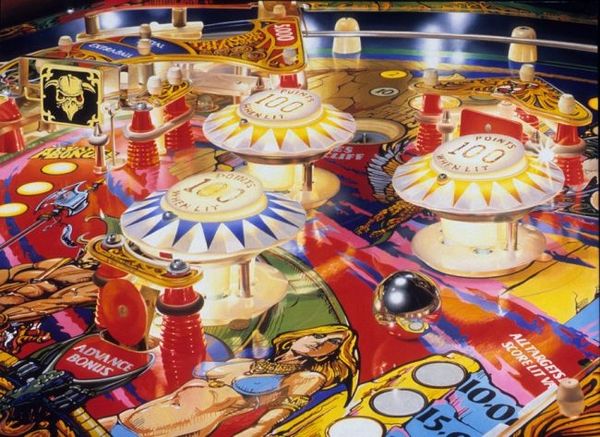
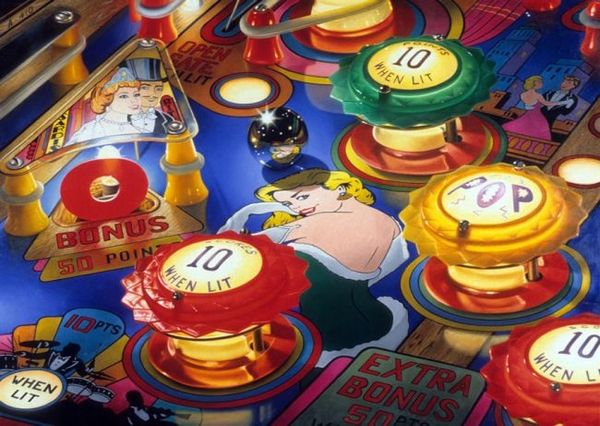
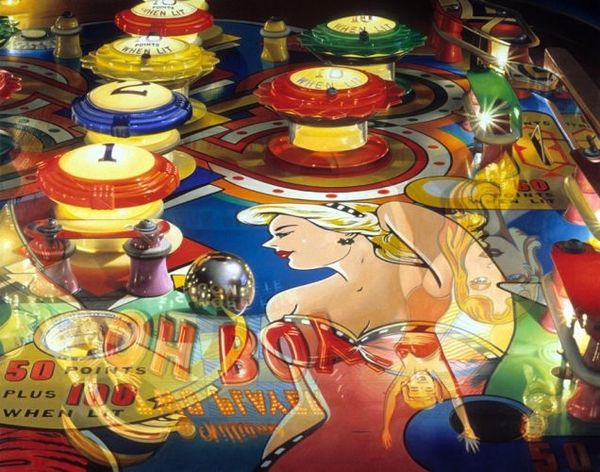
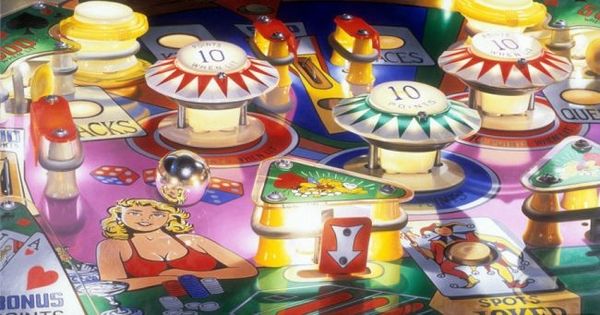
Curator: Charles Bell’s “Double Bonus,” completed in 1987, is quite captivating. What are your initial thoughts? Editor: My immediate impression is one of hyper-real, almost photographic detail, yet with an undeniably artificial, almost dreamlike quality to it. The composition draws my eye to the interplay of light and shadow on these chrome surfaces. Curator: Bell was renowned for his photo-realist style. It’s created using acrylic paint to painstakingly replicate the appearance of a pinball machine's playfield, but, I would contend that its cultural significance lies in its appropriation of pop imagery. Editor: I concur. The rendering is almost unbelievable. Notice the crispness of line, how he captures the reflective surfaces – almost trompe-l'oeil. He's taken the disposable and elevated it, at least visually. Curator: It goes beyond elevation, I feel. By focusing on a mass-produced object like this, it begs the question: how much does the consumption and accessibility of this arcade culture reflect shifting social values during the Reagan era? Editor: Perhaps. But look closer at how Bell isolates sections of the pinball table. The cropping and composition create a formal tension, allowing one to meditate on these shapes. The almost classical division and proportion feels… deliberate. Curator: This choice also points to labor. His work is reminiscent of Warhol's embrace of mass production but celebrates, instead, the intense, painstaking labor. Every stroke contributes to the illusion – a direct challenge to conventional ideas of craft in "high" art. Editor: It’s not just skill, however; the painting teases the senses with a promise of tactility; you expect the smooth, cold touch of metal or polished plastic as much as one appreciates this play on form. Curator: Certainly. It's a dialogue between process and the finished product. So this picture is a confluence of American dream symbols—technology, entertainment, and visual splendor. Editor: Precisely! When considering "Double Bonus," there is complexity. Both visual and conceptual elements weave together, engaging one in prolonged aesthetic dialogue. Curator: It’s been insightful viewing this with you. A material perspective contextualizing art through consumerism with an equally sensitive examination into how artistic representation changes social landscapes. Editor: And likewise. Considering this painting from a formal perspective enhances appreciation and sensitivity to the world we observe daily, and what lies beneath surface representations.
Comments
No comments
Be the first to comment and join the conversation on the ultimate creative platform.
 Collect
 React
React Comment
More like this