oil-paint
#
still-life
#
gouache
#
acrylic
#
oil-paint
#
oil painting
#
intimism
#
post-impressionism
#
watercolor
Dimensions: 54.5 x 65.5 cm
Copyright: Public domain
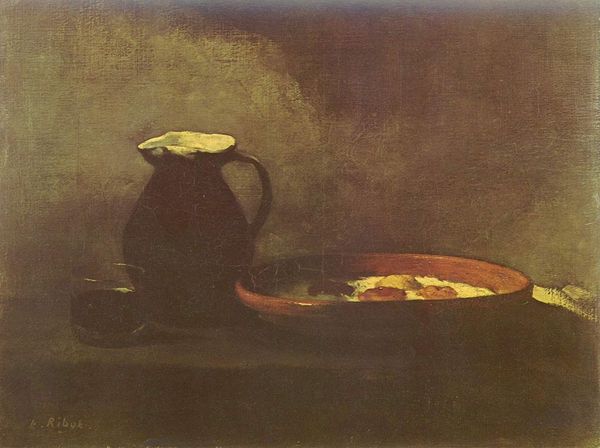
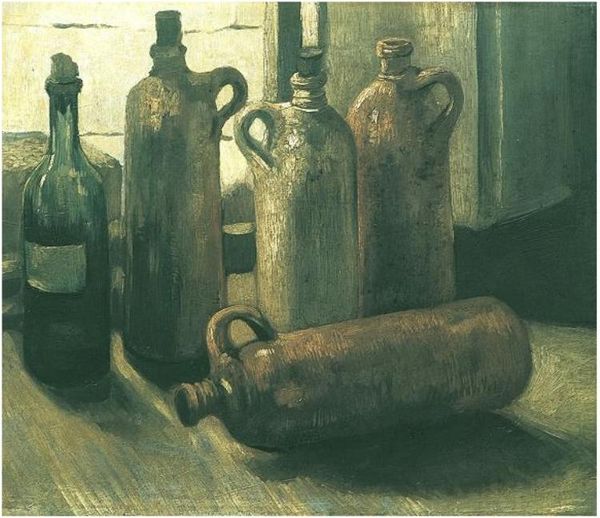
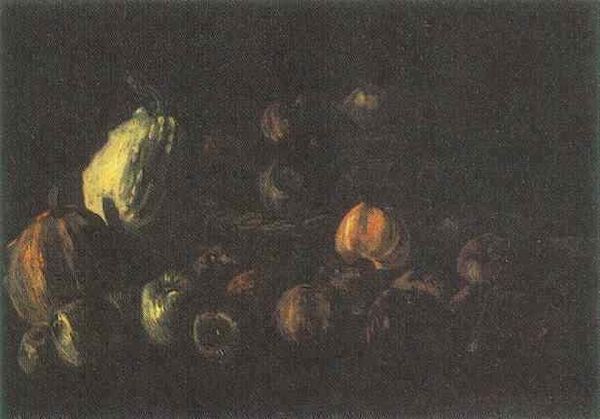
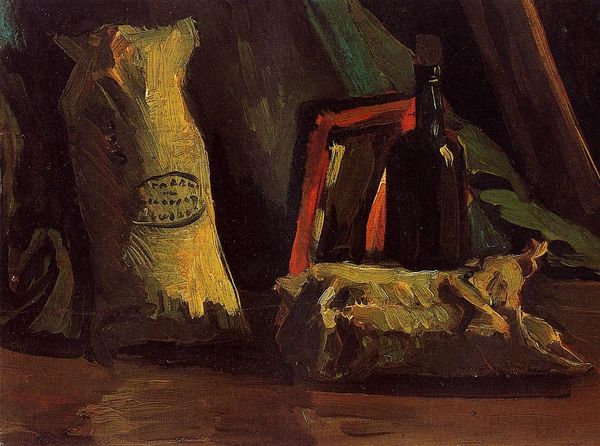
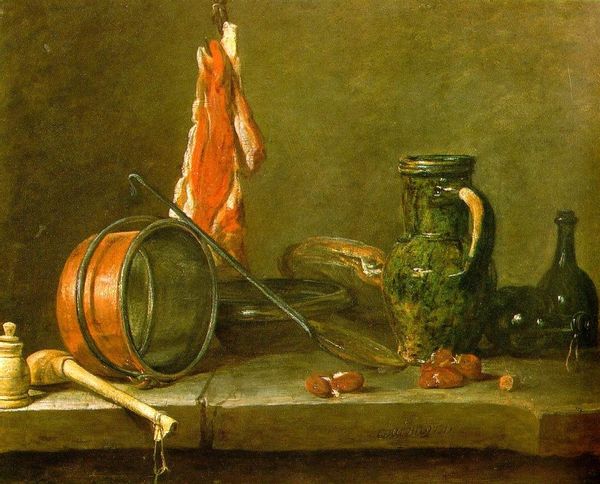
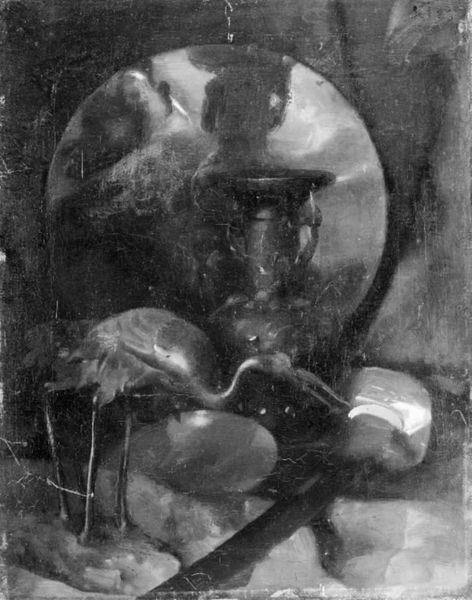
Editor: Here we have Theo van Doesburg's "Still Life," painted in 1906 using oil paint. There's a kind of hushed intimacy to it, and it makes me think about memory and domesticity. What can you tell us about this work? Curator: The intimacy you perceive is striking. Notice how the arrangement feels less like observation and more like quiet participation. What feelings do the objects themselves evoke? Editor: I see a plate, a water bottle, maybe a piece of fruit...They feel very humble, everyday objects. Do these objects hold any particular symbolic significance? Curator: Absolutely. Post-Impressionist still lifes often used common objects to explore the essence of form and colour, reflecting a shift away from literal representation toward personal expression. This humble setting provides the vocabulary through which an artist imbeds concepts, memories, continuity and discontinuity. Is it personal, or does it trigger shared cultural connotations? Editor: It feels personal, especially with those muted greens and browns. It's not a vibrant display, more like a quiet contemplation. It makes me consider the simplicity and beauty found in daily life. Curator: Indeed. This seemingly simple collection points us toward a symbolic order reflecting on personal associations and collective experiences—a form of visual poetry if you will. Does it challenge or conform to your understanding of "still life" as a genre? Editor: I think it challenges it. Usually, I expect still lifes to be bright and showy, but this feels introspective, like it's inviting me to meditate on these objects. It reveals more about the person who chose and arranged them than the objects themselves. Curator: Precisely! The genius of a successful still life resides in its ability to use quotidian objects to trigger a deeper emotional or intellectual experience. It transcends the ordinary. Editor: That's fascinating. I’ll definitely look at still lifes differently now, paying more attention to the subtle symbols and the emotional weight they carry. Curator: As we move through the gallery, perhaps consider how each artwork weaves together these threads of personal narrative and shared visual language.
Comments
No comments
Be the first to comment and join the conversation on the ultimate creative platform.
 Collect
 React
React Comment
More like this