1941
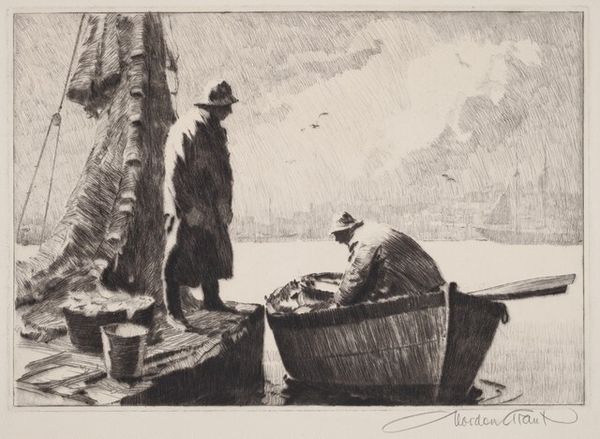
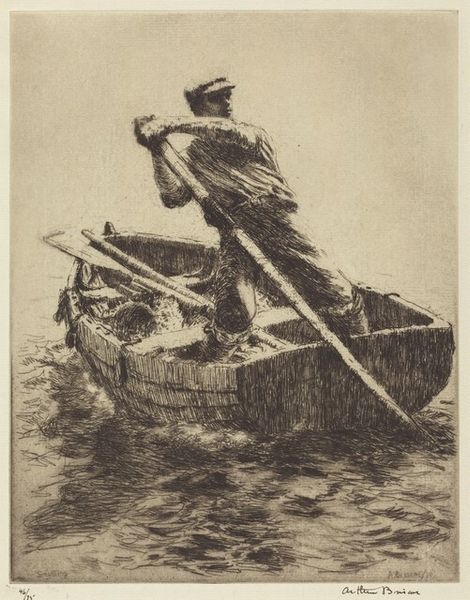
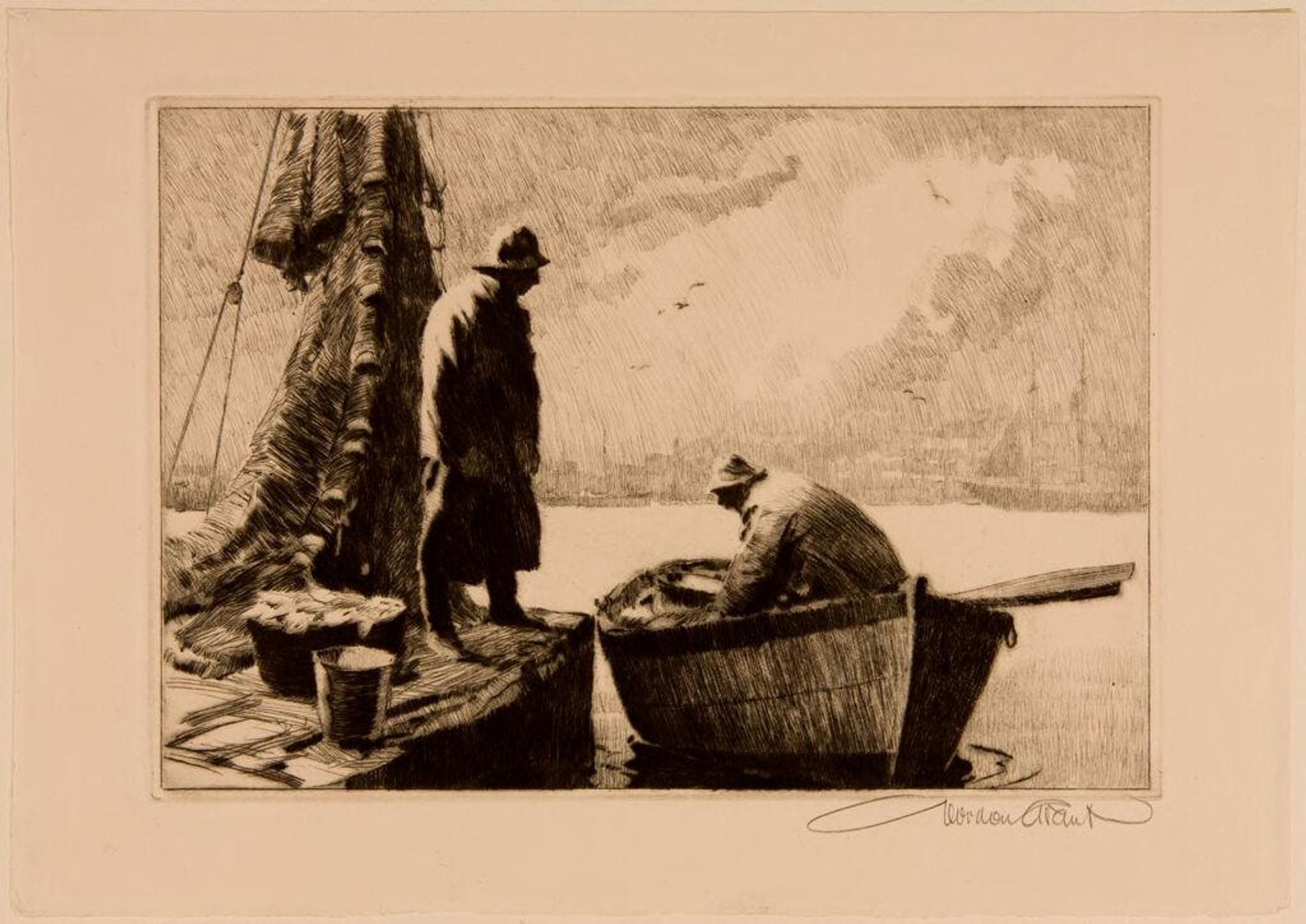
Man of Gloucester


Listen to curator's interpretation
Curatorial notes
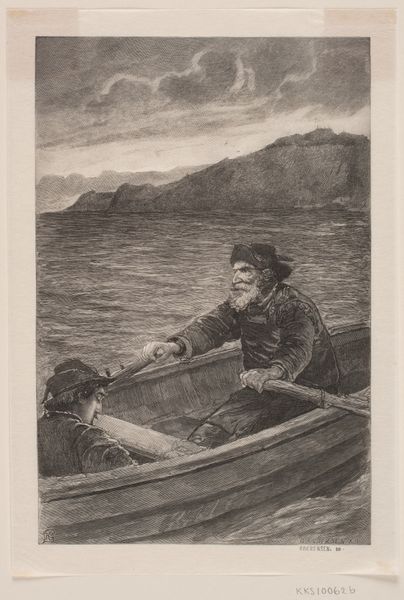
Curator: Let's turn our attention to "Man of Gloucester," an etching by Gordon Grant. There's no firm date for the piece, but Grant lived from 1875 to 1962. Editor: Immediately, I'm struck by the somber mood. The stark lines and limited tonal range create a palpable sense of isolation and toil. Curator: That aligns with Grant's social realism. He often depicted the lives of working-class Americans, especially maritime laborers. Gloucester, Massachusetts, was and still is, a significant fishing port. Editor: Notice how the diagonal lines converge toward the horizon, creating depth, but also trapping the figures in this watery world. Curator: Indeed. The composition emphasizes the economic realities of these men. They are intimately connected to the sea and the work it demands of them. Editor: The etching technique itself—the fineness of the lines—mirrors the laboriousness of their task. Curator: It’s a somber portrayal, but one that speaks to the dignity of labor and the importance of these maritime communities. Editor: Precisely. The artist's use of light and shadow lends a dramatic touch, highlighting the harshness of their existence. Curator: Well, this etching offers an insightful glimpse into a specific time and place, reflecting on the lives of ordinary people. Editor: And considering the work's formal aspects deepens our appreciation of both the skill of the artist and the lives portrayed.