About this artwork
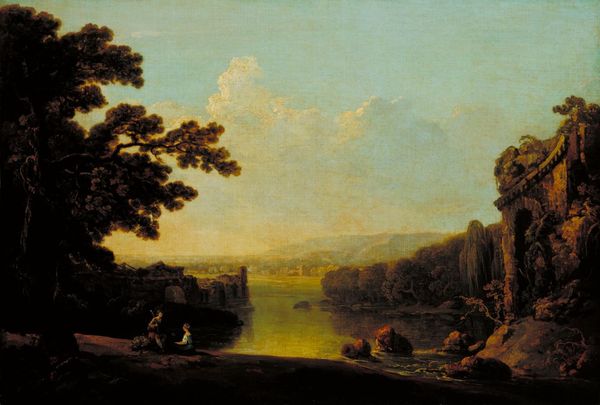
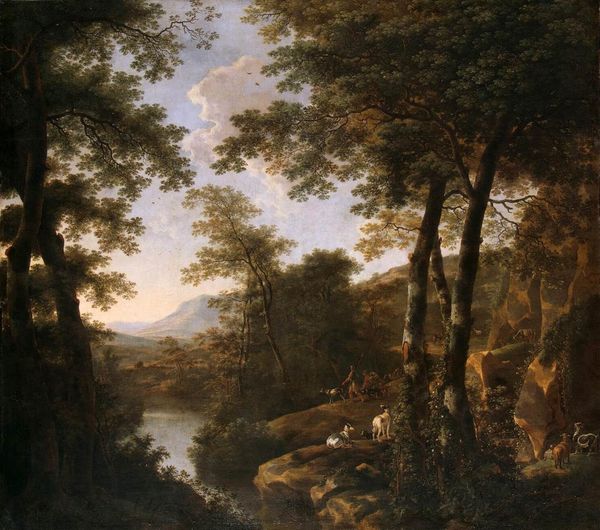
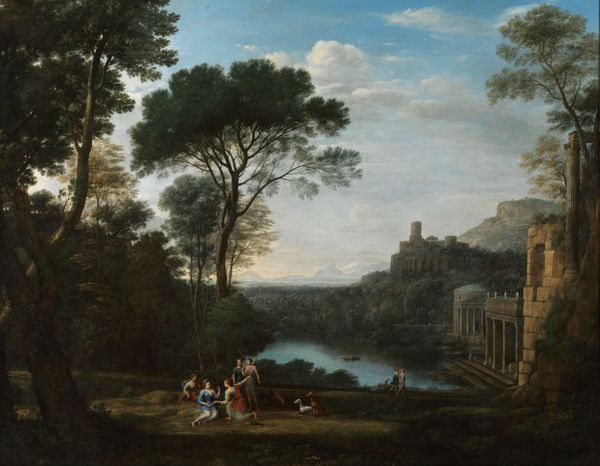
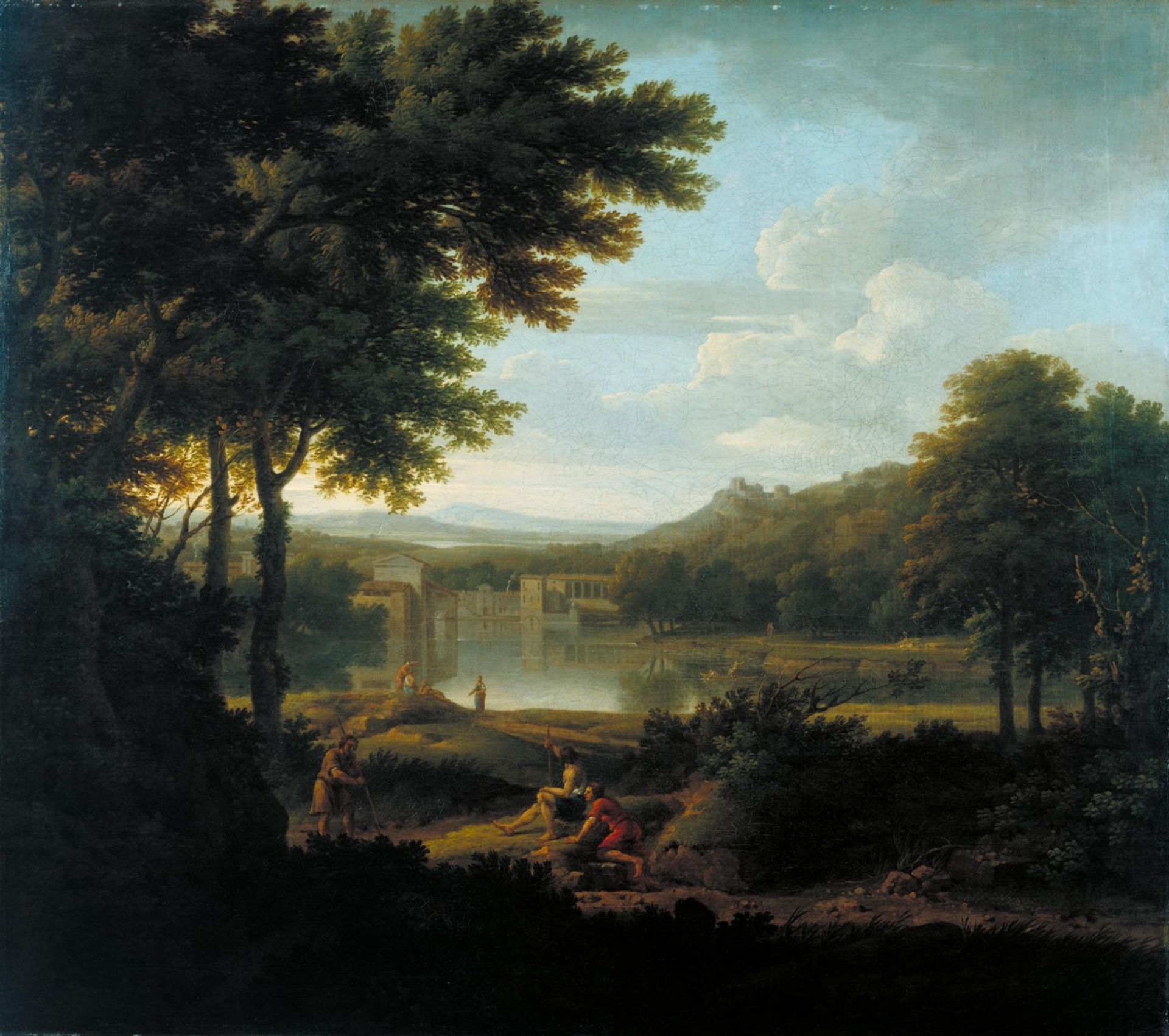
Editor: George Lambert's "Classical Landscape," a sizable painting at roughly 103 x 117 cm, evokes such a serene atmosphere. The figures seem almost secondary to the idyllic setting. What does this landscape tell us? Curator: It speaks of a longing for a past, a golden age. Note the ruins reflected in the water, a symbol of time's passage. But the figures, posed in classical garb, recall pastoral scenes. Doesn't it suggest how we project our desires onto the landscape, imbuing it with cultural memory? Editor: That's fascinating! So, the landscape isn’t just a place, but a repository of shared stories? Curator: Precisely. It becomes a stage for our cultural narratives, reflecting our ideals, anxieties, and persistent need to connect with the past. Editor: It’s amazing to think a landscape can hold so much meaning. Curator: Indeed, it's a mirror reflecting our collective consciousness.


Artwork details
- Dimensions
- support: 1035 x 1168 mm
- Location
- Tate Collections
- Copyright
- CC-BY-NC-ND 4.0 DEED, Photo: Tate
Comments

http://www.tate.org.uk/art/artworks/lambert-classical-landscape-t00211
George Lambert never visited Italy, although his paintings were inspired by the tradition of classical landscape painting. is a purely imaginary scene, with a carefully balanced composition and figures in generalised dress appropriate to a pastoral scene. Idealised landscapes like this were often designed to be set into panelling, over doors or chimneypieces. They would have been regarded as part of the fixed decoration of the room. Gallery label, September 2004
About this artwork
Editor: George Lambert's "Classical Landscape," a sizable painting at roughly 103 x 117 cm, evokes such a serene atmosphere. The figures seem almost secondary to the idyllic setting. What does this landscape tell us? Curator: It speaks of a longing for a past, a golden age. Note the ruins reflected in the water, a symbol of time's passage. But the figures, posed in classical garb, recall pastoral scenes. Doesn't it suggest how we project our desires onto the landscape, imbuing it with cultural memory? Editor: That's fascinating! So, the landscape isn’t just a place, but a repository of shared stories? Curator: Precisely. It becomes a stage for our cultural narratives, reflecting our ideals, anxieties, and persistent need to connect with the past. Editor: It’s amazing to think a landscape can hold so much meaning. Curator: Indeed, it's a mirror reflecting our collective consciousness.
Comments
http://www.tate.org.uk/art/artworks/lambert-classical-landscape-t00211
George Lambert never visited Italy, although his paintings were inspired by the tradition of classical landscape painting. is a purely imaginary scene, with a carefully balanced composition and figures in generalised dress appropriate to a pastoral scene. Idealised landscapes like this were often designed to be set into panelling, over doors or chimneypieces. They would have been regarded as part of the fixed decoration of the room. Gallery label, September 2004