print, engraving
#
portrait
#
baroque
# print
#
academic-art
#
engraving
#
realism
Dimensions: height 186 mm, width 139 mm
Copyright: Rijks Museum: Open Domain
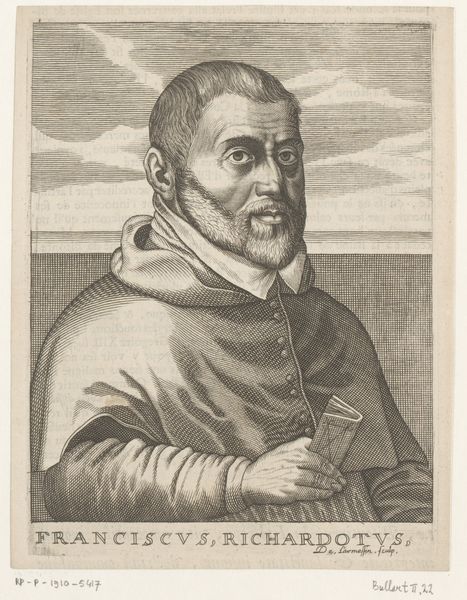
Editor: This is Nicolas de Larmessin's "Portret van Balthasar Moretus," an engraving, dating from about 1650 to 1739, and currently at the Rijksmuseum. It seems like a fairly straightforward portrait, but the details are so precise. What sort of stories or meanings do you see embedded in the image? Curator: The symbolic weight here comes not from overt allegories, but from the cultural expectations around portraiture itself. In its very stillness and composed nature, this image is a carefully constructed statement about the sitter. The pillar behind him denotes strength and stability, almost functioning as a family crest would. What feelings does the sitter’s posture evoke? Editor: He seems very grounded. I notice that he is leaning on books. Perhaps he's learned? Also the plant—it looks like laurel or olive—in his hand conveys a sense of accomplishment, of peace. Curator: Indeed. These elements were strategically chosen to communicate Moretus's social standing and intellectual prowess. This recalls the Roman tradition of associating these plants with victory, with honor. Moretus seems eager to emulate these traits through what we now perceive as rigid, formal visual communication. Can you sense the continuation of values that this visual symbolism expresses across the ages? Editor: It's amazing to see how much cultural baggage a portrait can carry. Thank you. Curator: It demonstrates the enduring power of visual language in shaping and preserving cultural memory.
Comments
No comments
Be the first to comment and join the conversation on the ultimate creative platform.
 Collect
 React
React Comment
More like this