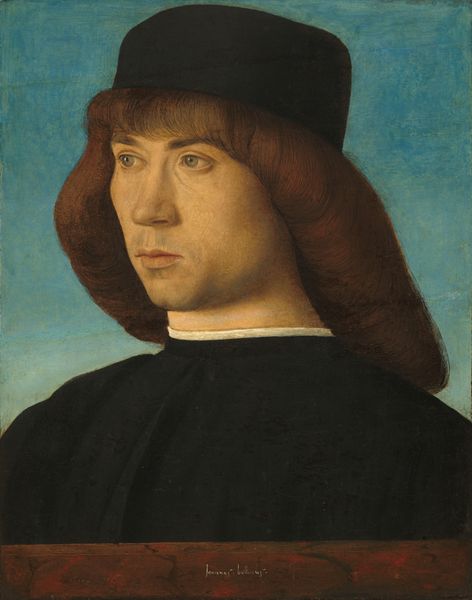
Copyright: National Gallery
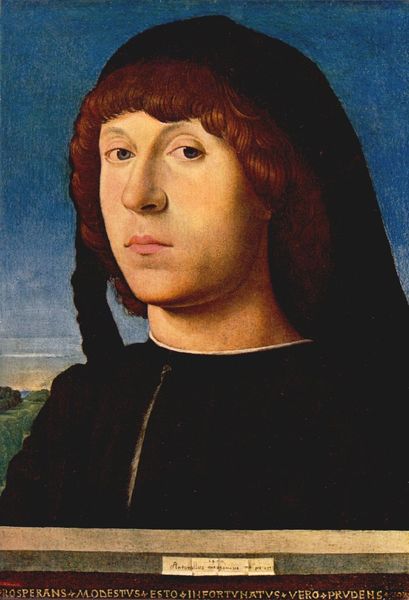
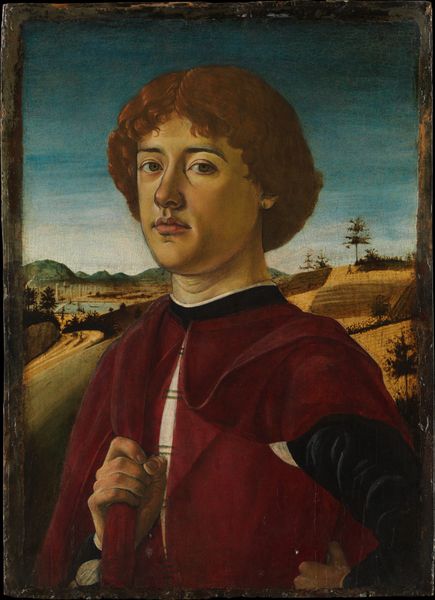
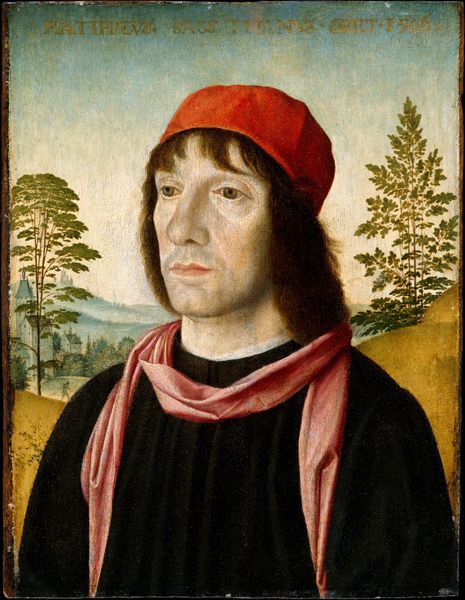
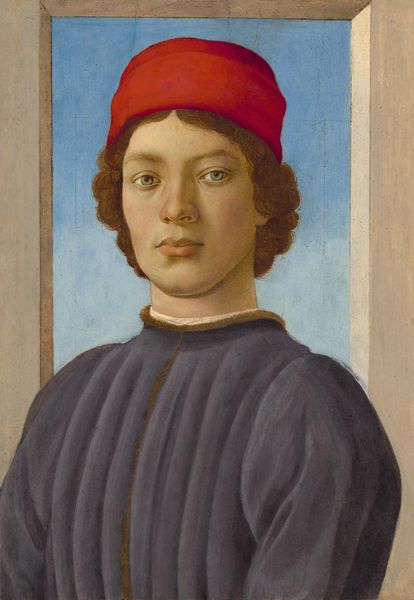
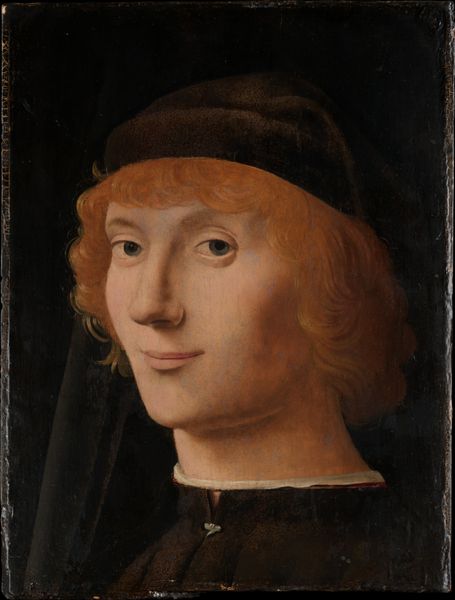
Domenico Ghirlandaio painted this portrait of a young man, likely in Florence, sometime in the 1480s, using oil on a wooden panel. The calm and composed face, framed by soft, curling hair and a simple black cap, is set against a placid landscape, typical of the Florentine Renaissance. But what can we learn about the young man and the society that produced this image? Commissioned portraits like these were statements of wealth and status, reflecting the sitter's place in the social hierarchy of Renaissance Florence. The youth’s red garment, though muted in tone, would have signified his family’s affluence. The serene background landscape, receding into the distance, reflects the Renaissance interest in perspective and the natural world. As historians, we use portraits like these as source material, combining them with other documentary evidence, such as family records, inventories, and social histories, to understand the lives of individuals and the broader social structures of their time. The meaning of art is always contingent on its social and institutional context.
Comments
No comments
Be the first to comment and join the conversation on the ultimate creative platform.
 Collect
 React
React Comment
More like this