print, engraving
old engraving style
form
11_renaissance
line
northern-renaissance
decorative-art
engraving
Dimensions: height 214 mm, width 286 mm
Copyright: Rijks Museum: Open Domain
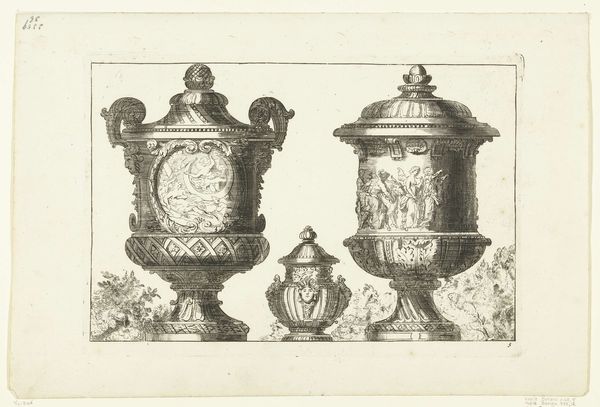
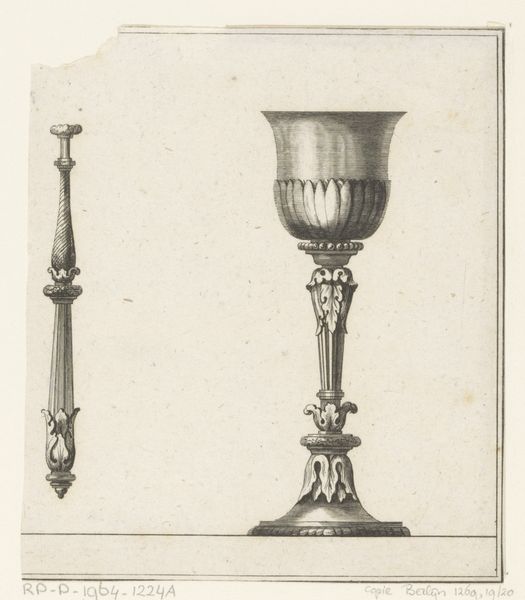
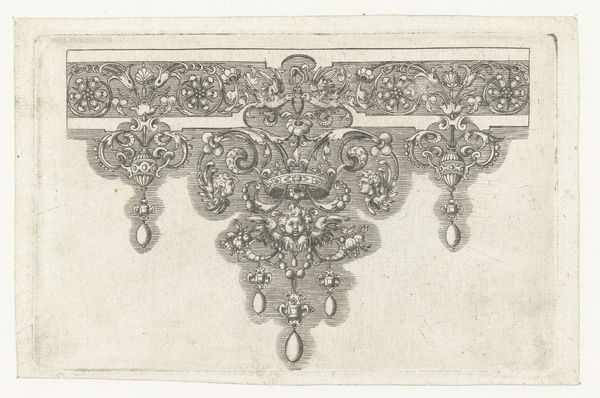
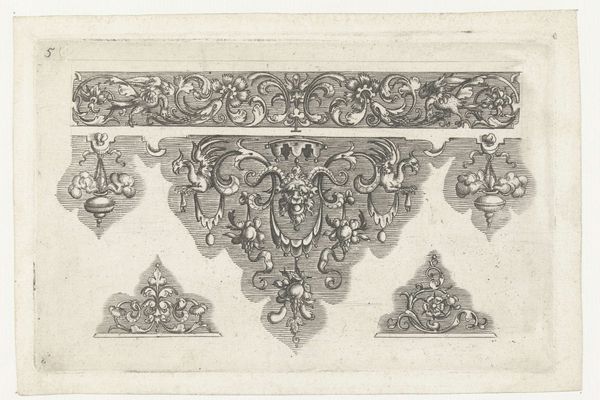
Curator: Welcome. Before us, we have a print by Hieronymus Hopfer titled "Twee friezen boven elkaar, elk met vijf bokalen," created sometime between 1528 and 1550. It translates to "Two friezes above each other, each with five goblets." Editor: It gives off a strangely rigid and precise impression, as if documenting the anatomy of objects, but its symmetry gives the designs balance, a sense of calm and order. Curator: Indeed. The formal quality of the print relies heavily on line work, and we observe in it a particular commitment to symmetry and repetition. Each goblet design adheres to similar structural principles. Note how the bases, bodies, and lids, while unique in embellishment, are variations on core geometric forms. Editor: Looking at the vessels, their varying degrees of ornamentation and symbolism stand out. One sees, in these designs, both secular opulence and, potentially, echoes of liturgical chalices, holding wine as a potent symbol, each uniquely decorated. Do these design differences suggest status? Function? Or perhaps different vintages, each given symbolic weight? Curator: It’s more likely these are explorations in form and variations of a theme, the goblet. While meaning might reside within certain decorative elements, the overwhelming concern appears to be with exploring the possibilities of shape and surface through a meticulously rendered line. This creates an almost taxonomic presentation. Editor: Even within their regimented form, the goblets stir the imagination, sparking stories about ritual, banquets, power, and artistry. One almost feels the weight of tradition held within those forms, across time. It offers an insight into the visual vocabulary of wealth and ceremony. Curator: A keen observation. The print deftly merges artistic expression with functional design, capturing the spirit of the Northern Renaissance in its detailed artistry and inherent symmetry. It is, therefore, a complex interaction of material, technique, and presentation. Editor: Ultimately, Hopfer’s composition transports us back to a time rich with symbol, offering us a peek into the culture of design. It whispers stories of artistry, legacy, and time itself.
Comments
No comments
Be the first to comment and join the conversation on the ultimate creative platform.
 React
React Comment