
Curatorial notes
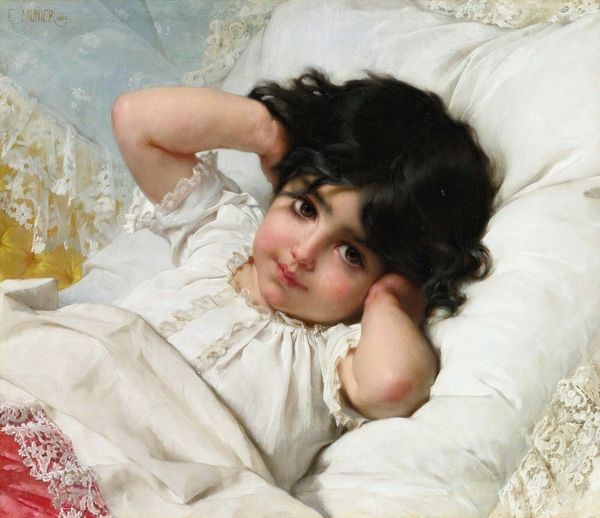
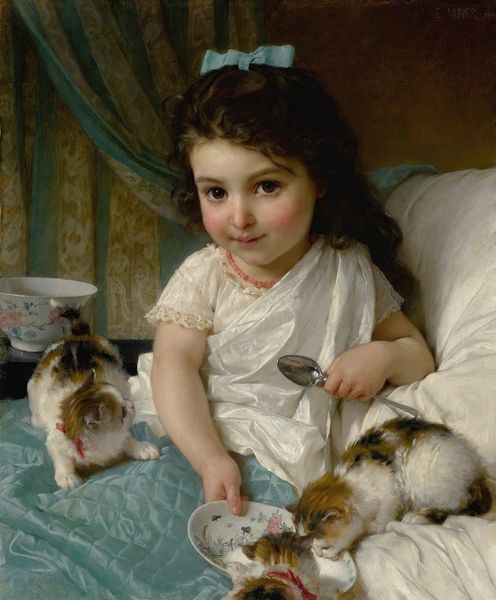
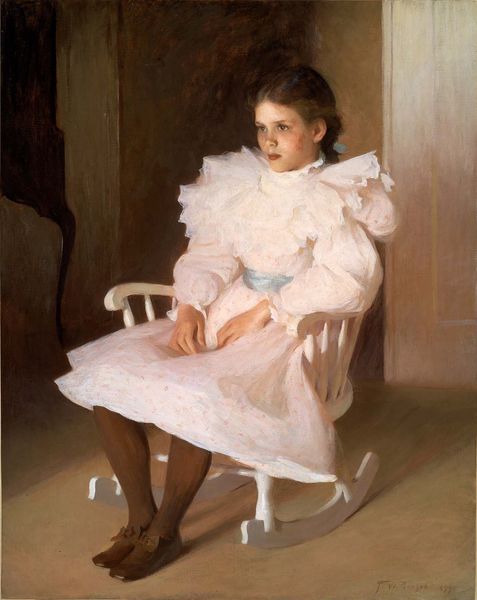
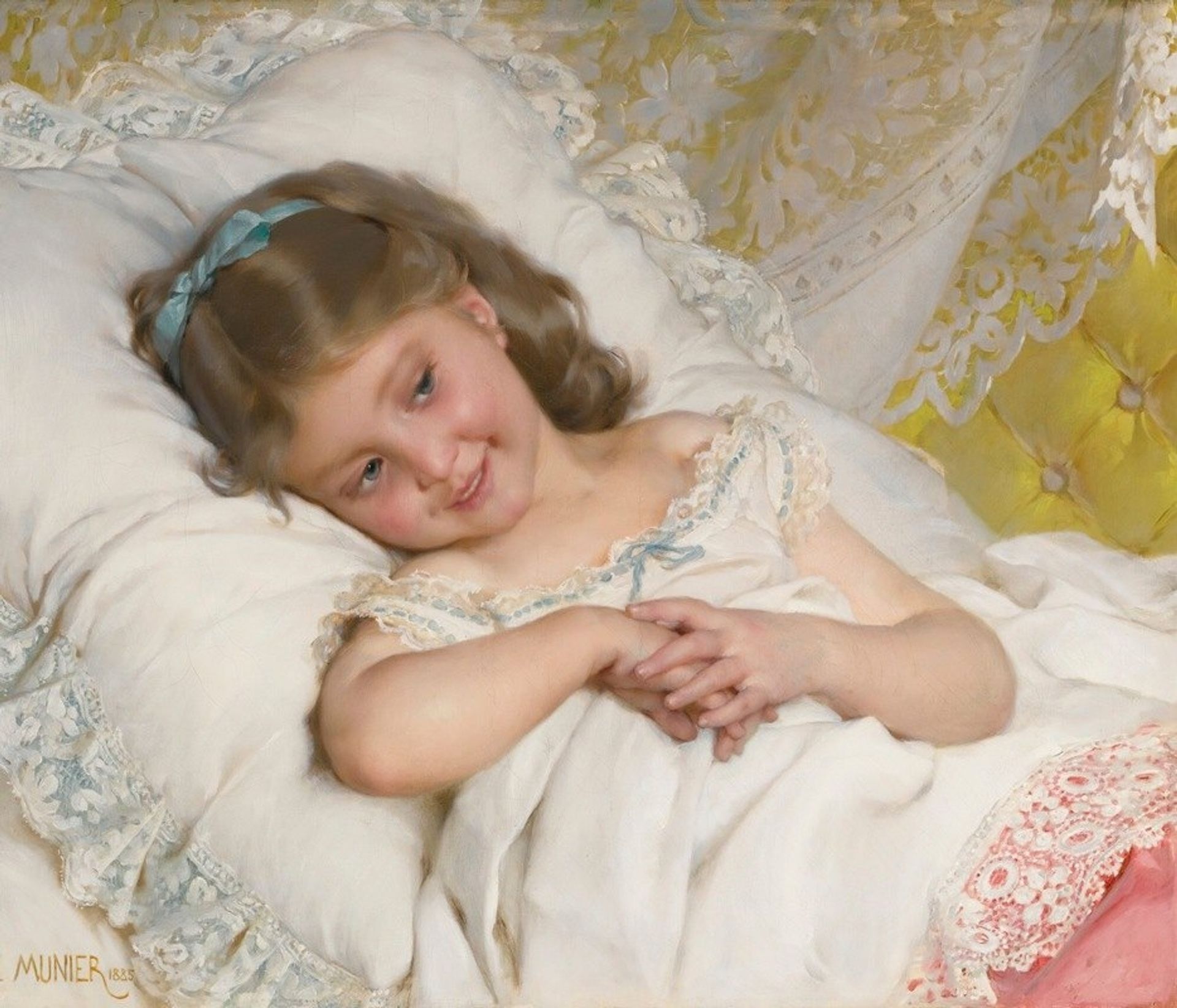
Editor: Here we have Émile Munier's "Girl Resting," created in 1885 using oil paints. It's very sweet, very intimate, and feels… staged somehow. I am also curious to learn more about the types of textiles present in the piece, they really caught my eye. What's your interpretation? Curator: This is academic art, rooted in the intense study of materials. The choice of oil allows for that exquisite rendering of light on fabric – consider the production process involved in these manufactured goods. Notice how lace becomes a key signifier of class and domestic labor here? The little girl's resting underscores those realities and hides them under its idyllic gaze. Editor: So you're suggesting the material quality is essentially masking other class and labor issues of the period? Curator: Exactly! Munier romanticizes a life seemingly free from the realities of production. Every thread is a testament to unseen labour, isn’t it? The lace trim, the manufactured dyes… It is all consumed to produce an ideal image, for whom and by whom? Editor: That's a fantastic point, I didn't consider it from a production perspective. It is almost an advert for the good life available to those wealthy enough to enjoy all of that fabric. Curator: Precisely. And oil paint itself becomes a material symbol of that excess, right? So easy to apply such smooth texture on something that stands for wealth in itself! Editor: This piece makes so much more sense looking at it through the lens of the labor and material processes that produced it. Thanks for sharing that insight! Curator: My pleasure. This has highlighted the connection between artistry and materialism. It will be valuable in my future material assessments.