c. 1936
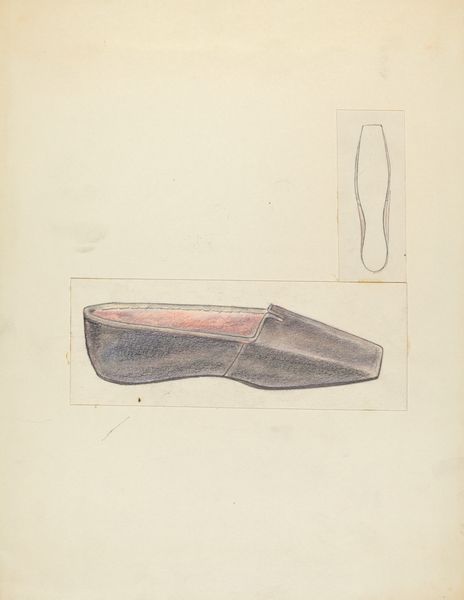
Slipper


Listen to curator's interpretation
Curatorial notes
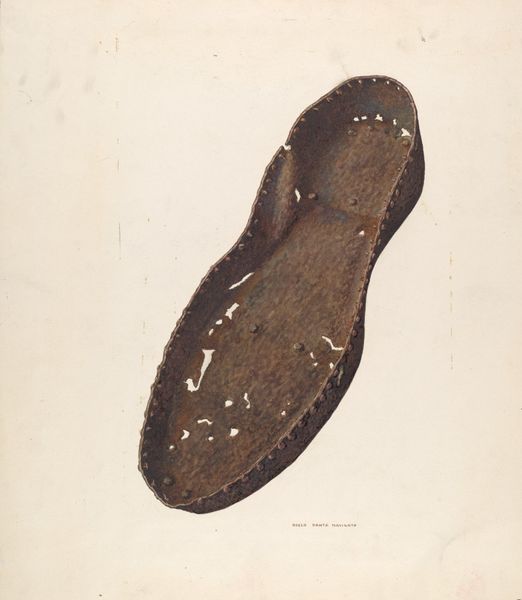
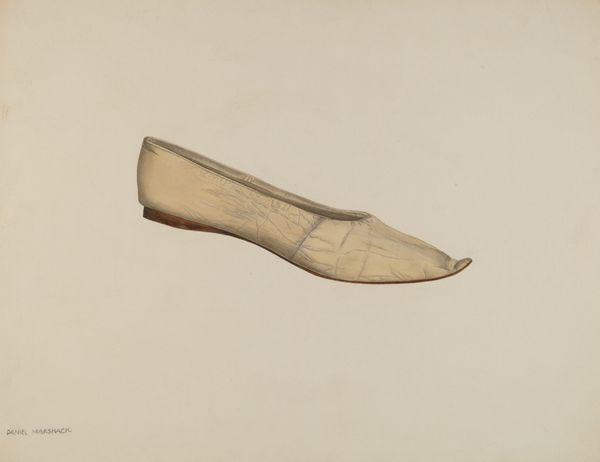
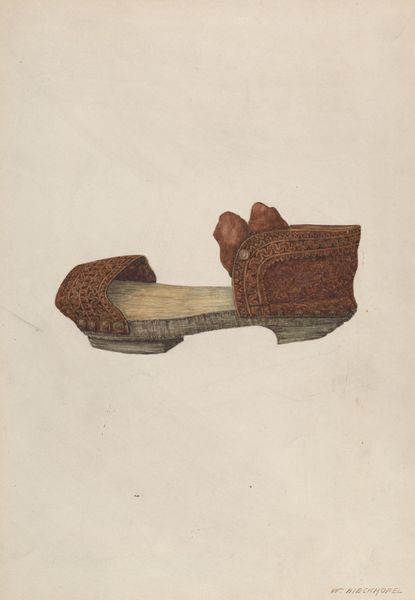
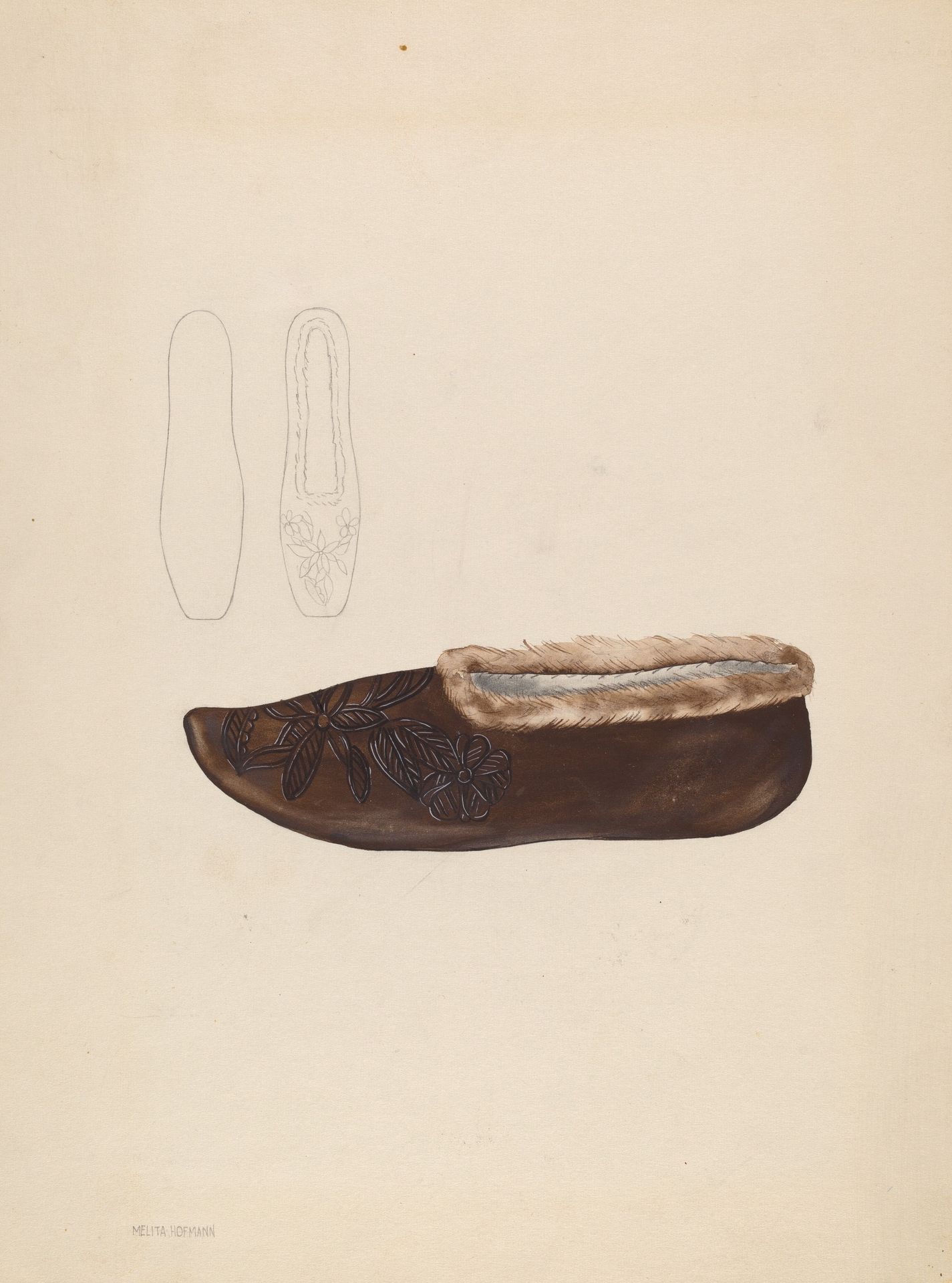
Editor: This is Melita Hofmann’s "Slipper," created around 1936 using watercolor and pencil on paper. The way the brown of the slipper contrasts with the untouched paper gives it a unique kind of glow. What stands out to you in terms of materiality or production? Curator: Well, immediately I'm drawn to the implied labor. Consider the time invested in rendering such a common, everyday object with such care. What does it say about Hofmann's access to materials, or about the role of women in artistic labor at the time? Was she elevating a domestic craft, or simply recording a mundane object? Editor: I hadn't really thought about the craft aspect of it. The slipper seems like an object from daily life that might usually be overlooked. Is it possible that the choice of materials - humble watercolor and paper - relates to this idea of "overlooked" labour? Curator: Precisely. Consider the contrast: the slipper itself, designed for comfort and ease, and the painstaking artistic labor that created its representation. Do you think the seemingly unfinished sketches next to the completed shoe emphasize a shift in the perception of craft in art? It makes you wonder about the stages of labor, from production of material, design, and then the final piece. Editor: It definitely raises a lot of questions about value and how we define 'art'. The inclusion of those sketches does prompt that thinking about process. Thanks for bringing those elements to light. I am viewing the work differently now. Curator: The pleasure's all mine. I think looking at art through this lens encourages us to be more critical about the production, as well as the value, of art objects.