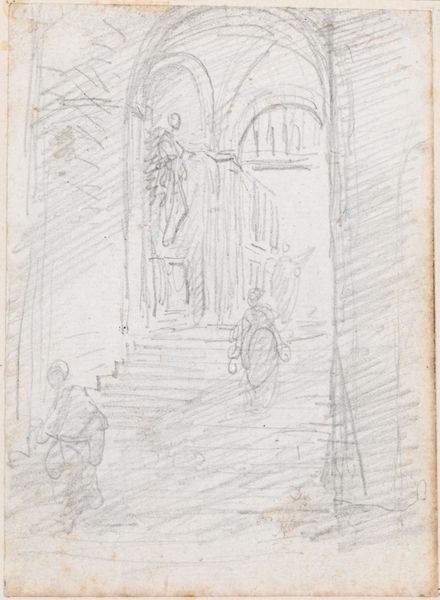
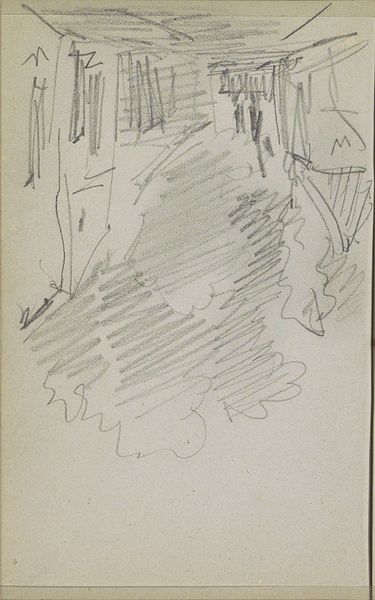
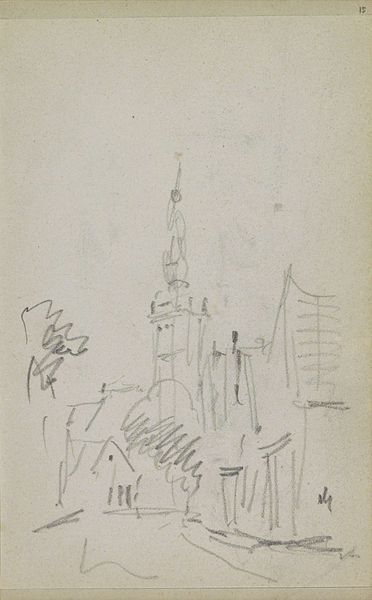
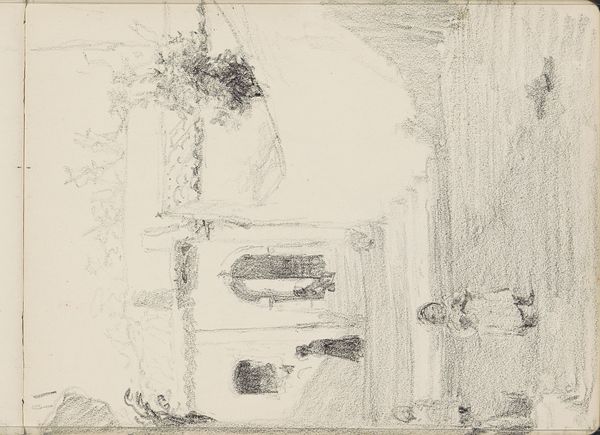
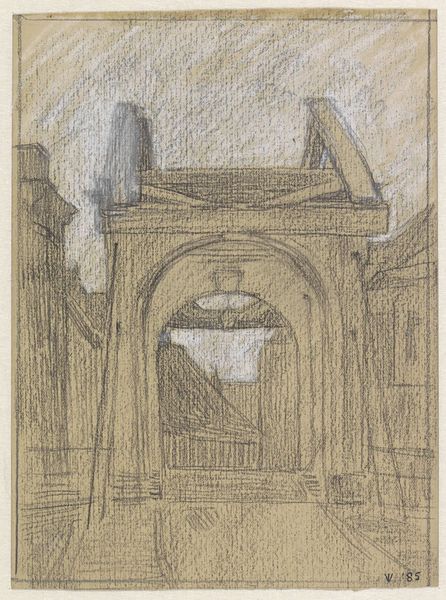
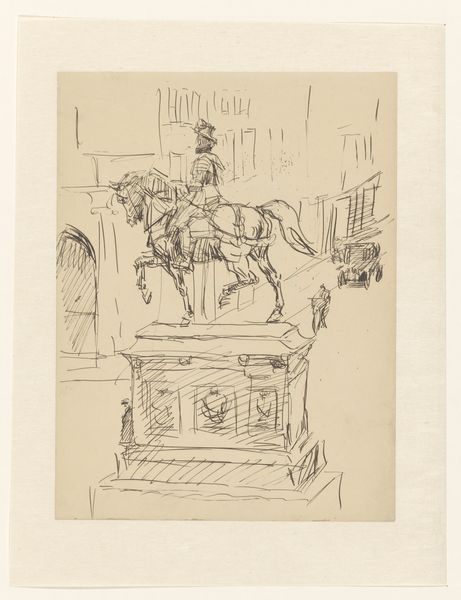
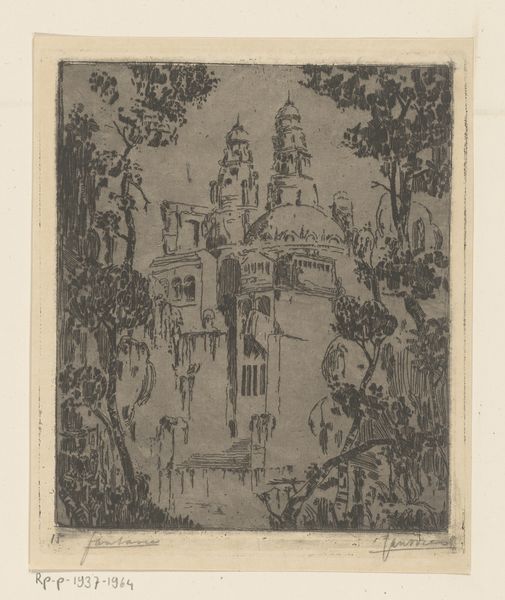
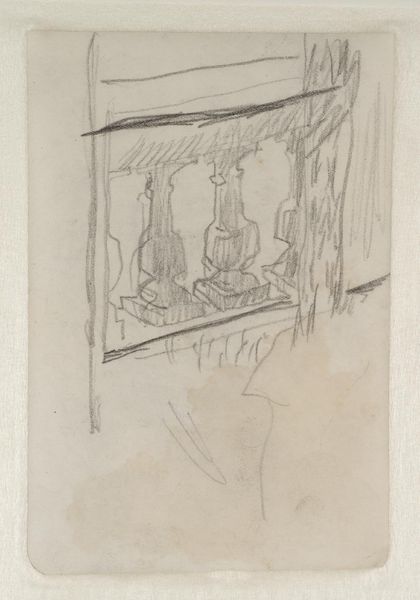
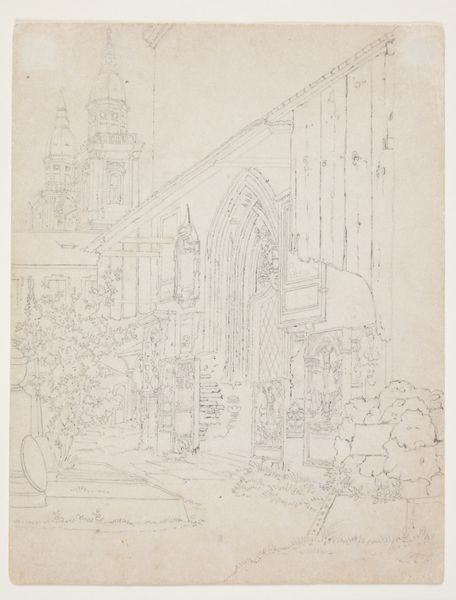
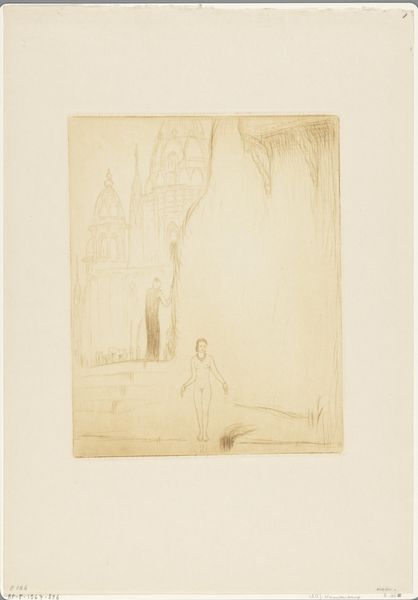
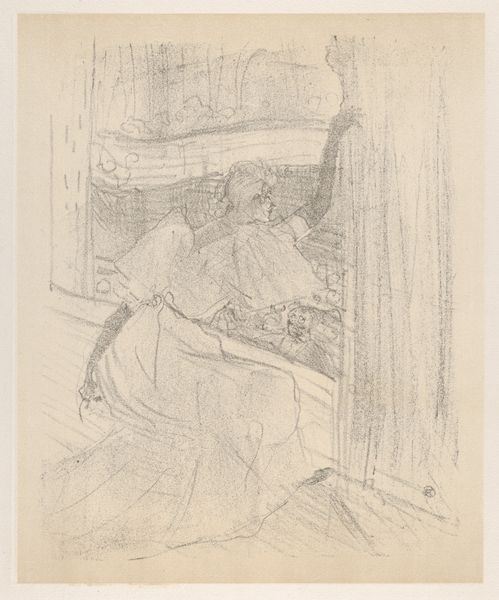
Notenkraker met een kaars en bebloed zwaard en het Marsepeinslot 1898
0:00
0:00

willemwenckebach
Rijksmuseum
Dimensions: height 437 mm, width 298 mm
Copyright: Rijks Museum: Open Domain
Editor: So, this drawing is titled "Nutcracker with a candle and bloody sword and the Marzipan Castle," created by Willem Wenckebach in 1898. It looks like it was made with coloured pencils and regular pencil. The cityscape kind of gives me a romantic, slightly eerie feeling. What do you see in this piece? Curator: What immediately strikes me is how Wenckebach uses the fantastical imagery of the Nutcracker story as a lens to comment on societal structures and perhaps even violence. A bloody sword amidst this "Marzipan Castle" forces us to question the cost of beauty and privilege. What do you think the artist is trying to say by placing the grotesque imagery, a bloodied sword for instance, with an element as innocent as a marzipan castle? Editor: That's an interesting question. It's almost as if the sweetness of the marzipan castle is there to disguise something sinister? Curator: Exactly. Think about it this way: who benefits from this apparent "sweetness," and at whose expense? This period saw immense industrial growth alongside widespread social inequality. Perhaps Wenckebach critiques this imbalance. The single lit candle draws attention, doesn't it? It can symbolize many things from hope, death, awareness, and even judgment. Editor: So the light highlights something specifically for us, the viewers. What would that be? Curator: Well, I feel he invites us to dissect the seductive veneer of progress and to acknowledge the harsh realities often hidden beneath the surface. That lone Nutcracker sketch in the corner acts almost like a specter. Perhaps Wenckebach sought to unmask the narratives of power embedded within seemingly harmless children's stories. Editor: Wow, I never thought a simple drawing could be interpreted with all of this social commentary! Thank you for providing insight! Curator: Of course! Analyzing art through these contextual lenses truly enriches the experience. It becomes more than just an aesthetic piece; it becomes a mirror reflecting the socio-political climate of its time.
Comments
No comments
Be the first to comment and join the conversation on the ultimate creative platform.
 Collect
 React
React Comment
More like this