About this artwork
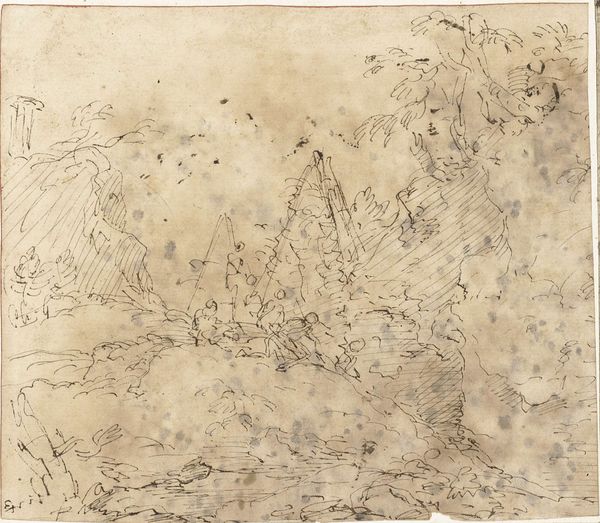
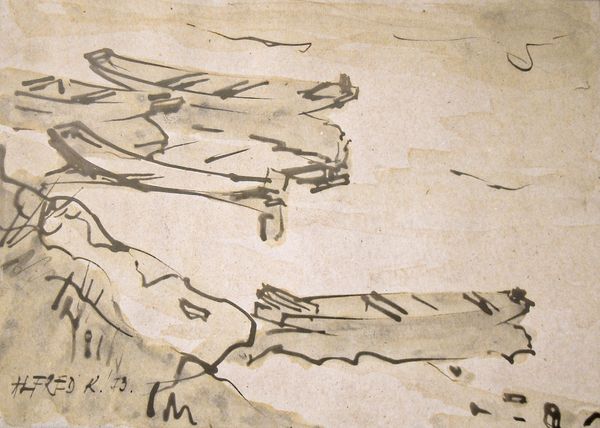
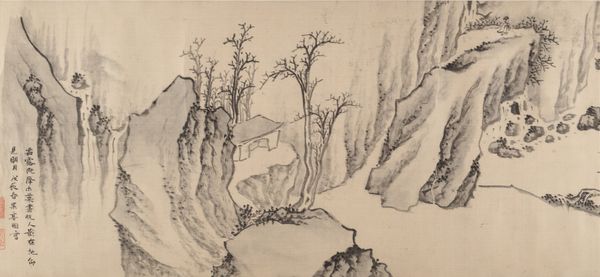
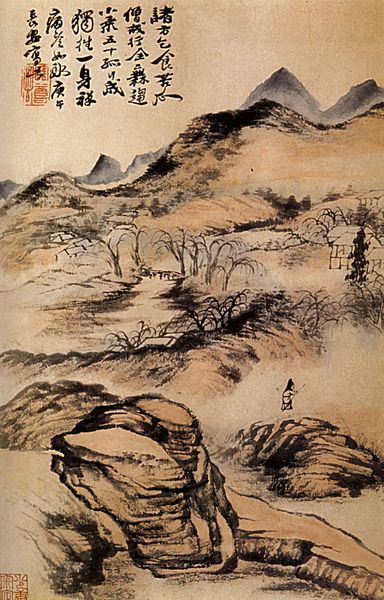
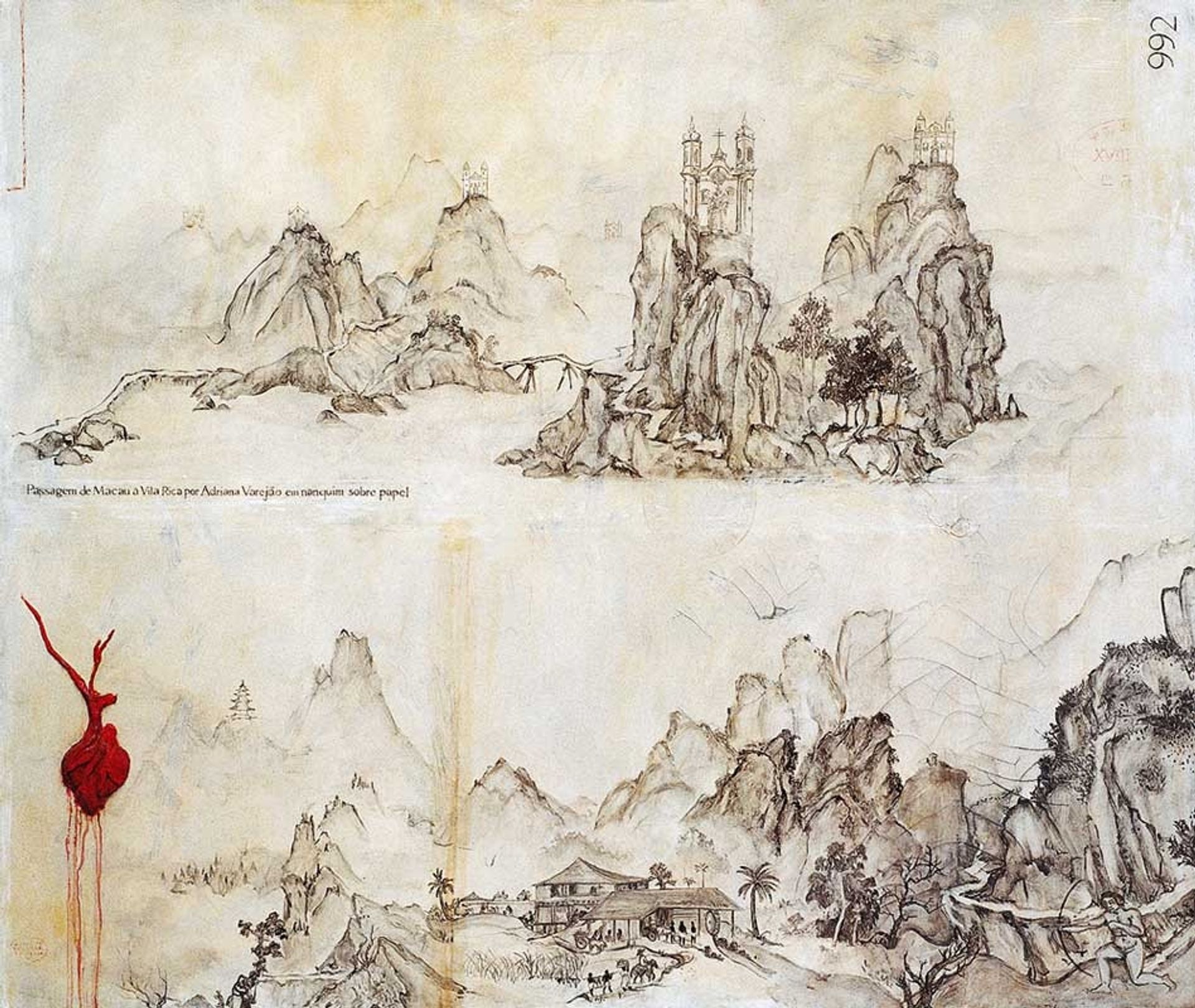
Editor: This is Adriana Varejão’s “Passage from Macau to Vila Rica,” created in 1992 using ink on paper. It looks like a serene landscape, but there's a disconcerting element with that visceral red shape on the lower left. What do you see in this piece? Curator: I see a fascinating tension constructed through contrasting visual languages. Note how Varejão juxtaposes elements of traditional Asian landscape painting – the distant, misty mountains, the delicate brushstrokes – with the Western anatomical representation you mentioned. Editor: That contrast definitely creates a push and pull. How does the composition reinforce that feeling? Curator: Consider the division of the picture plane. The upper section, with its floating, almost ethereal architecture, presents an idealized vision. The lower section, grounded by the architecture of Vila Rica and figures, hints at something more material and perhaps troubled. Observe the layering of washes that imply depth while disrupting conventional perspectival space. Do you perceive any semiotic relationship? Editor: Hmm… Perhaps the architecture, especially the Baroque churches in the upper scene, symbolizes a kind of imposed European order? And then maybe the bleeding anatomical part challenges that sense of control? Curator: An insightful reading. The disruption of surfaces— the washes, erasures—becomes a potent metaphor. It raises the question: how can we truly represent a history so laden with conflict and exploitation? Editor: I never thought of it that way. Looking at it again, it feels less like a serene landscape and more like a commentary on the collision of cultures and the scars it leaves behind. Thanks. Curator: Indeed, and considering that she employs a restricted tonal range, this reinforces the effect you've described, compelling the eye to examine detail and depth, and to interpret.

Artwork details
- Medium
- drawing, paper, ink
- Copyright
- Adriana Varejão,Fair Use
Tags
drawing
ink painting
asian-art
landscape
paper
ink
orientalism
modernism
watercolor
Comments
No comments
About this artwork
Editor: This is Adriana Varejão’s “Passage from Macau to Vila Rica,” created in 1992 using ink on paper. It looks like a serene landscape, but there's a disconcerting element with that visceral red shape on the lower left. What do you see in this piece? Curator: I see a fascinating tension constructed through contrasting visual languages. Note how Varejão juxtaposes elements of traditional Asian landscape painting – the distant, misty mountains, the delicate brushstrokes – with the Western anatomical representation you mentioned. Editor: That contrast definitely creates a push and pull. How does the composition reinforce that feeling? Curator: Consider the division of the picture plane. The upper section, with its floating, almost ethereal architecture, presents an idealized vision. The lower section, grounded by the architecture of Vila Rica and figures, hints at something more material and perhaps troubled. Observe the layering of washes that imply depth while disrupting conventional perspectival space. Do you perceive any semiotic relationship? Editor: Hmm… Perhaps the architecture, especially the Baroque churches in the upper scene, symbolizes a kind of imposed European order? And then maybe the bleeding anatomical part challenges that sense of control? Curator: An insightful reading. The disruption of surfaces— the washes, erasures—becomes a potent metaphor. It raises the question: how can we truly represent a history so laden with conflict and exploitation? Editor: I never thought of it that way. Looking at it again, it feels less like a serene landscape and more like a commentary on the collision of cultures and the scars it leaves behind. Thanks. Curator: Indeed, and considering that she employs a restricted tonal range, this reinforces the effect you've described, compelling the eye to examine detail and depth, and to interpret.
Comments
No comments