Copyright: Public Domain
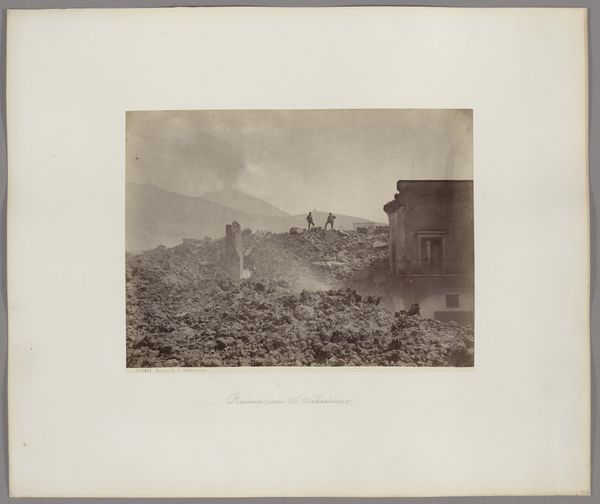
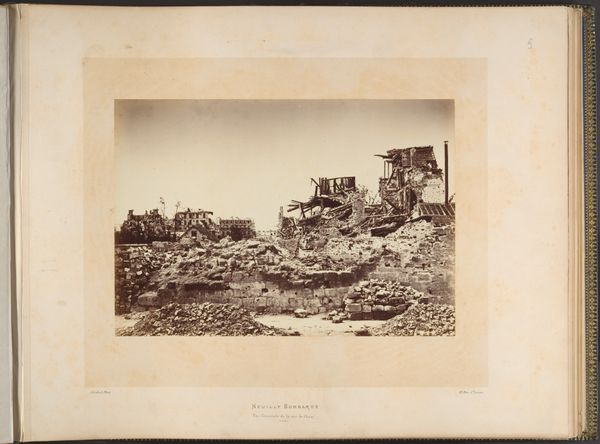
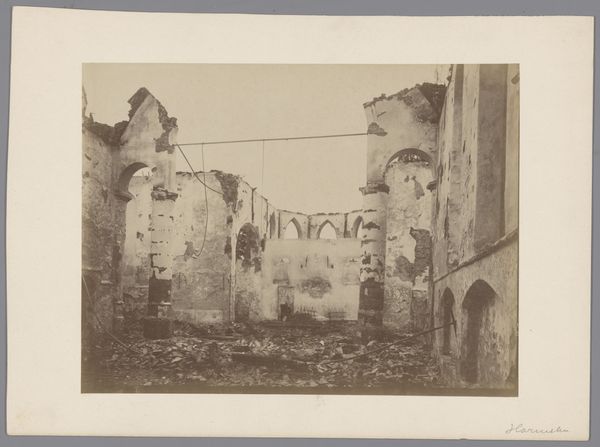
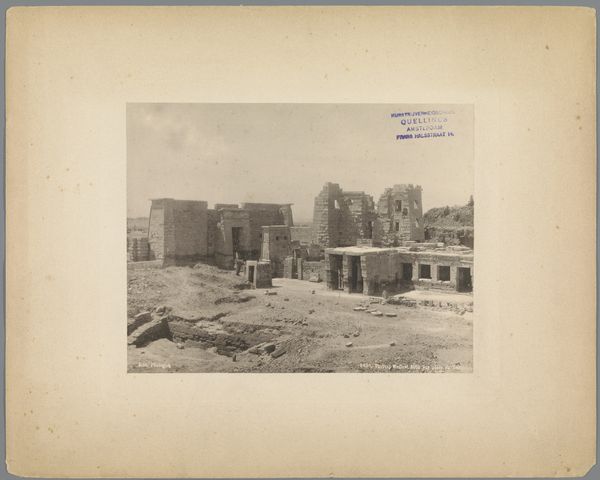
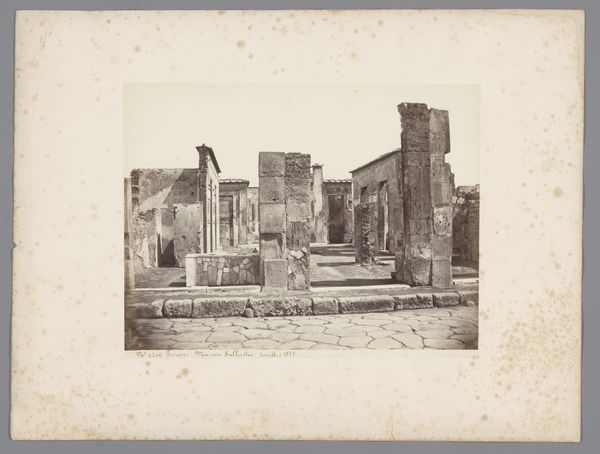
Editor: This photograph, “Ruins of Saint Sebastian” by Giorgio Sommer, was taken around 1872-73. The subject, of course, is devastation, yet the composition feels so considered, almost serene in its stillness. How would you interpret this work? Curator: The formal organization is compelling. Note the tonal gradations, the strategic juxtaposition of textures, from the coarse rubble in the foreground to the smoother planes of the remaining architecture. Editor: It almost feels staged, or romanticized somehow. Curator: Consider, too, the subtle diagonal created by the ruins, leading the eye upwards and into the negative space of the sky. This is a photographic print – an albumen print – with all the materiality that entails. How do the cool, muted tones impact your understanding of the ruin? Editor: They do lend a certain detached quality to the scene, highlighting the permanence and inevitability of decline. The balance of the composition, between destruction and stillness, is so striking. Curator: Precisely. Sommer uses formal strategies to create an interesting dialogue, framing a ruin not merely as loss but as a site of visual complexity. And the scale: it gives the image a feeling of distance. Editor: It’s fascinating how Sommer transforms devastation into something aesthetically compelling through these subtle arrangements. Curator: Yes, thinking about this through semiotics offers further depth. What visual ‘signifiers’ help you decode the scene? Editor: Seeing the remaining walls next to piles of rubble and rocks – it sends a powerful message about decay and ruin but maybe also strength? It really shows how a formalist approach enriches your understanding of art. Thanks for this. Curator: It has been a pleasure, a new understanding is always exciting.
Comments

stadelmuseum over 2 years ago
⋮
Mount Vesuvius is a volcano still active today. After it erupted in 1872, Giorgio Sommer took several shots documenting the disastrous consequences of the event. For example, he portrayed the ruins of houses in San Sebastiano. In many of the images, smoke still rises from the crater in the background, an ominous reminder of what has caused the devastation.


Join the conversation
Join millions of artists and users on Artera today and experience the ultimate creative platform.
 Collect
More like this