drawing, print, engraving
#
drawing
#
animal
# print
#
pencil sketch
#
landscape
#
figuration
#
engraving
#
rococo
Dimensions: height 201 mm, width 276 mm
Copyright: Rijks Museum: Open Domain
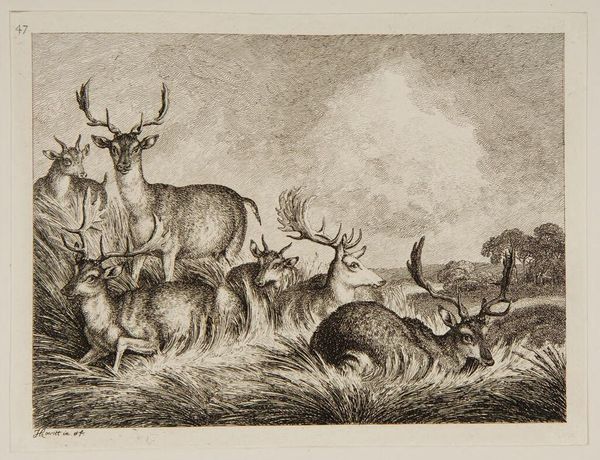
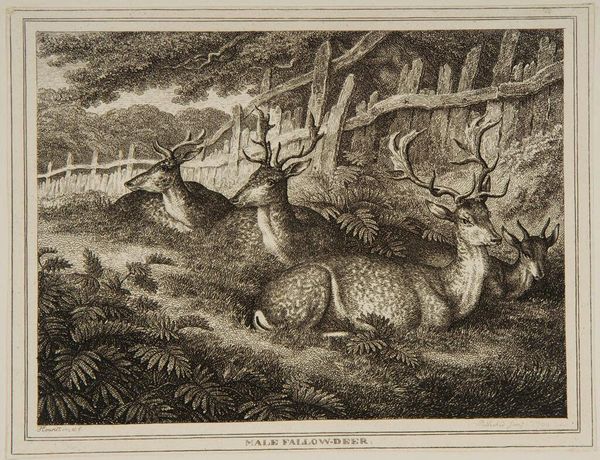
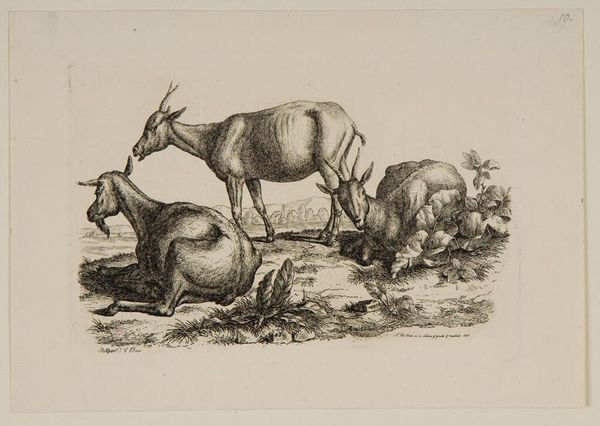
Editor: So, we’re looking at "Rustende herten," or "Resting Deer," a print by Gilles Demarteau, dating somewhere between 1732 and 1776. It’s an engraving, a pretty delicate scene. There's something so tranquil about it, almost dreamlike. What do you make of it? Curator: Dreamlike is spot on! For me, it’s like stepping into a half-remembered fairytale. I see the Rococo fondness for pastoral scenes – but also, there's this vulnerability in their rest. Are they truly at peace, or just momentarily safe? It's interesting how Demarteau captures this tension. Editor: I hadn't really considered the tension! I was too caught up in the pretty foliage and elegant lines. Is that tension something unique to Demarteau, or a feature of the Rococo period generally? Curator: Good question. The Rococo was all about ornate beauty, yes, but underneath, there was often a questioning of established norms, a kind of playful subversion. This print encapsulates that beautifully: an idyllic scene, yes, but with that little niggle of unease, as if the world is just a stage. Notice how precisely Demarteau positions the figures, a pleasing composition, isn't it? Editor: Very pleasing! Almost like they're posing. Like it’s deliberately, elegantly constructed. What’s striking me now is how staged everything feels; even their "rest" feels performed somehow. Curator: Exactly! And that, to me, elevates it beyond a simple nature scene. It’s asking us, what does 'natural' even mean, especially when filtered through art? Editor: It’s funny, I came in thinking “peaceful deer,” but now I’m leaving thinking about performance and questioning reality. Art is amazing! Curator: Isn't it just! It is like opening one of those russian dolls, keeps giving. And hopefully encourages more interesting thoughts to bloom and flourish.
Comments
No comments
Be the first to comment and join the conversation on the ultimate creative platform.
 Collect
 React
React Comment
More like this