Portret van admiraal Maarten Harpertszoon Tromp en vice-admiraal Witte Cornelisz. de With 1641
0:00
0:00

cornelisvandaleni
Rijksmuseum
print, engraving
#
portrait
#
baroque
#
dutch-golden-age
# print
#
history-painting
#
engraving
Dimensions: height 404 mm, width 514 mm
Copyright: Rijks Museum: Open Domain
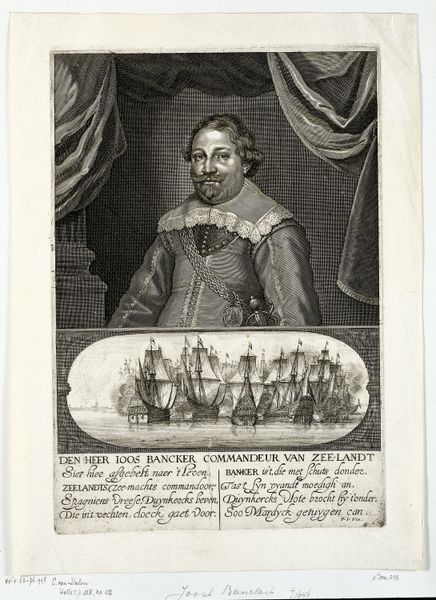
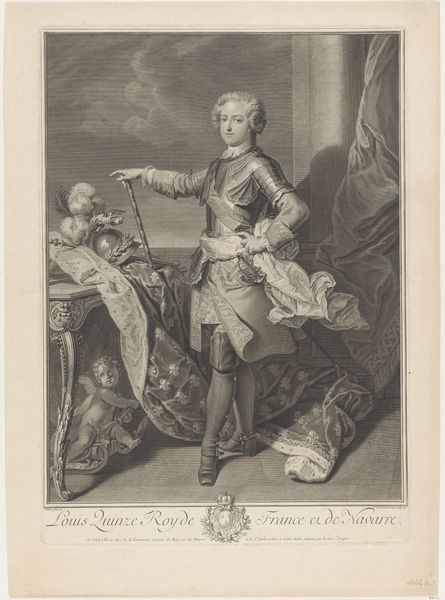
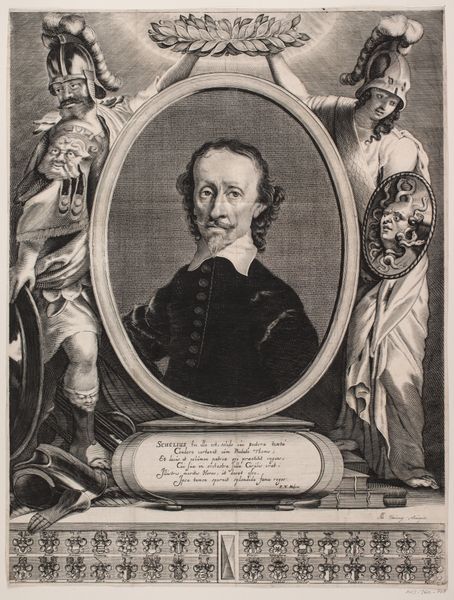
Editor: Here we have a print entitled "Portret van admiraal Maarten Harpertszoon Tromp en vice-admiraal Witte Cornelisz. de With," created by Cornelis van Dalen I in 1641. The artwork shows two imposing figures, presumably the Admiral and Vice-Admiral mentioned in the title. What strikes me most is how they are framed against what appears to be a naval battle. What story do you think this piece tells? Curator: It’s an intriguing image, particularly considering the socio-political context of the Dutch Golden Age. We must remember that portraiture, especially engravings like this, served a crucial role in shaping public perception. Here we see a visualization of power intended to legitimize a newly established republic in constant struggle with bigger European empires like Spain, depicted in the background naval scene. What impression do you think such a portrait, printed and distributed, would leave on the average citizen? Editor: I imagine it would project an image of strength and confidence. Almost propaganda? The detail is fascinating considering the figures were likely not present together at the time the portrait was created. It's almost a composite image made for political impact. Curator: Exactly. The artist’s goal wasn’t necessarily to create a lifelike representation but to promote an idea of Dutch naval power and leadership. How might this image be received differently today compared to when it was made, considering our contemporary understanding of military and political power? Editor: Now we might be more critical of such overt displays of power. In its own time, perhaps it represented a new way to visualize state power and naval skill. Curator: Precisely. This engraving reminds us that art actively participates in constructing history. Thanks to prints like this, the legend of Admiral Tromp lived on well after his death in 1653, making him a cornerstone of Dutch cultural memory. Editor: That is a great point! I didn't think about how widely such portraits could be disseminated at the time, furthering these historical and cultural narratives.
Comments
No comments
Be the first to comment and join the conversation on the ultimate creative platform.
 Collect
 React
React Comment
More like this