

1800 - 1900
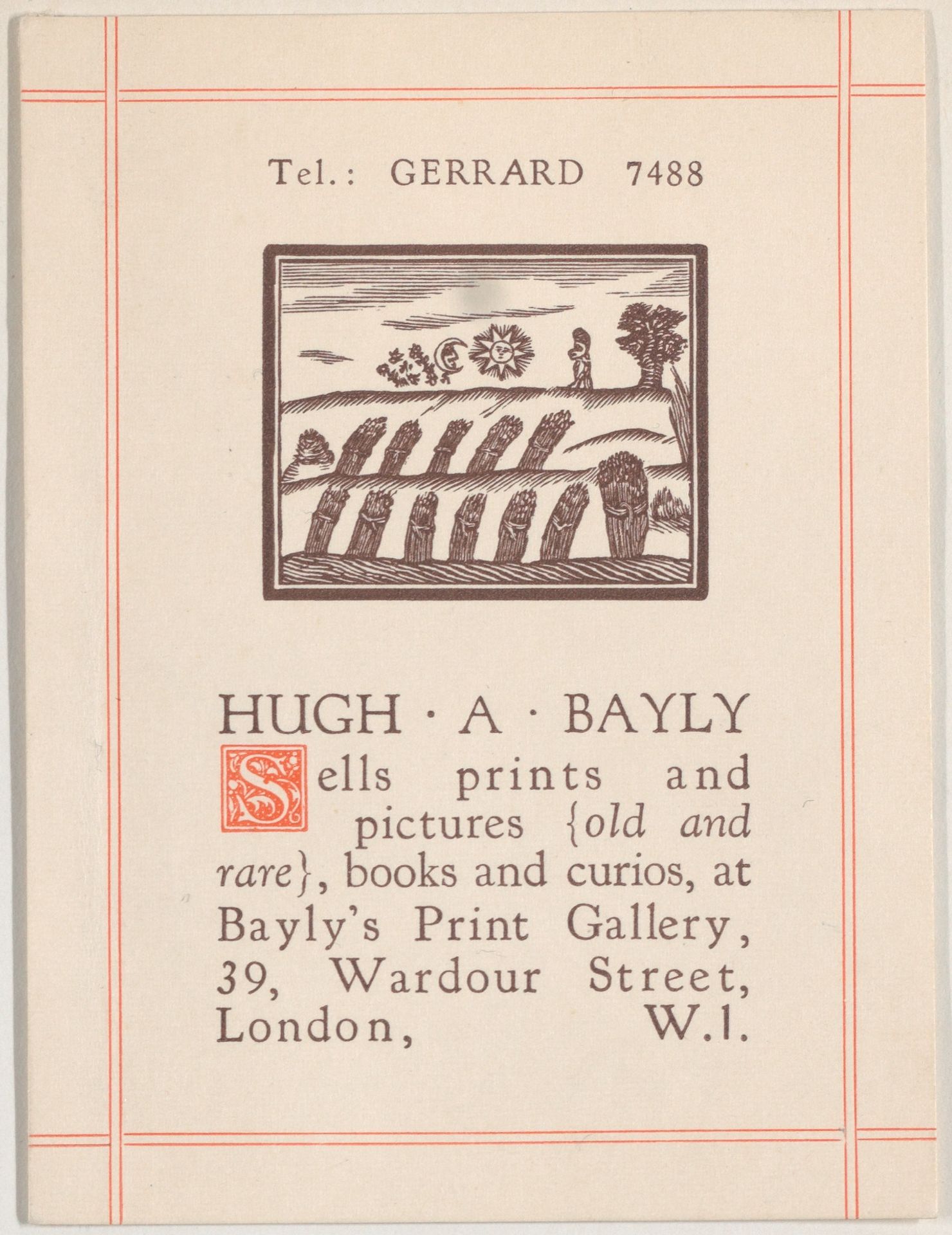
Trade card for Hugh A. Bayly, printseller

Listen to curator's interpretation
Curatorial notes
Curator: This is a trade card for Hugh A. Bayly, a printseller active between 1800 and 1900. It’s currently held in the collection of the Metropolitan Museum of Art. Editor: My first impression is it’s peculiar; a strange combination of whimsical and ancient feeling. Those standing stone-like figures are quite striking and odd for an advertisement. Curator: Precisely. Trade cards like this weren't just functional, they also advertised a certain taste or aesthetic. The inclusion of those almost monolithic figures likely intended to suggest a connection to historical and artistic significance, alluding to the enduring appeal of 'old and rare' prints. Editor: I wonder, did that resonate at the time? There's an aura of pre-historic mystery meeting Arts and Crafts aesthetic here. London, by this point, had already become a world city but, this card tries to offer an esoteric or mysterious vibe with an image referencing more rural times. Curator: Absolutely. The Arts and Crafts movement, to which it visually alludes, heavily emphasized craftsmanship and often looked back to pre-industrial styles for inspiration. It positioned itself against the mass-produced, so advertising “old and rare” objects this way speaks to a desire for authenticity, in a rapidly industrializing world. Editor: You're right, there is something subversive about it. On the surface it is an advert. However, that tiny landscape and the telephone number somehow don't seem to connect with ease, creating tension by mixing folklore elements with early modernity. It seems to hint at a story or world that existed beyond London's high streets and technological novelties. Curator: It highlights how commerce adopted the language and imagery of artistic and cultural movements. In some ways, it shows that, throughout time, society has continued its project of using aesthetics and symbols to give products an added cultural layer of value. Editor: And to give their business an allure. Well, it worked on me, I'd be intrigued enough to go inside! Curator: Agreed. It's a small, ephemeral piece that reveals much about the cultural landscape of its time.