About this artwork
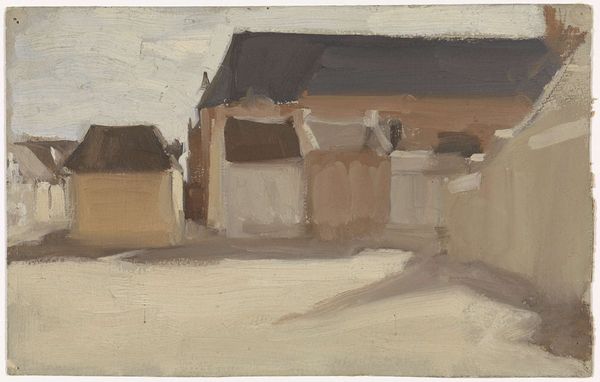
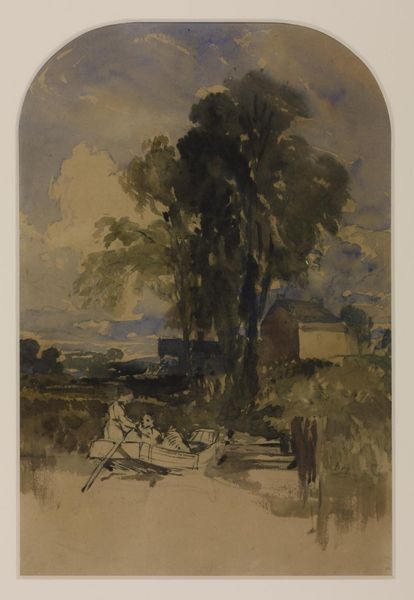
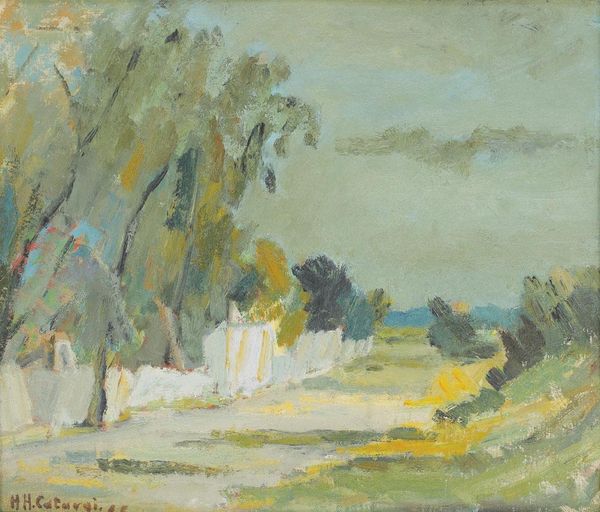
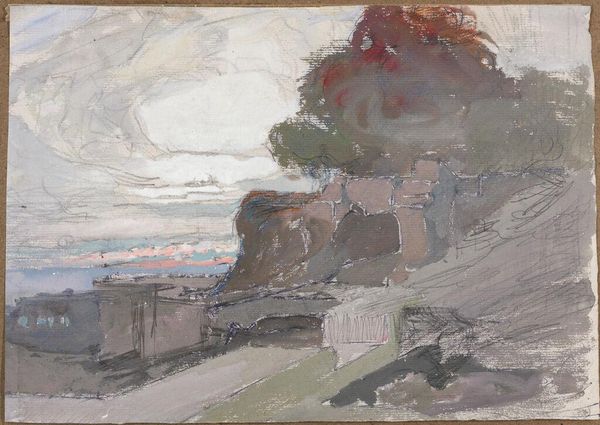
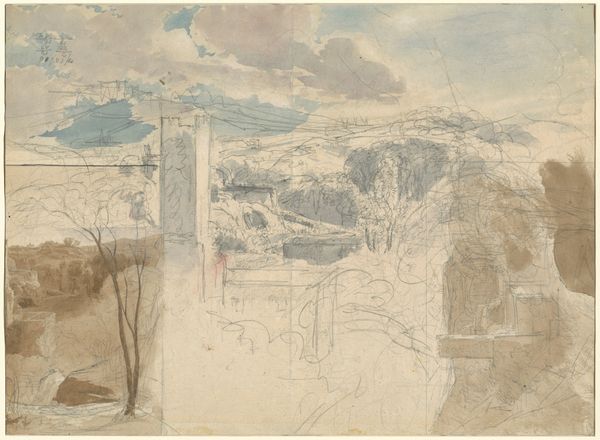
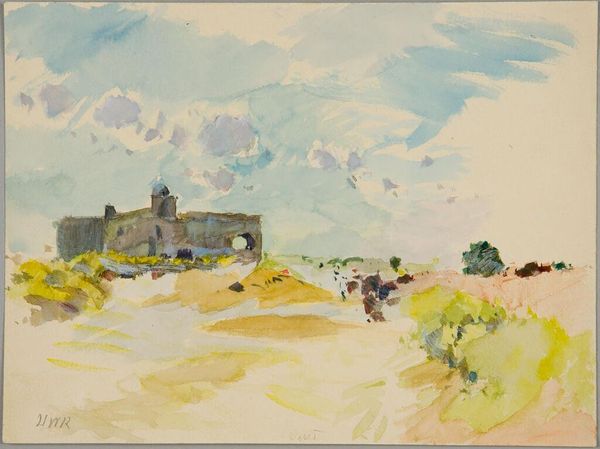
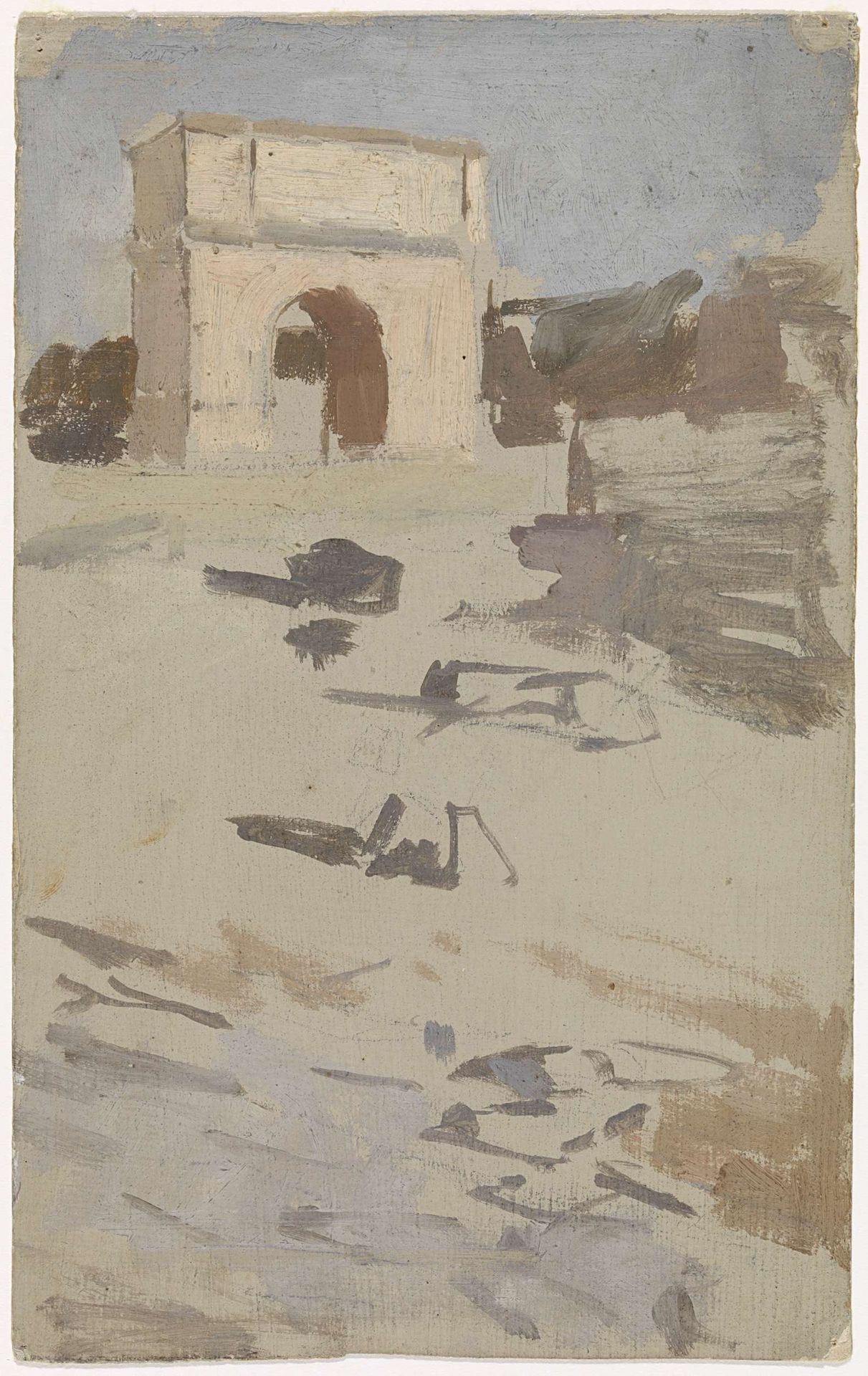
Antoon Derkinderen captured this sketch of the Arch of Titus in Rome in oil on canvas. Derkinderen, a Dutch artist, painted this study, likely en plein air, meaning ‘in the open air’ in French. This painting is characterized by loose brushstrokes and muted colors. The Arch itself was erected in 81 AD by Emperor Domitian to commemorate his brother Titus's victories, including the Siege of Jerusalem in 70 AD. The decision to depict the Arch suggests an interest in the legacy of Roman power and the way it intersects with military might. The monument is a symbol of imperial authority and triumph. The social conditions that shaped this artwork are rooted in the late 19th-century European fascination with classical antiquity. It was a time when artists often looked to the past for inspiration and validation. To fully understand this work, a historian might delve into travelogues, architectural studies, and exhibition records of the period. It’s in this rich contextual understanding that the true meaning of art resides.

Artwork details
- Medium
- painting, plein-air, watercolor
- Dimensions
- height 219 mm, width 137 mm
- Copyright
- Rijks Museum: Open Domain
Tags
Comments
Share your thoughts
About this artwork
Antoon Derkinderen captured this sketch of the Arch of Titus in Rome in oil on canvas. Derkinderen, a Dutch artist, painted this study, likely en plein air, meaning ‘in the open air’ in French. This painting is characterized by loose brushstrokes and muted colors. The Arch itself was erected in 81 AD by Emperor Domitian to commemorate his brother Titus's victories, including the Siege of Jerusalem in 70 AD. The decision to depict the Arch suggests an interest in the legacy of Roman power and the way it intersects with military might. The monument is a symbol of imperial authority and triumph. The social conditions that shaped this artwork are rooted in the late 19th-century European fascination with classical antiquity. It was a time when artists often looked to the past for inspiration and validation. To fully understand this work, a historian might delve into travelogues, architectural studies, and exhibition records of the period. It’s in this rich contextual understanding that the true meaning of art resides.
Comments
Share your thoughts