1690
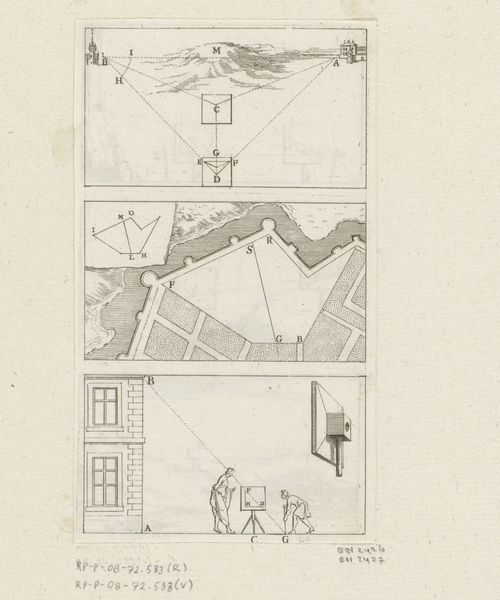
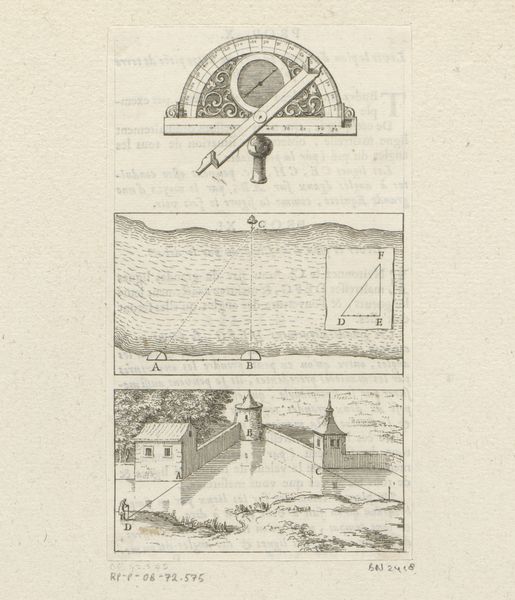
Gebruik van de meetplank geïllustreerd

Sébastien Leclerc I
1637 - 1714Location
RijksmuseumListen to curator's interpretation
Curatorial notes
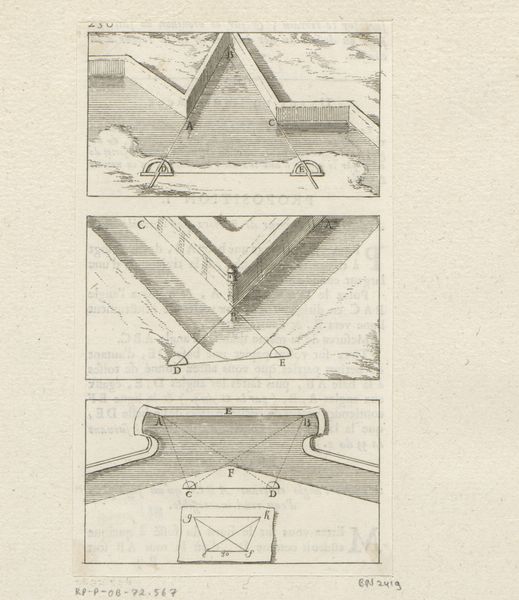
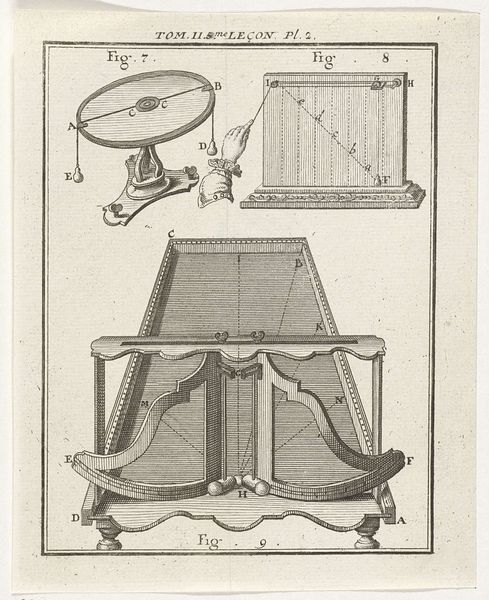
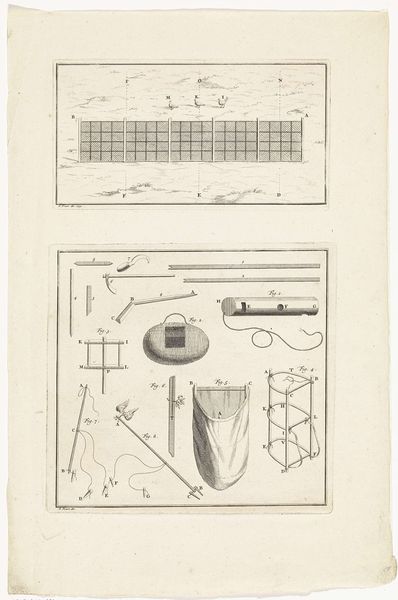
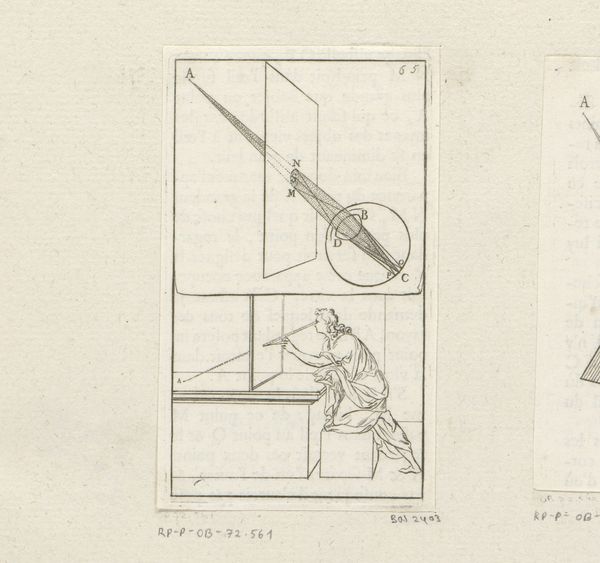
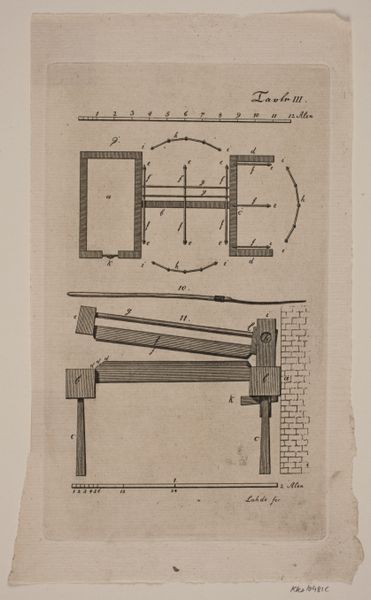
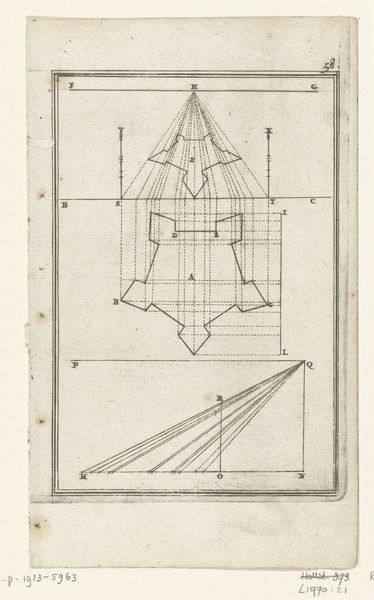
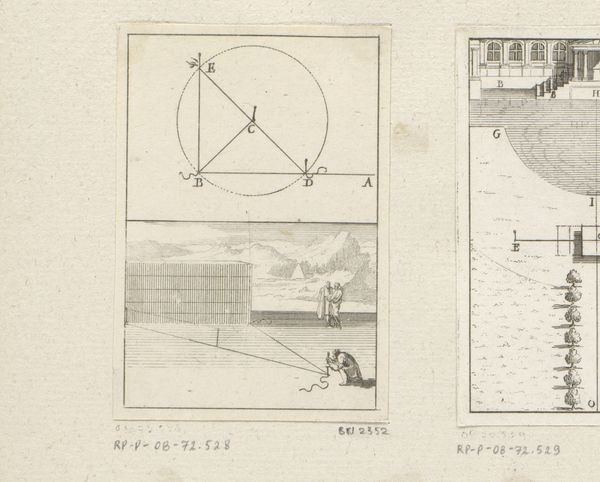
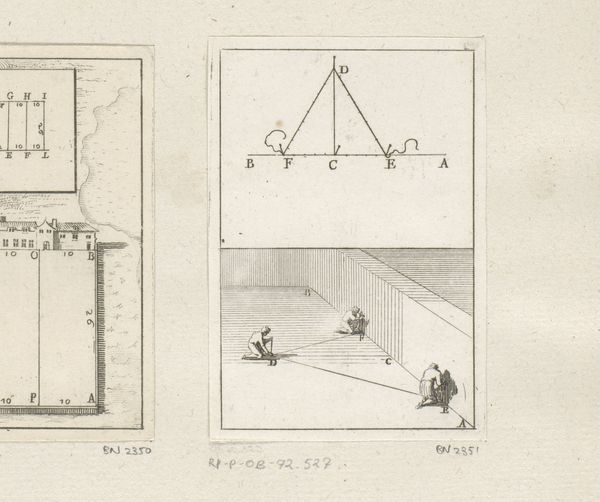
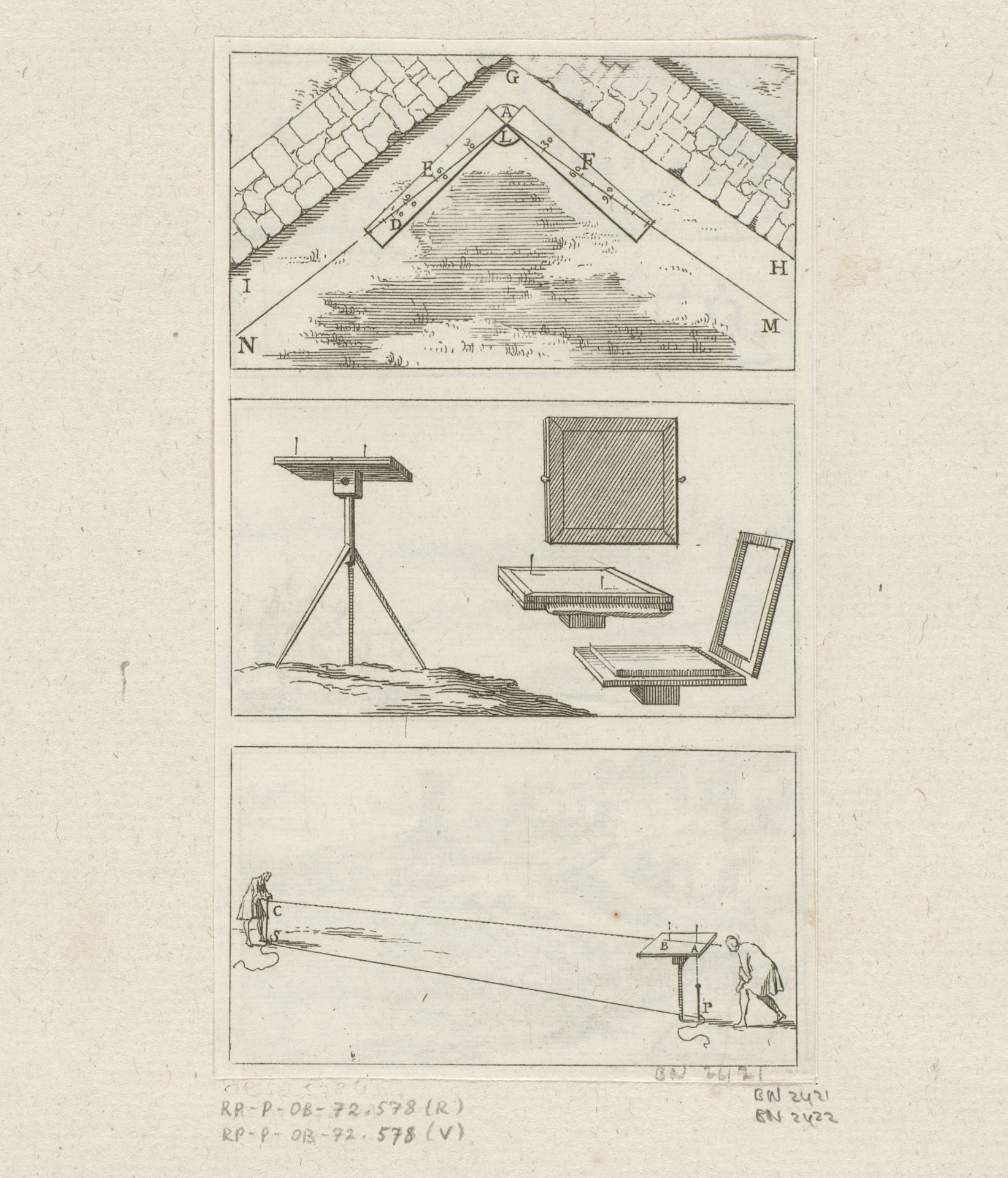
Editor: Here we have Sèbastien Leclerc I's 1690 engraving, "Gebruik van de meetplank geїllustreerd," a print from the Rijksmuseum's collection that lays out a method of measuring. It’s got such a diagrammatic feel, almost like a technical manual, yet with that beautiful baroque touch in the line work. What jumps out at you when you look at it? Curator: Ah, yes! It whispers to me of secrets of perspective. See how the artist tries to unlock its mysteries, and in turn, offer it to us like some delightful theorem? I find myself charmed by its simplicity and the fact that it makes something abstract—geometric understanding—so very tactile. Don't you find that almost whimsical? Editor: Whimsical is a surprise, I admit! I saw it as rather rigid, all those straight lines. But you're right, there's something appealing about its instructional clarity. Why choose to create it as a piece of art rather than a simple guide, then? Curator: Good question. It almost seems to dance between both realms doesn’t it? This was created during the late Baroque period, which was full of a renewed interest in mathematics and sciences; it was an invitation to the elite society who owned this engraving. Art was considered a pathway to communicate, dissecting knowledge with creative methods. The very lines themselves seem to celebrate the act of measurement, making precision itself a subject of aesthetic delight. Editor: That makes perfect sense. So, in a way, the artistic rendering elevates the scientific. It wasn't *just* a diagram; it was an expression of wonder. I can now understand where that “whimsy” comes from. I see it now, almost like an instruction set or manual. Curator: Exactly! In the end, whether mathematics or perspective, everything leads back to stories worth communicating through various methods. The delight, as they say, is in seeing.