1755 - 1765
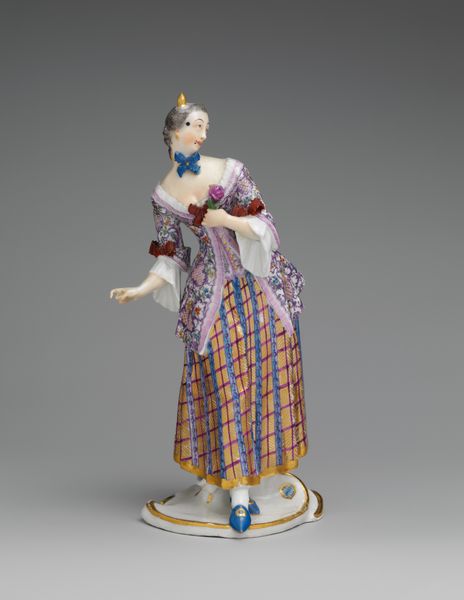
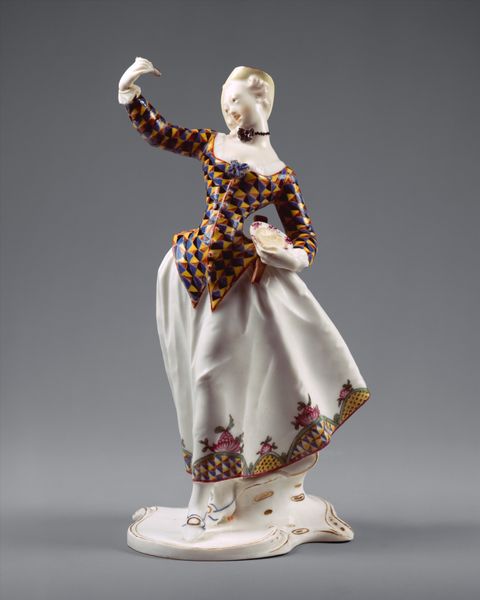
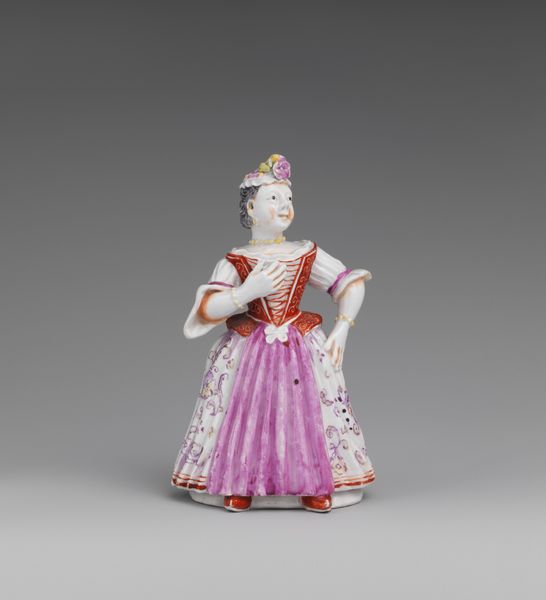
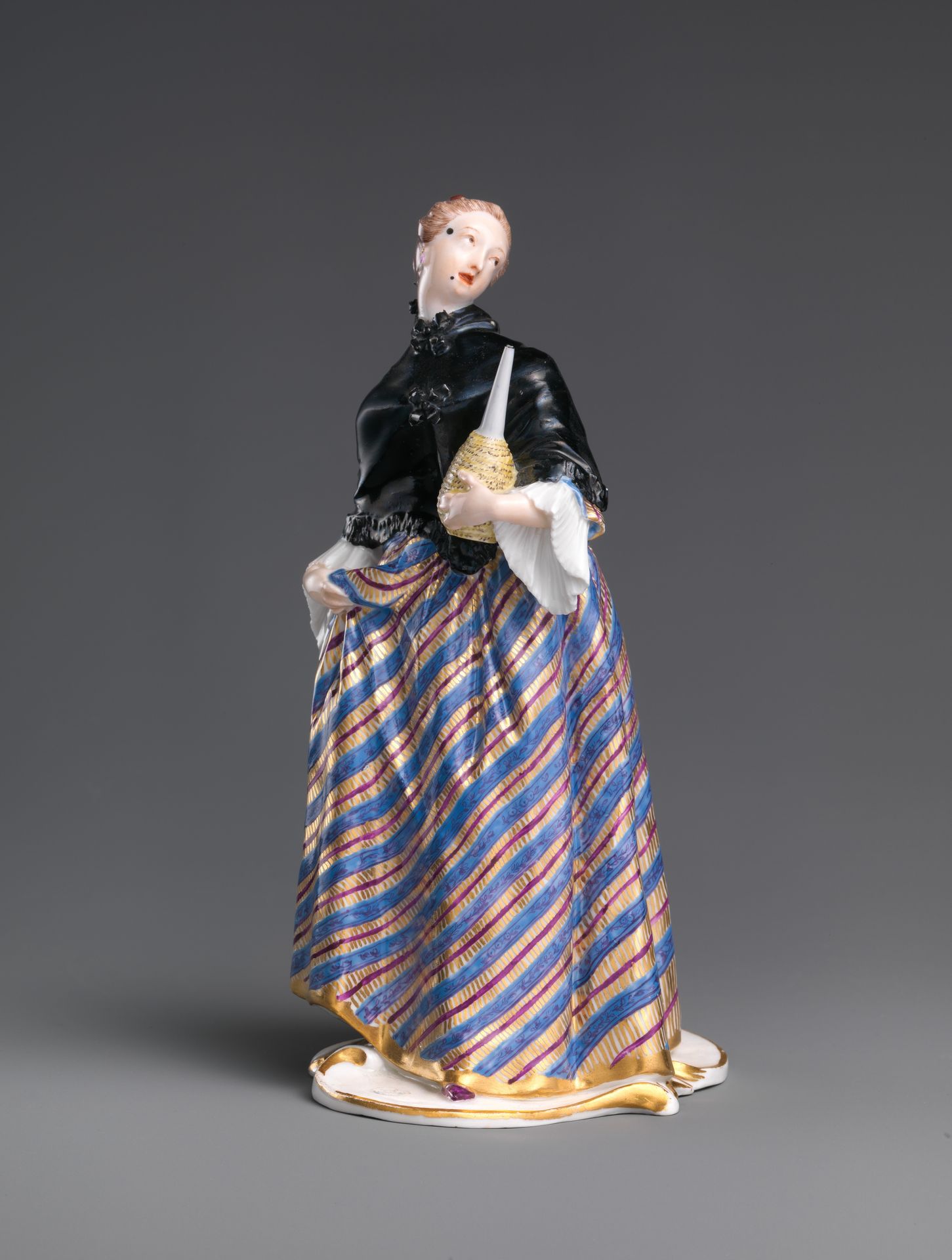
Donna Martina

Nymphenburg Porcelain Manufactory
1747
The Metropolitan Museum of Art
Metropolitan Museum of Art, New York, NYListen to curator's interpretation
Curatorial notes
"Donna Martina" was fashioned in Germany out of porcelain in the mid-18th century by the Nymphenburg Porcelain Manufactory. Here, a noble lady is captured in static elegance. Her dress is made of striped lines of blue, gold and pink, her jacket a shiny black. Porcelain manufactories were initially patronized by royalty. The ability to produce high-quality porcelain objects, such as this figure, became something of a political and economic tool. Porcelain was the new luxury good, a market originally dominated by the East. European nations were racing to develop their own production methods and techniques for porcelain creation. This beautiful example of the craft speaks to the increasing importance of this industry. The historian must research archives, historical records, and scientific reports to appreciate the historical relevance of this artwork. The ability to produce porcelain changed the dynamics of global trade and cultural exchange.