
Curatorial notes
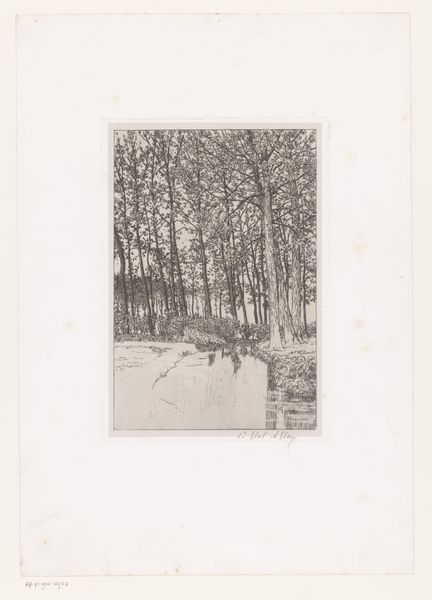
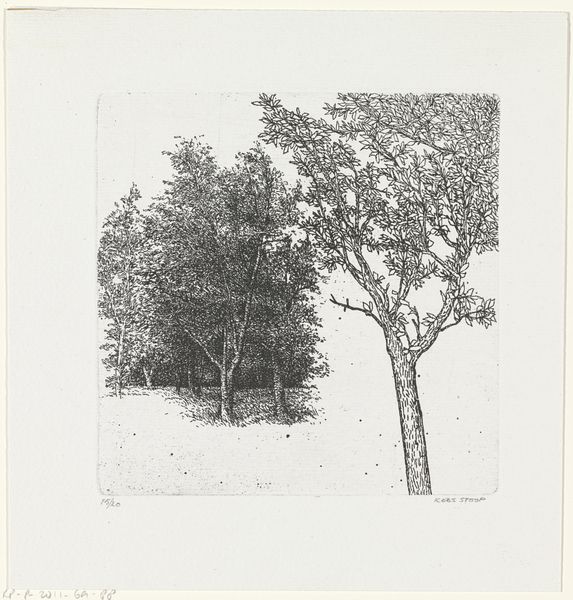
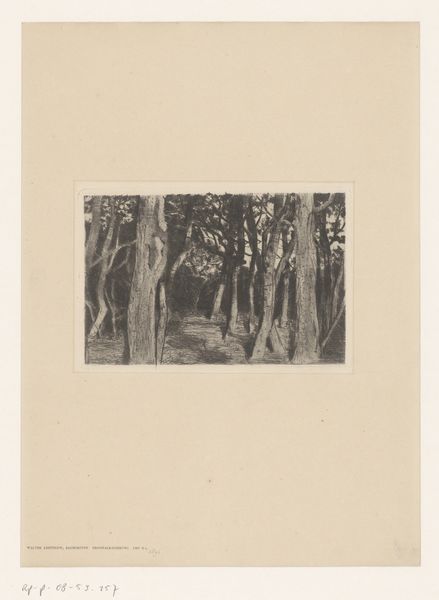
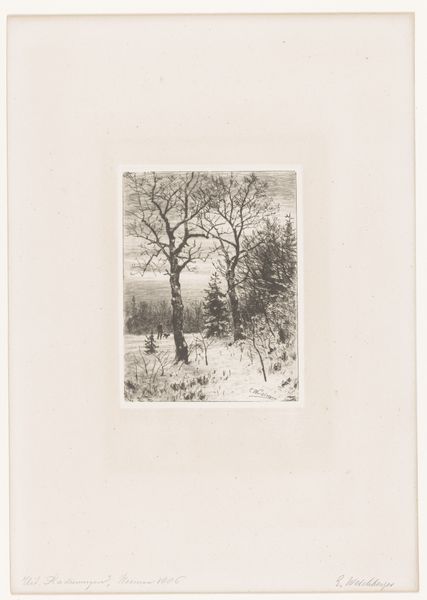
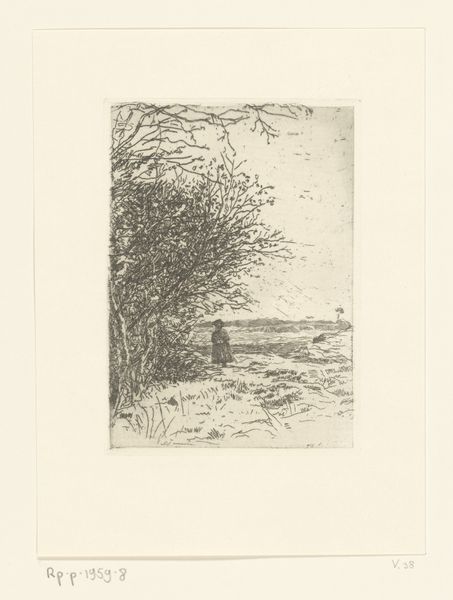
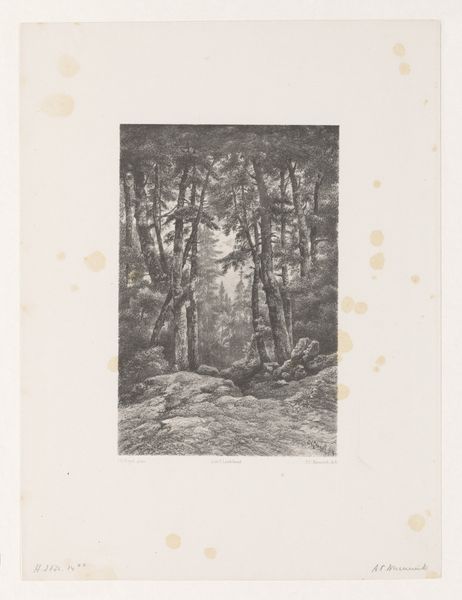
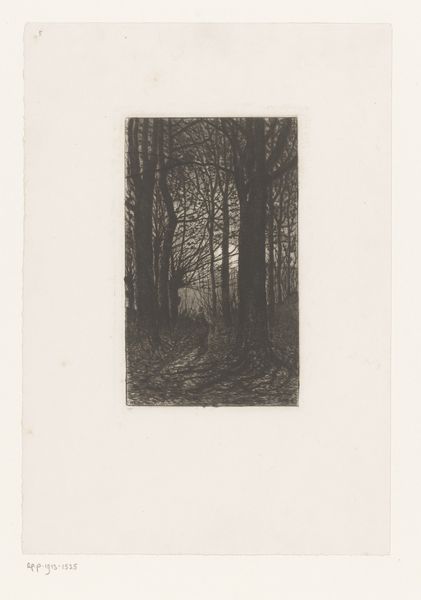
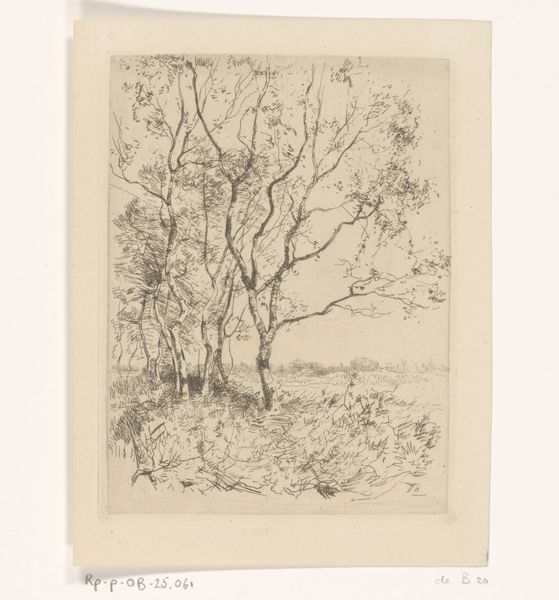
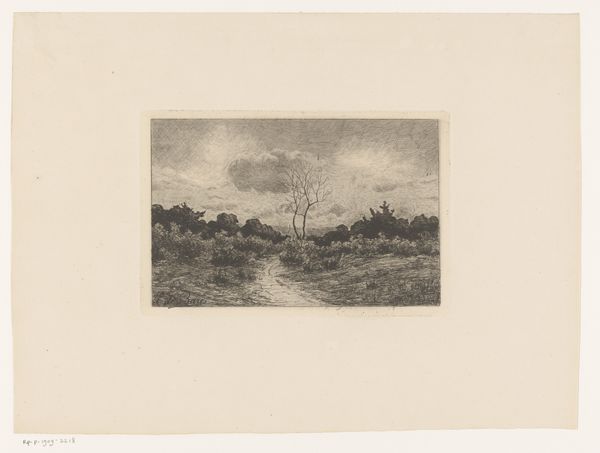
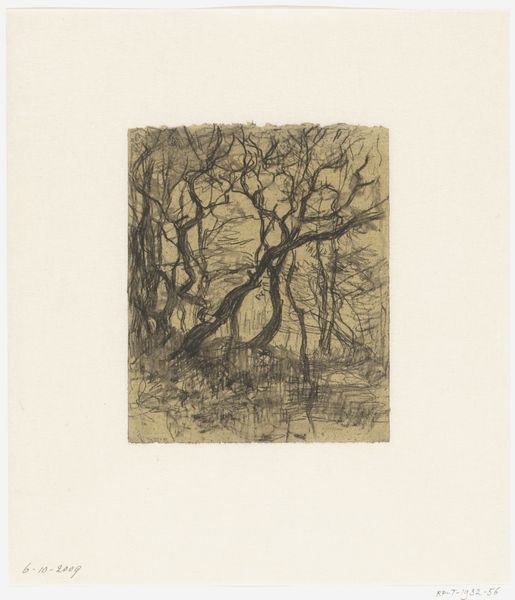
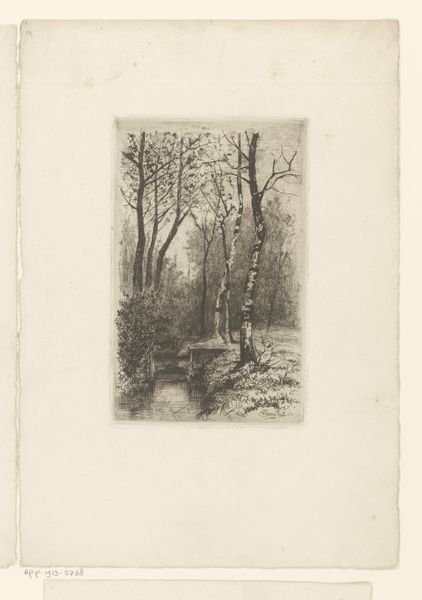
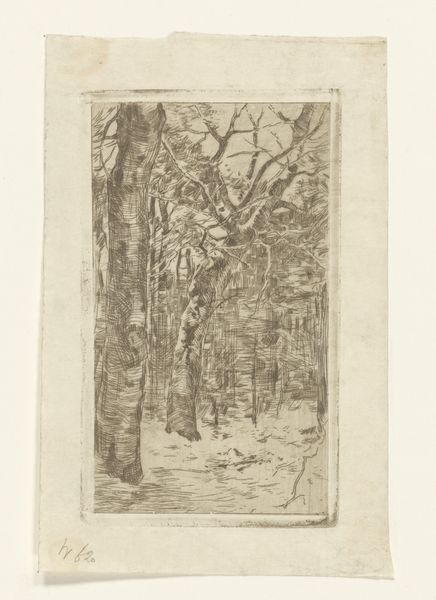
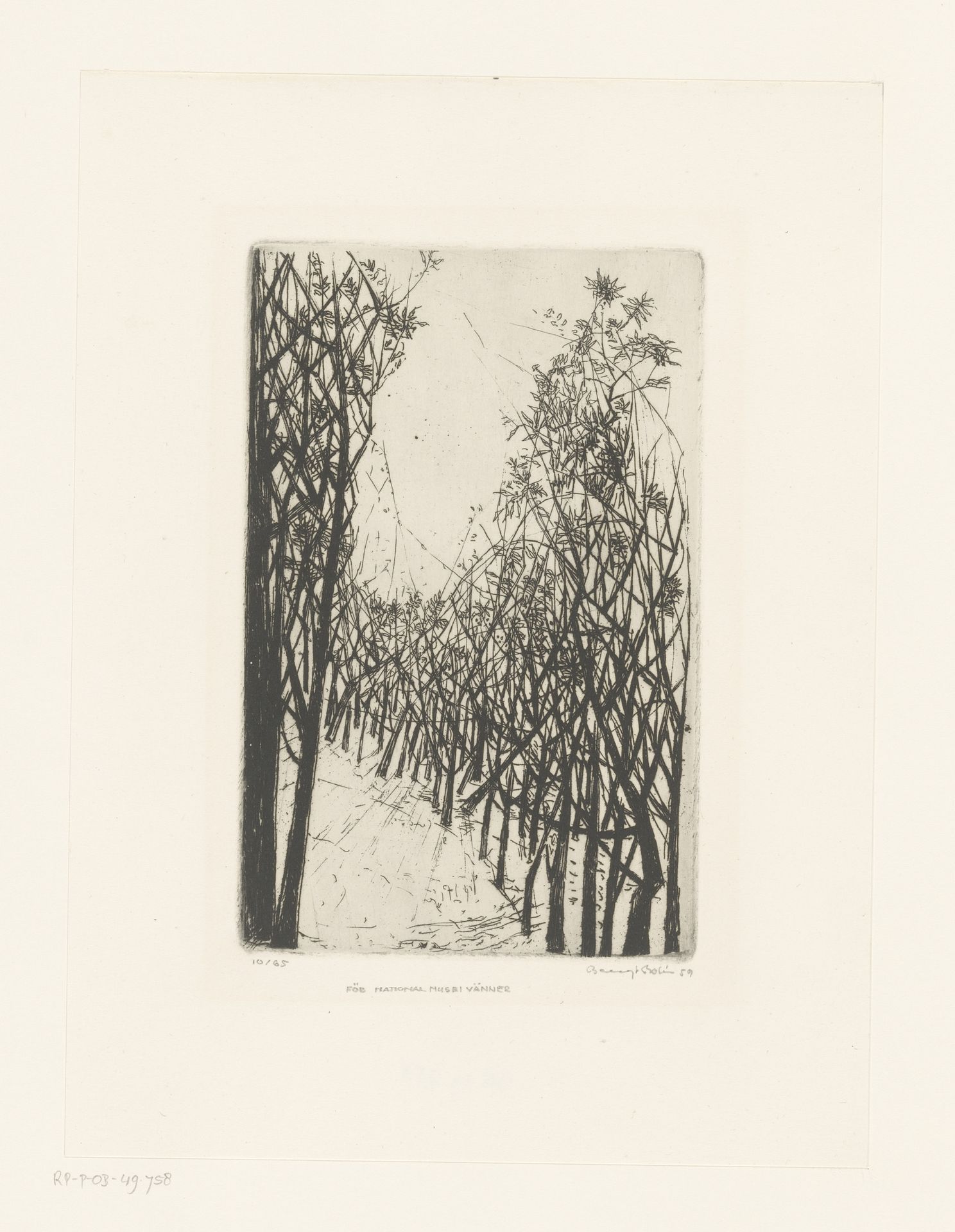
Curator: Let's dive into "Kale boomtakken," or "Bare Tree Branches," an etching created by Bengt Bolin in 1959. Editor: What an intricate print. I am really struck by how Bolin created this sense of depth and the barrenness, it is somber, with so many delicate lines. As a historian, what strikes you most about this work? Curator: Considering the post-war period, and Bolin’s identity as a Swedish artist, this print embodies a certain Scandinavian sensibility. The landscape as a motif became heavily politicized, carrying notions of national identity. We might ask, does Bolin engage in that romanticism or perhaps offer a critique through its starkness? How do the 'bare branches' resonate in a society rebuilding itself? Editor: So, the print might be commenting on a specific moment in time? Curator: Exactly! How does the medium of printmaking itself contribute to this dialogue? Etchings allowed for wider distribution. What statement might Bolin be making by creating a potentially democratic artwork depicting a very specific landscape? Who would be the consumers? Editor: That’s a perspective I hadn't considered! I was focusing on the art and design, now it brings into focus a wide variety of sociopolitical concerns and artistic expression and choices. Curator: Yes, thinking about accessibility is vital, especially when viewing art with seemingly simple imagery. Editor: It makes me see that it’s more than just an image of bare trees. I am now much more aware of the print and of what messages were being sent. Thanks for your insights!