About this artwork
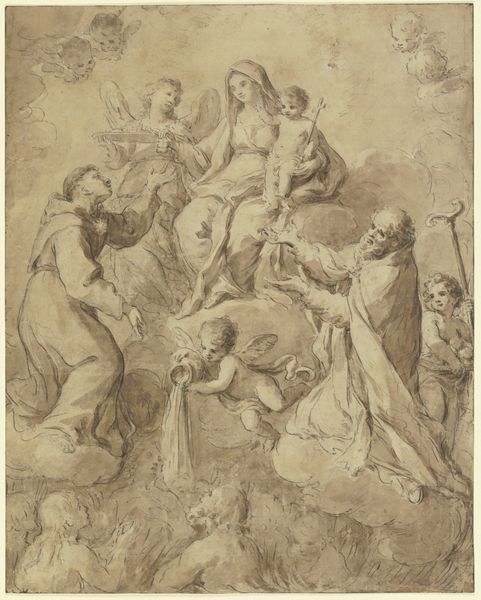
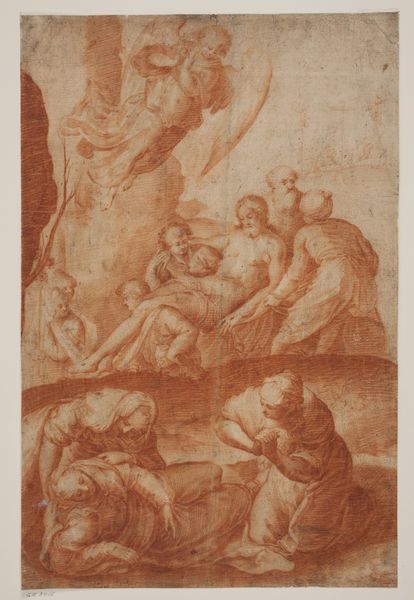
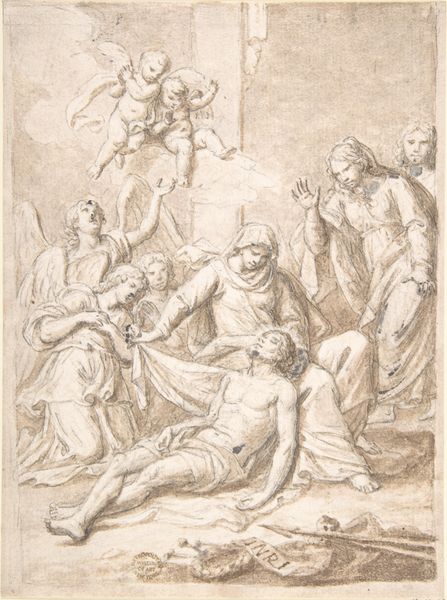
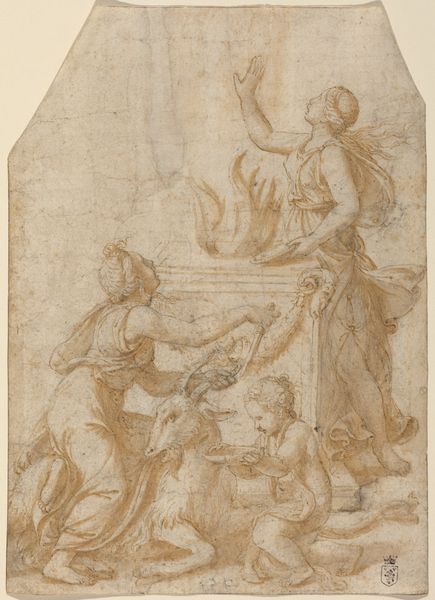
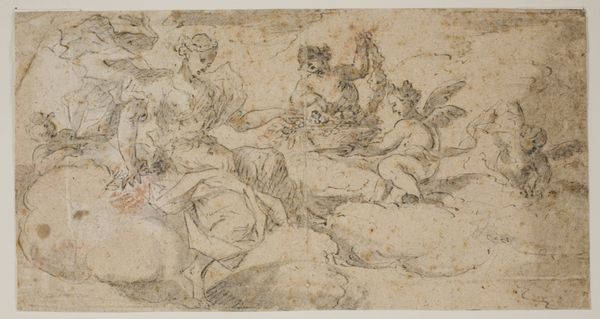
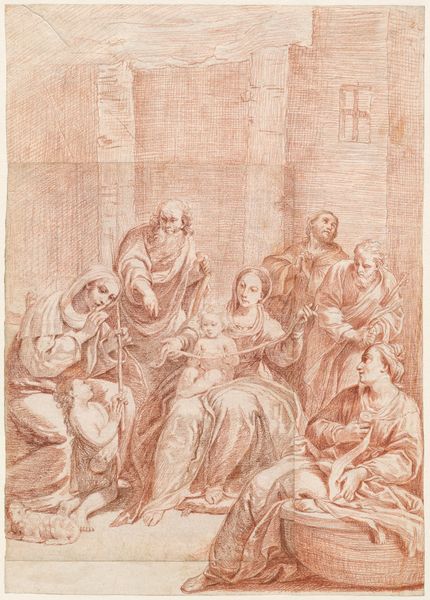
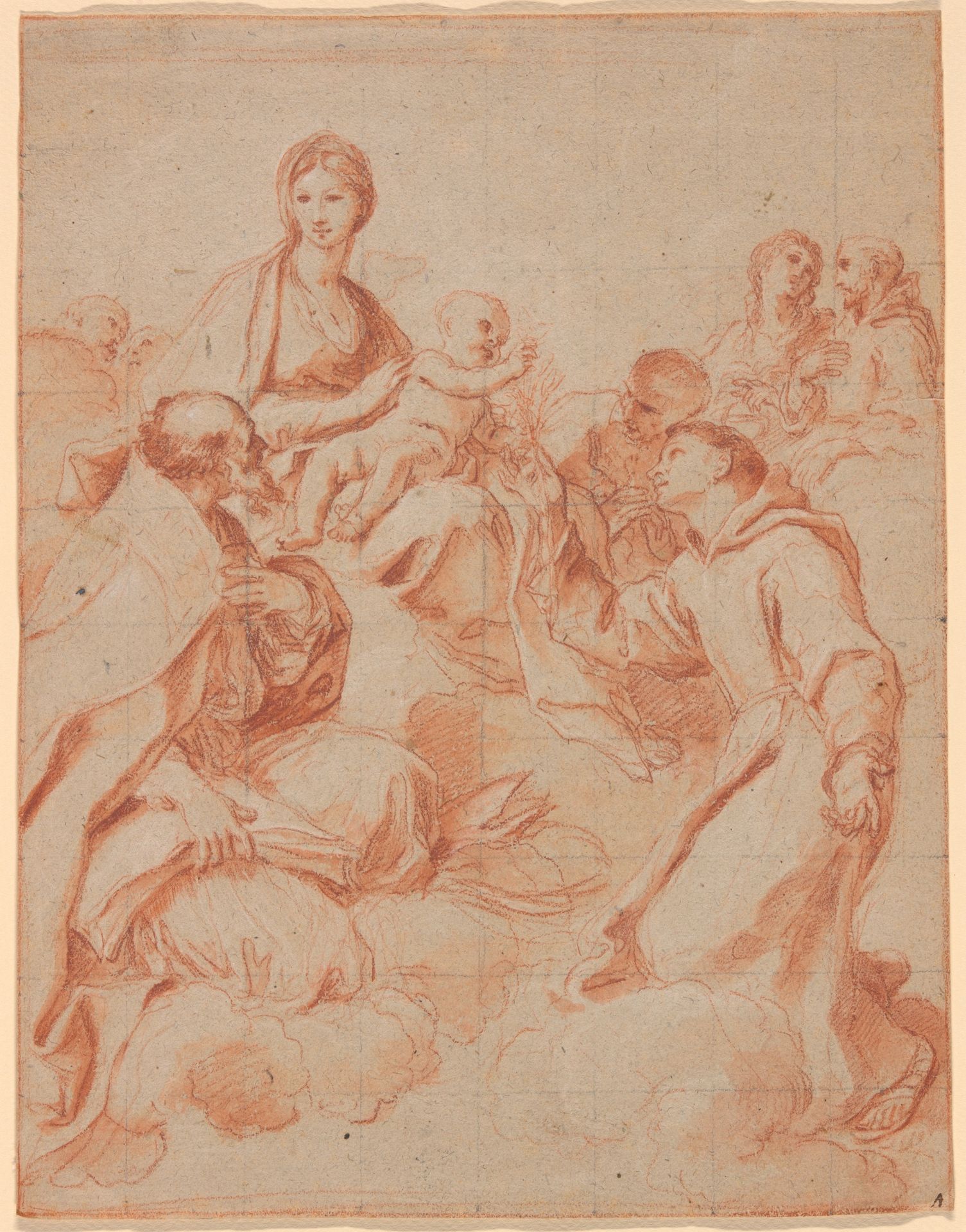
Andrea Sacchi made this red chalk drawing, The Virgin and Child with Saint Anthony of Padua Handing a Lily to the Child, sometime in the 17th century. Red chalk wasn't exactly an everyday material, but it was far from precious. It was a readily available, relatively inexpensive medium for sketching and planning. The lines created with red chalk are soft and warm, providing a suppleness to the figures. You can almost feel the weight of the bodies, the folds of the drapery, the soft skin of the infant. The grid marks, visible beneath the drawing, tell us a lot about the making process. Sacchi likely used this grid to transfer the design onto a larger canvas. It’s a method for scaling up an image, more like an industrial process than a singular artistic creation. Ultimately, understanding the materials and techniques used by Sacchi gives us insight into the economic and social context in which he worked, reminding us that even the most revered works of art are the product of labor and production.
The Virgin and Child with Saint Anthony of Padua Handing a Lily to the Child
n.d.


Artwork details
- Medium
- drawing, print, paper, pencil, chalk
- Dimensions
- 315 × 243 mm
- Location
- The Art Institute of Chicago
- Copyright
- Public Domain
Tags
Comments
Share your thoughts
About this artwork
Andrea Sacchi made this red chalk drawing, The Virgin and Child with Saint Anthony of Padua Handing a Lily to the Child, sometime in the 17th century. Red chalk wasn't exactly an everyday material, but it was far from precious. It was a readily available, relatively inexpensive medium for sketching and planning. The lines created with red chalk are soft and warm, providing a suppleness to the figures. You can almost feel the weight of the bodies, the folds of the drapery, the soft skin of the infant. The grid marks, visible beneath the drawing, tell us a lot about the making process. Sacchi likely used this grid to transfer the design onto a larger canvas. It’s a method for scaling up an image, more like an industrial process than a singular artistic creation. Ultimately, understanding the materials and techniques used by Sacchi gives us insight into the economic and social context in which he worked, reminding us that even the most revered works of art are the product of labor and production.
Comments
Share your thoughts