drawing, print, engraving
#
portrait
#
drawing
# print
#
engraving
#
realism
Dimensions: height 162 mm, width 111 mm
Copyright: Rijks Museum: Open Domain
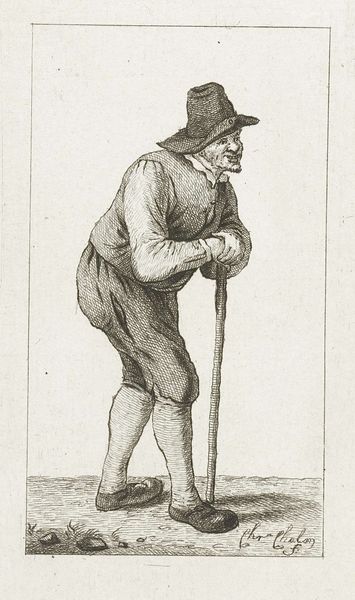
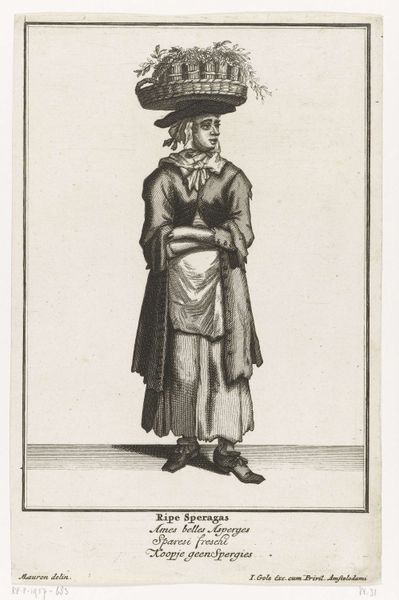
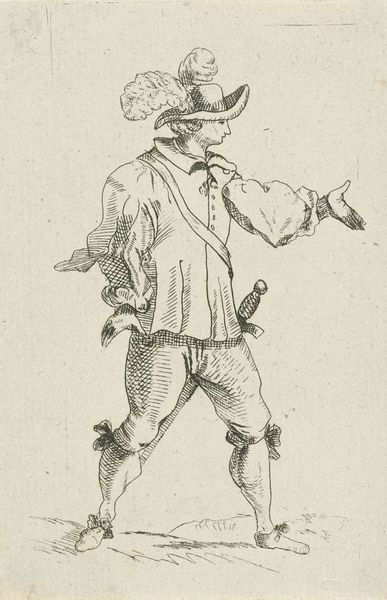
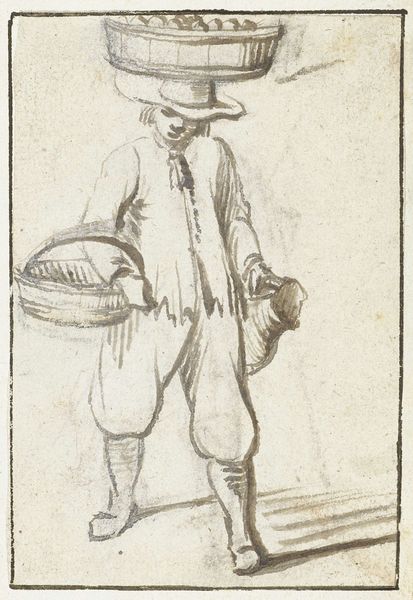
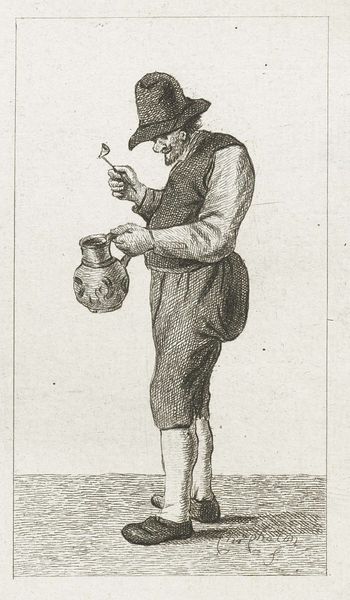
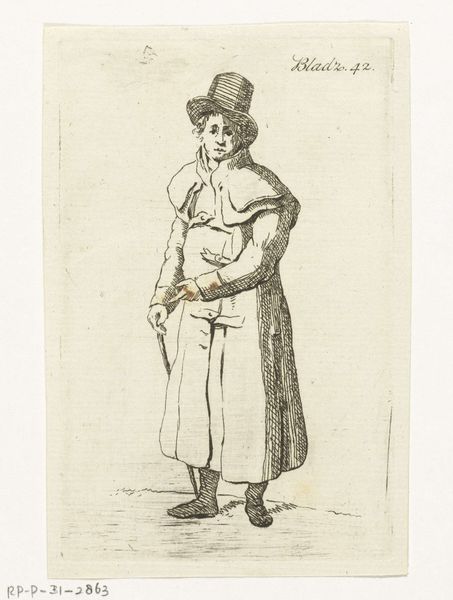
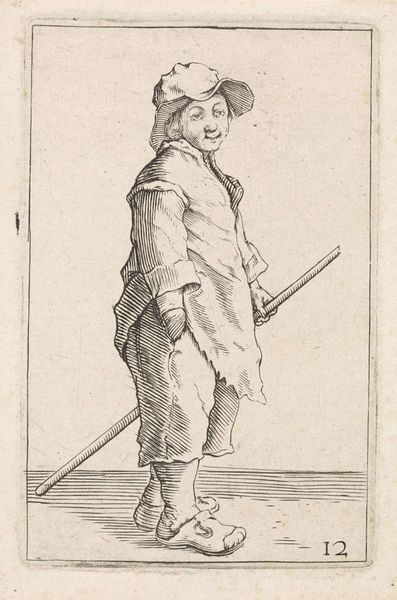
Curator: Take a look at "Man in lange jas" a print made sometime between 1785 and 1855, attributed to Pieter Kikkert. The piece uses engraving and drawing techniques. What's your initial response? Editor: Striking use of line! There’s a rough, almost caricatured feel to the figure that suggests this isn't about idealized beauty, but perhaps more about depicting social realities. The textures created through engraving are captivating. Curator: Indeed! And notice how the man's posture and clothing—that long coat and unusual hat—speak to a certain social class, or perhaps even a profession. It could represent a figure from the Dutch Golden Age being remembered, and maybe even slightly satirized. Editor: The level of detail certainly gives us a glimpse into the fashions and maybe the societal norms of the time. You can see the weight of the cloth, the cut of the jacket; it all tells a story of production and material culture. And the lines feel so raw; what kind of labor went into the engraving, what does this aesthetic choice signal? Curator: Right. Beyond the individual, the print could be commenting on larger societal structures. Think about the symbols embedded within the image: clothing as a signifier of status, posture conveying authority or the lack thereof. It also could express psychological symbolism of defiance given how asymmetrical the man looks. Editor: Absolutely, and that connection to history can be easily overlooked when focusing on aesthetic interpretation. But by looking closely at these material components we get a much richer picture. Curator: The cultural memory tied to specific items, or even garments, makes you rethink everything, doesn't it? This single image suddenly holds a multitude of narratives. Editor: Exactly. Considering the context and means of its creation really highlights this print’s multifaceted appeal and historical importance.
Comments
No comments
Be the first to comment and join the conversation on the ultimate creative platform.
 Collect
 React
React Comment
More like this