1902
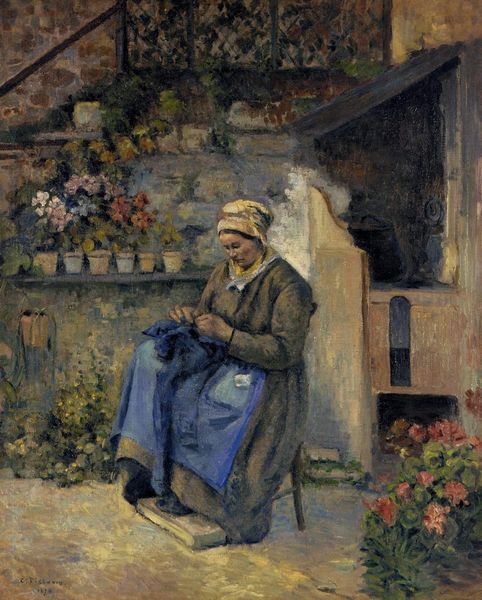
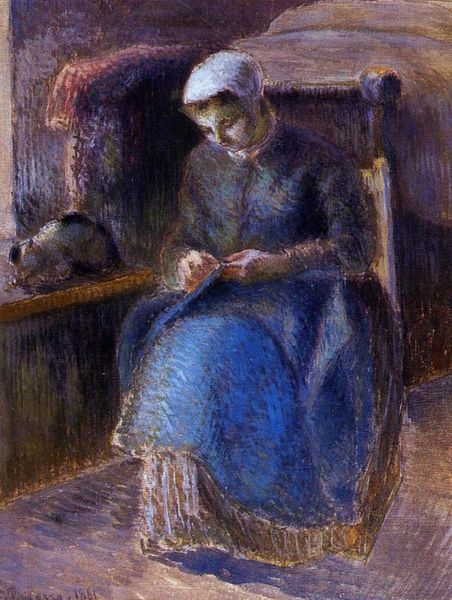
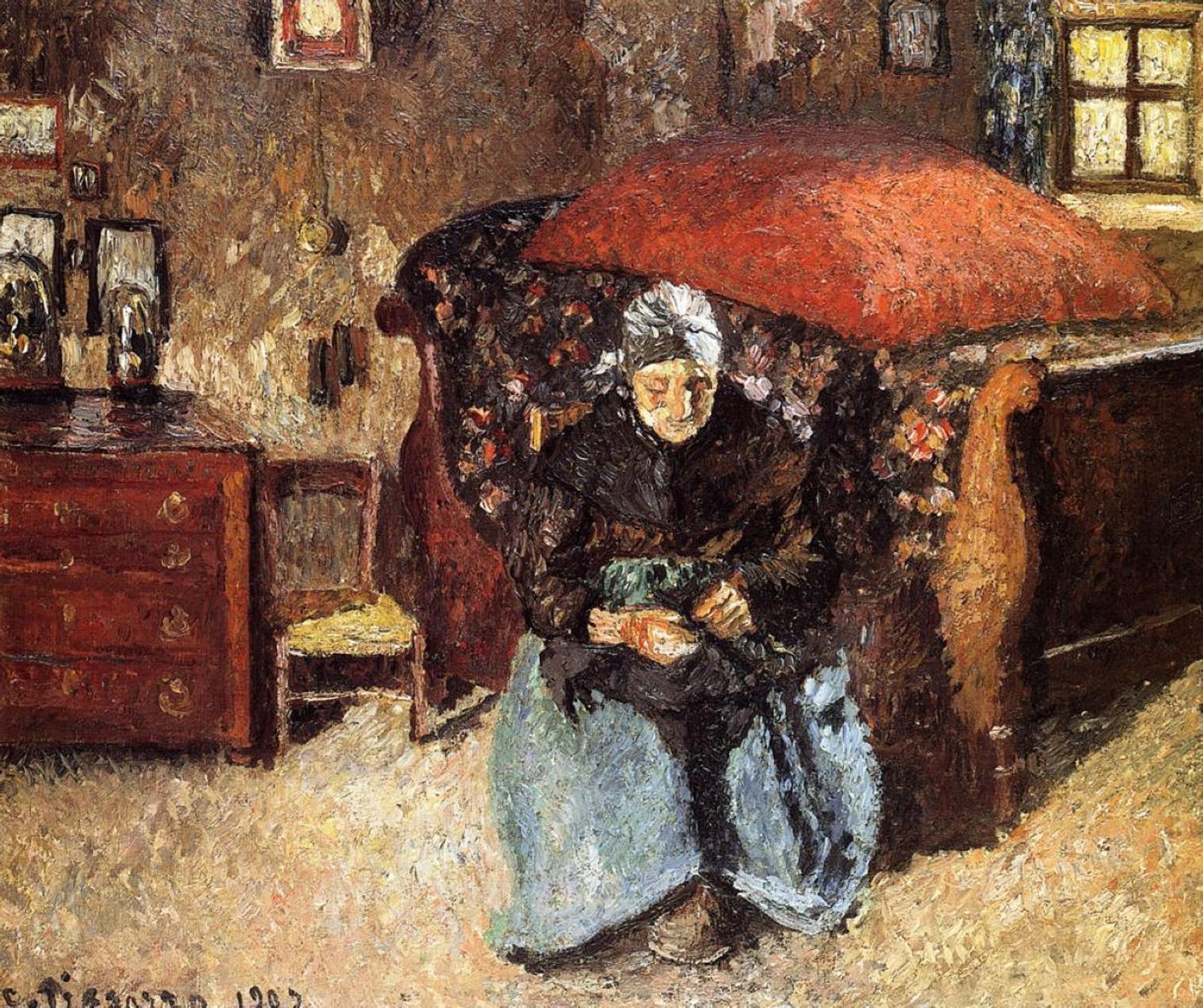
Elderly Woman Mending Old Clothes, Moret

Camille Pissarro
1830 - 1903Location
Private CollectionListen to curator's interpretation
Curatorial notes
Editor: This is "Elderly Woman Mending Old Clothes, Moret," an oil painting by Camille Pissarro from 1902. The thick brushstrokes create a scene that feels both intimate and a bit melancholic. What symbolic weight do you find in the portrayal of this woman and her task? Curator: The act of mending is heavy with symbolism, isn't it? It speaks to resilience, to making do, and preserving what's valuable in the face of wear and tear, whether it’s fabric or a life. In this intimate interior, lit with a soft, domestic glow, consider what "mending" might culturally signify beyond its literal meaning. Do you feel a sense of quiet strength in her posture? Editor: I do. It’s not a grand, heroic strength, but a quiet, persistent one. It reminds me of images of the archetypal "wise woman." Is Pissarro referencing that at all, intentionally or not? Curator: Possibly. Think of the etymology of "spinster" – women literally spinning thread, but also figuratively spinning narratives, holding knowledge. Mending, like spinning, could be seen as an act of maintaining cultural memory and continuity, repairing not just cloth but also the social fabric. Look at the muted palette – does that, in itself, convey a sense of tradition? Editor: Absolutely. The earth tones feel timeless. This makes me think about the value we place on "newness" versus the wisdom in repair and reuse. Thank you! I see so much more in this scene now. Curator: And I'm left pondering the unsung narratives woven into these simple acts of everyday life. Food for thought indeed.