c. 1807
Plate


Listen to curator's interpretation
Curatorial notes
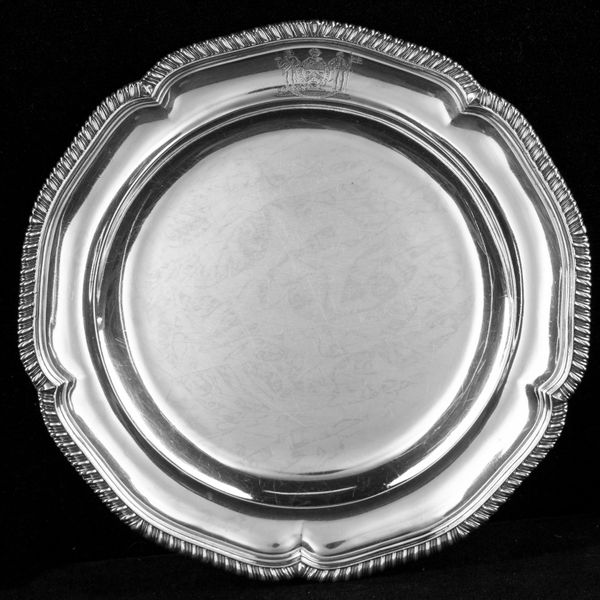
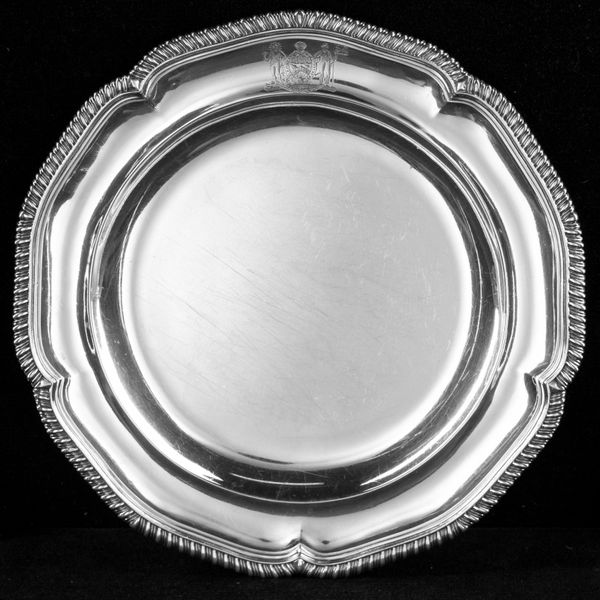
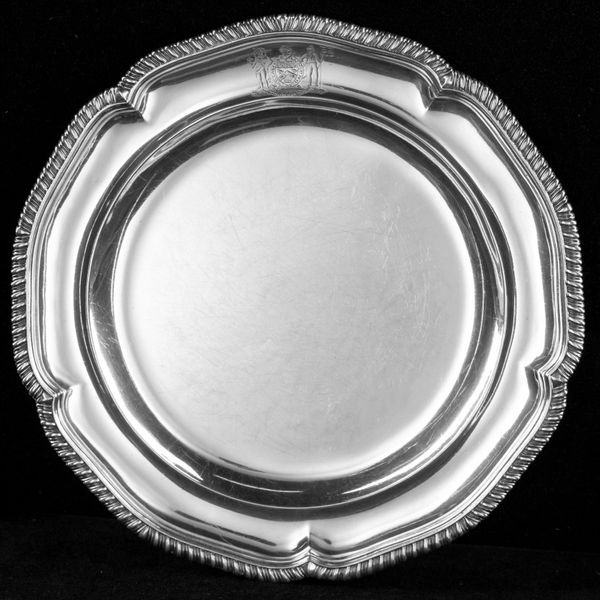
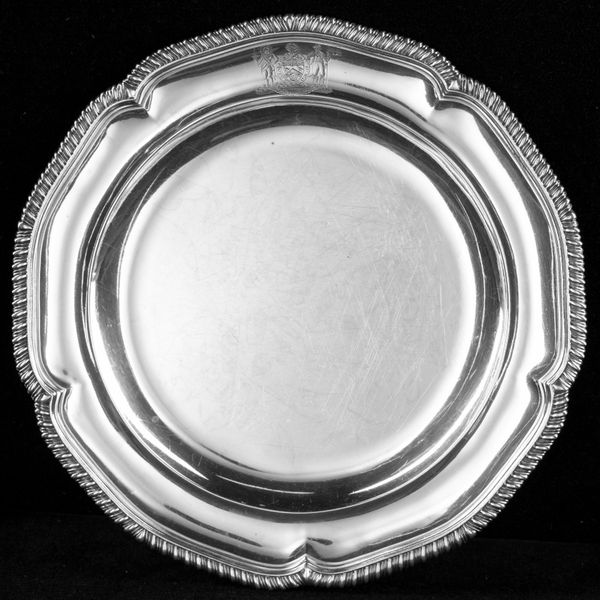
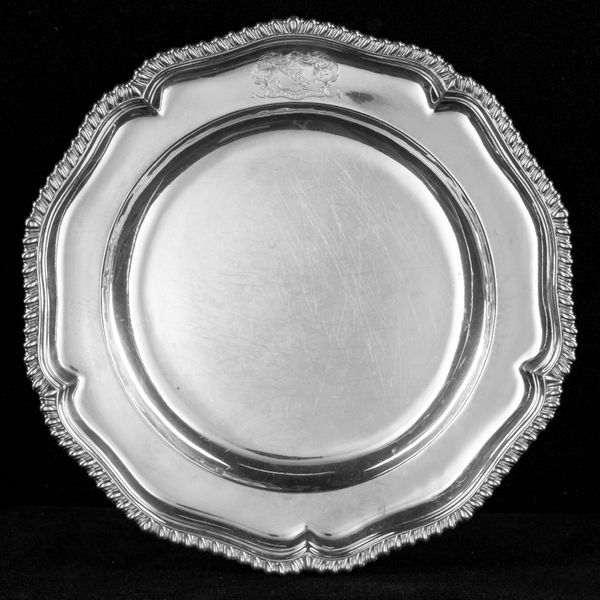
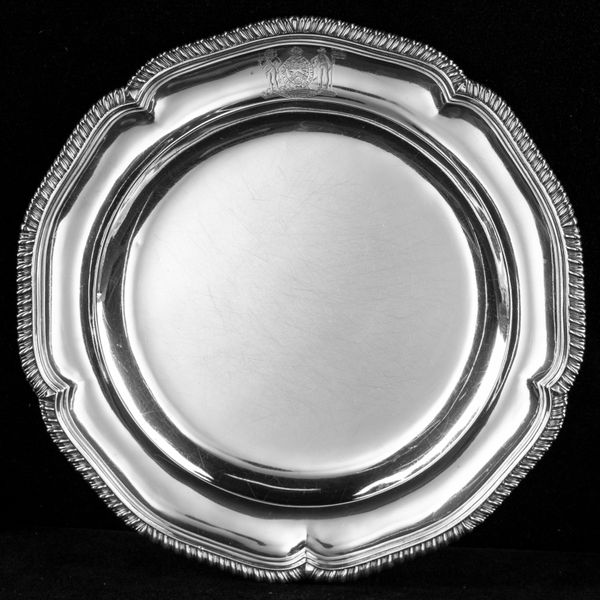
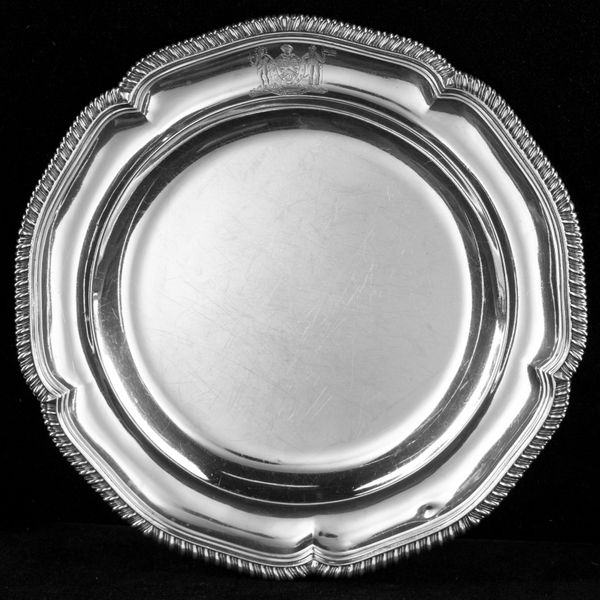
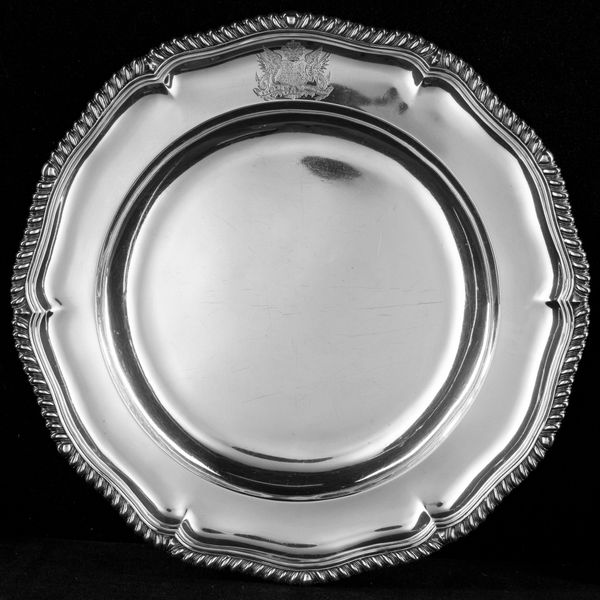
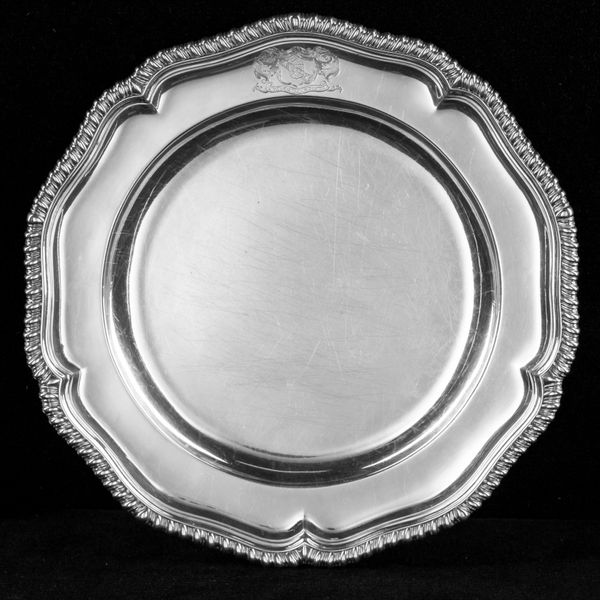
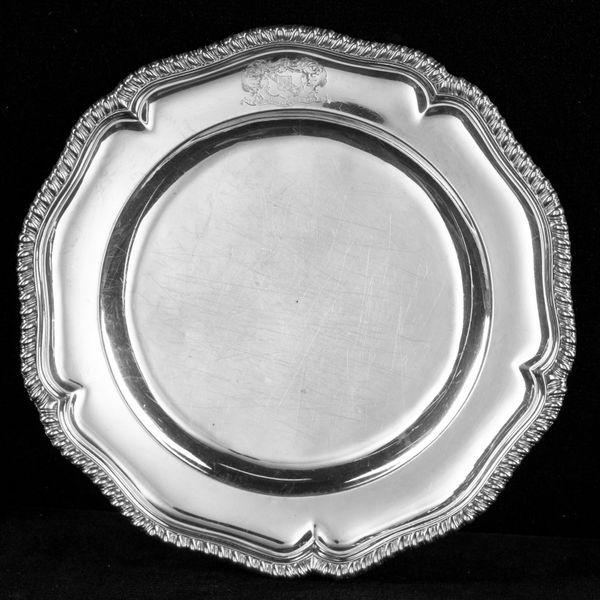
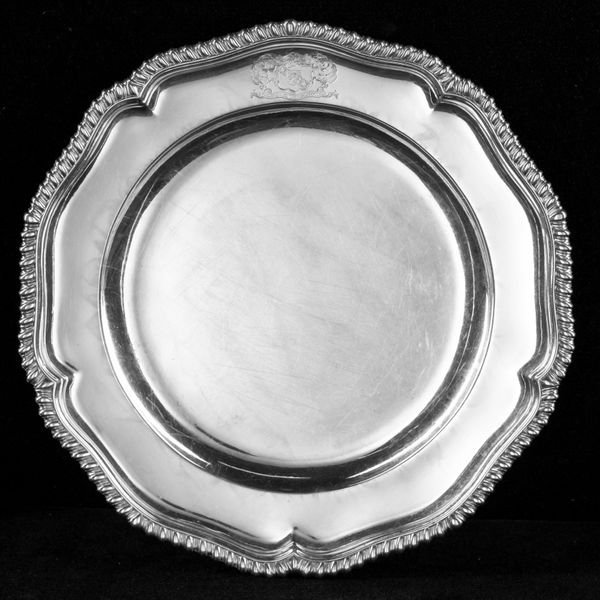
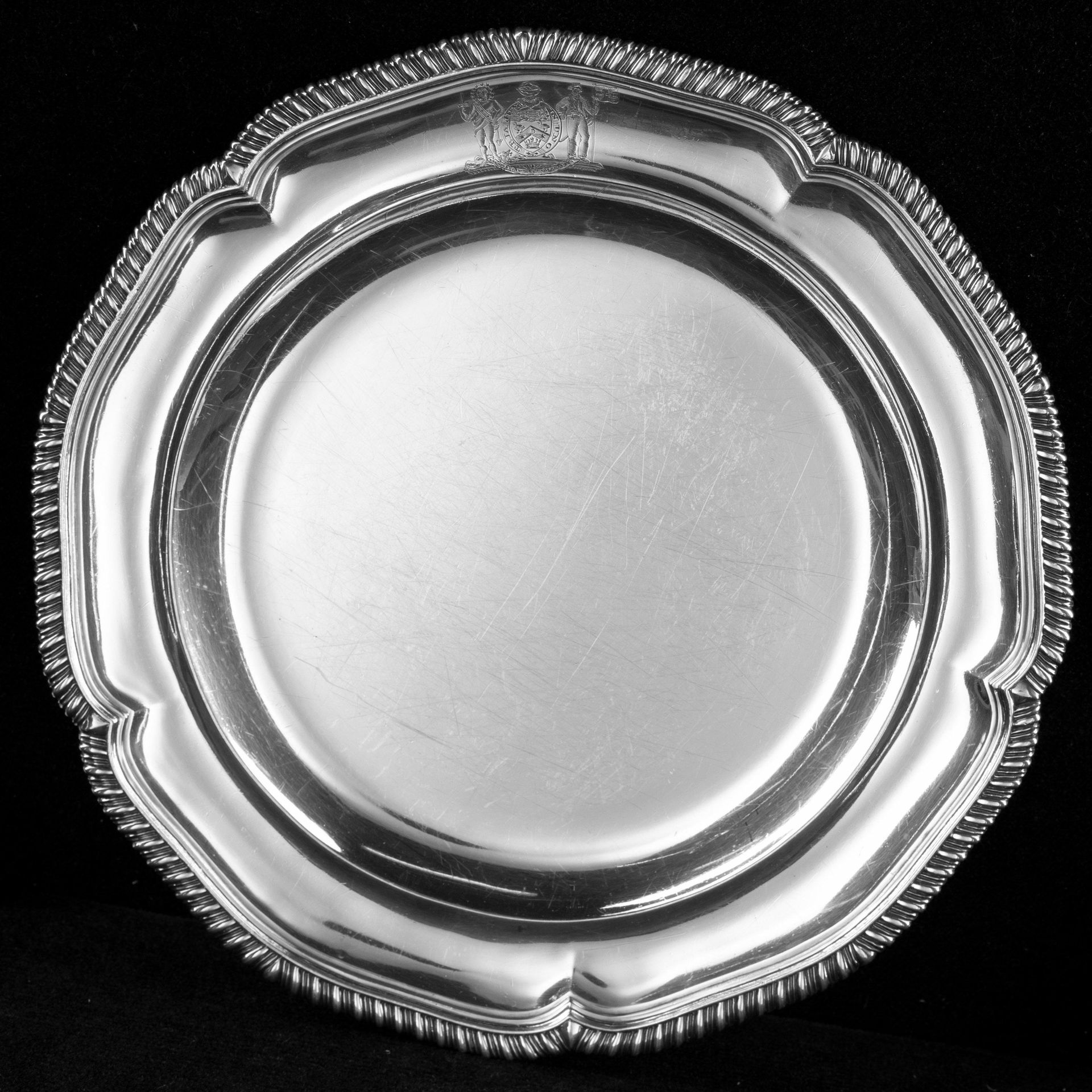
Editor: This is a silver plate, dating from around 1807. It's English, and the reflections are mesmerizing! The design seems almost austere. What strikes you most about its construction? Curator: Observe the interplay between the circular form and the slightly scalloped edge, punctuated by that repeating beaded motif. This creates a rhythm, a visual pulse that activates the otherwise static surface. Consider also how the light interacts with the highly polished silver, reflecting and refracting in ways that sculpt the plate. Editor: It does give it a unique form; it’s very simple. So, you're saying it's less about function and more about the visual experience? Curator: Precisely. Its aesthetic appeal arises from the carefully calibrated balance of forms, textures, and reflective qualities. Notice the subtle asymmetry introduced by what appears to be a crest or emblem near the top. What does this detail contribute to the overall composition? Editor: Good point. That area is very intricate in comparison with the rest of the plate and that adds to the elegance. I guess without it, the surface could appear too plain, or even clinical? Curator: It provides a focal point, grounding the composition and adding visual interest. Furthermore, consider how the silver’s reflective quality engages the viewer, incorporating their surroundings into the artwork. It is a dialogue, not just an object. Editor: I see it differently now! Focusing on how the elements come together creates a whole new way of seeing a relatively mundane object. Curator: Indeed. By carefully examining form and materiality, we can appreciate how even everyday objects can become sources of aesthetic contemplation.