1532
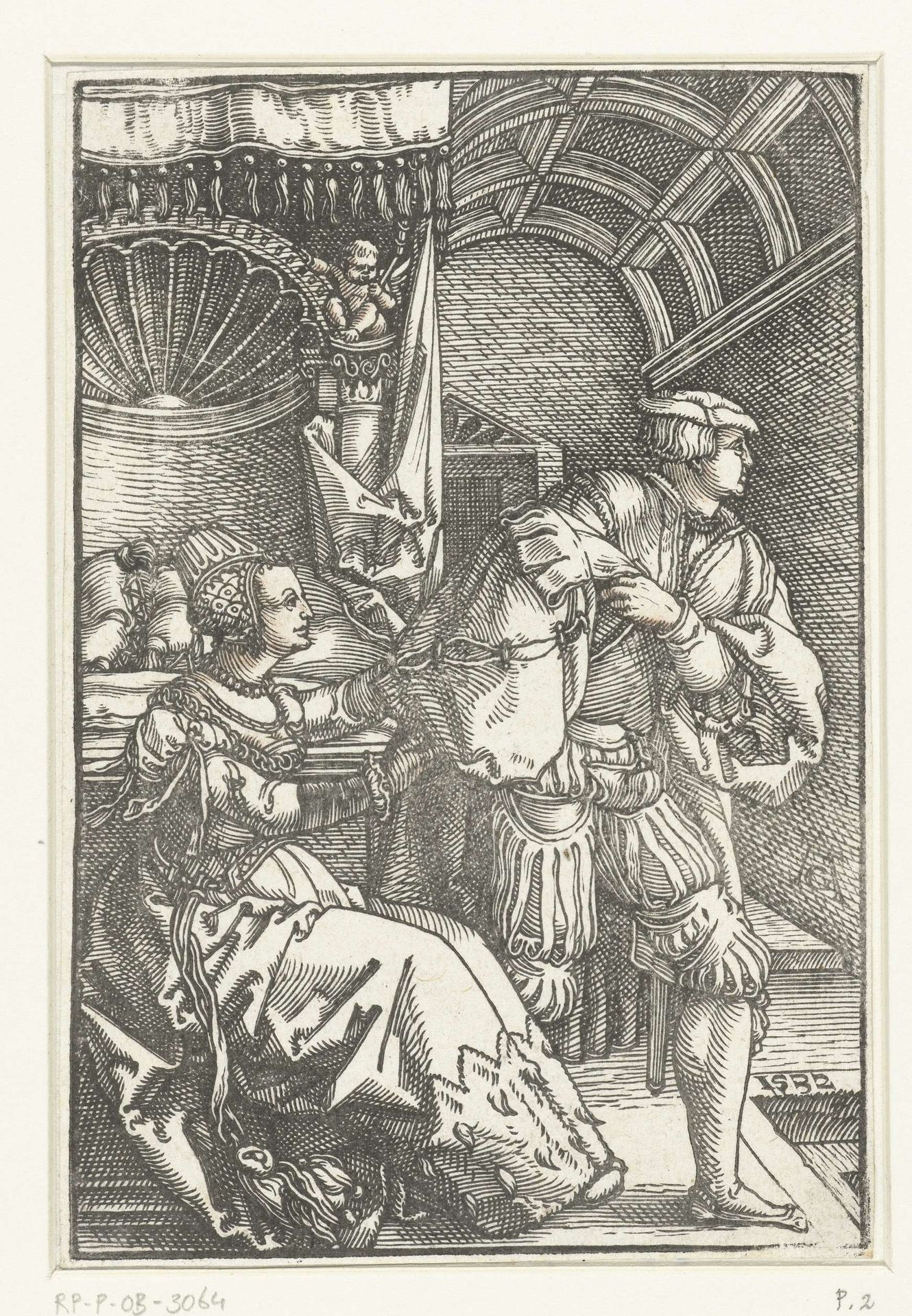
Jozef en de vrouw van Potifar

Heinrich Aldegrever
1502 - 1561Location
RijksmuseumListen to curator's interpretation
Curatorial notes
Heinrich Aldegrever created this engraving, "Joseph and Potiphar's Wife," during the Northern Renaissance. Aldegrever lived during a period of significant religious and social upheaval, including the Protestant Reformation. In this scene from the Book of Genesis, we witness a moment charged with gendered power dynamics. Potiphar's wife, a figure of privilege and authority, attempts to seduce Joseph, her husband's servant. Joseph, however, resists her advances, choosing integrity over social advancement. What is so interesting here is that the narrative has long been used to emphasize Joseph's virtue, thus conveniently obscuring the woman's agency and desire. Aldegrever’s composition invites us to consider how women's desires were often portrayed as transgressive, and how class and gender intersect to shape narratives of power and morality. The emotional intensity of the scene is palpable, isn't it? The woman’s determination versus Joseph's conflicted stance invites reflection on the personal and societal tensions inherent in such encounters.