1817
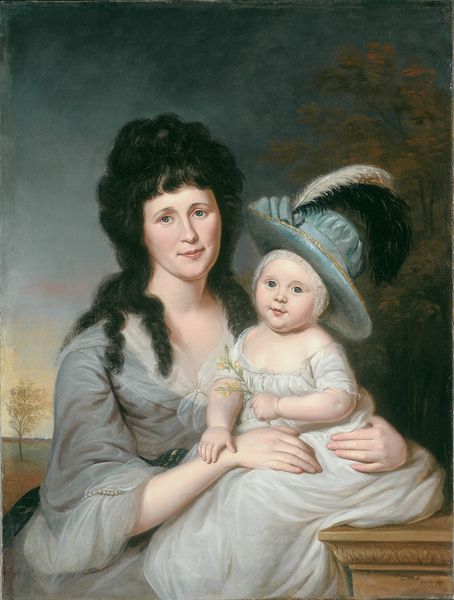
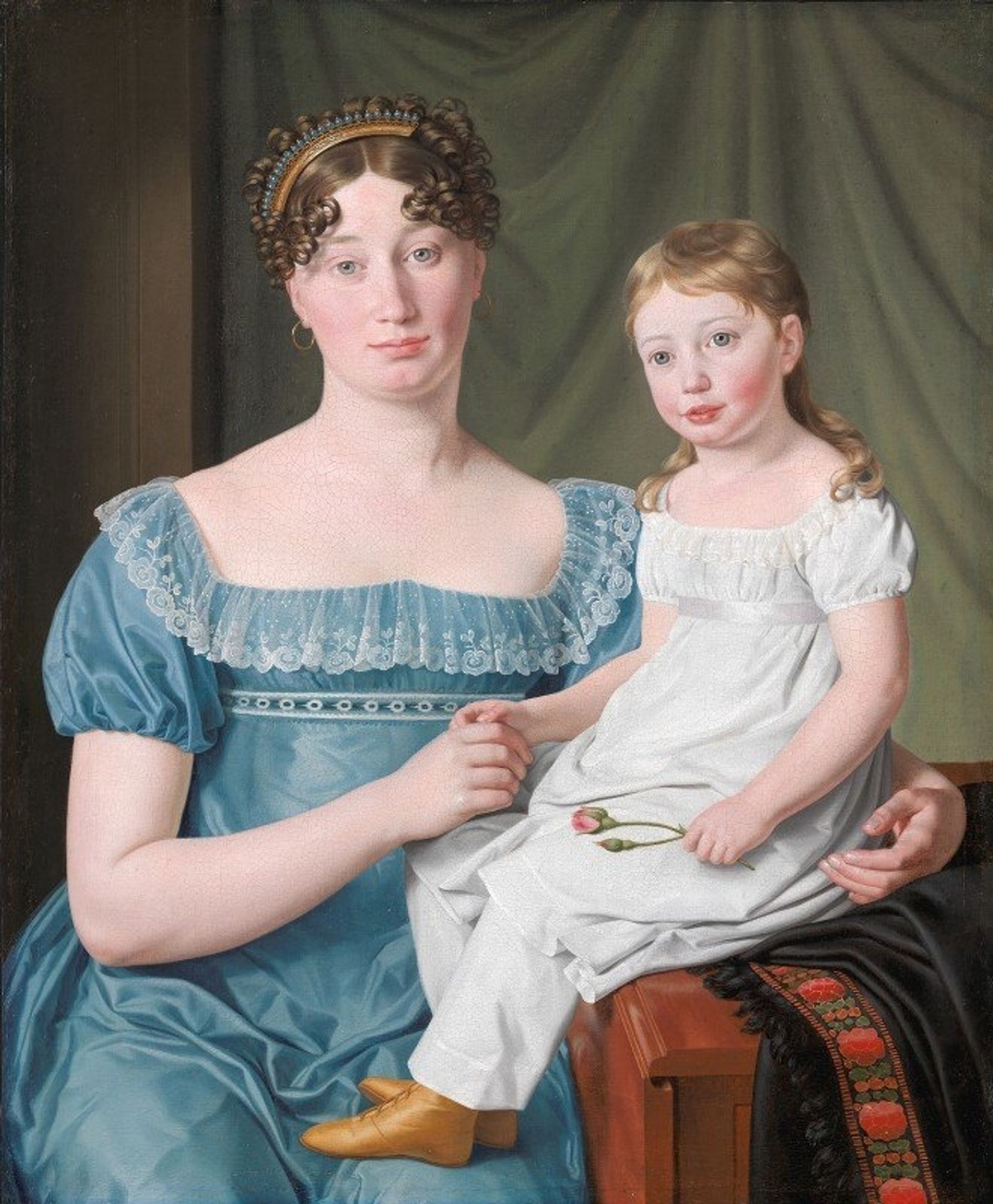
Portrait of a Noblewoman Sophie Hedvig Løvenskiold and her Three-Year-Old Daughter

Listen to curator's interpretation
Curatorial notes
Christoffer Wilhelm Eckersberg painted this portrait of a noblewoman and her daughter, sometime in the early nineteenth century, using oil on canvas. It’s a fascinating glimpse into the Danish upper class during the early 1800s. Eckersberg was a key figure in the Danish Golden Age, helping to establish the Royal Danish Academy as a center for artistic innovation. But this painting also tells a story of social status. Sophie Hedvig Løvenskiold, the mother, is portrayed with a calm assurance, her elegant blue dress and delicate jewelry signaling her elite position. Her daughter, in a simple white dress, holds a rose, a symbol of innocence and budding womanhood. Eckersberg’s work reflects the values of his time, where social class and family lineage were central to identity. By looking into archives and genealogical records we can learn more about the family and the institutional forces at play, enriching our understanding of the social and cultural context of this artwork.