About this artwork
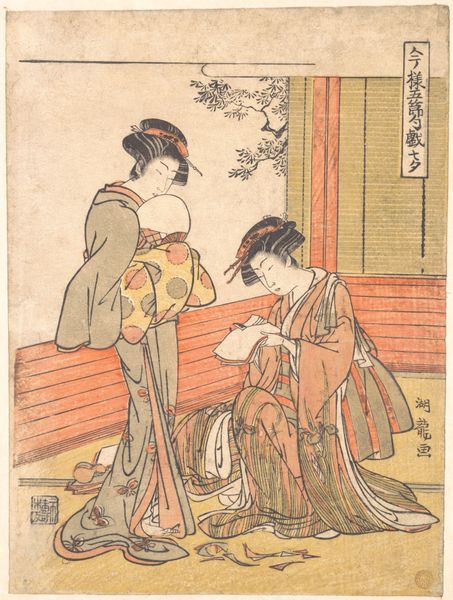
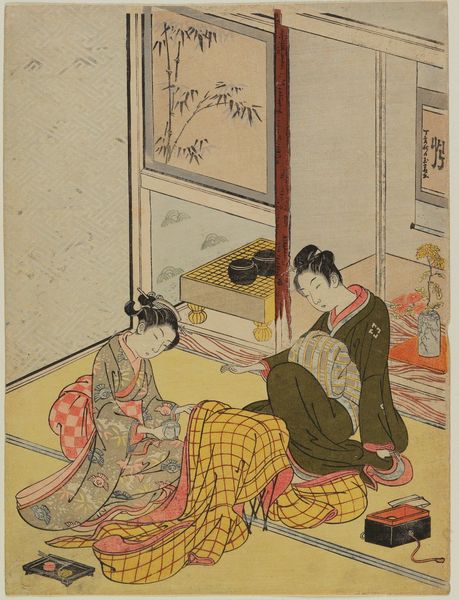
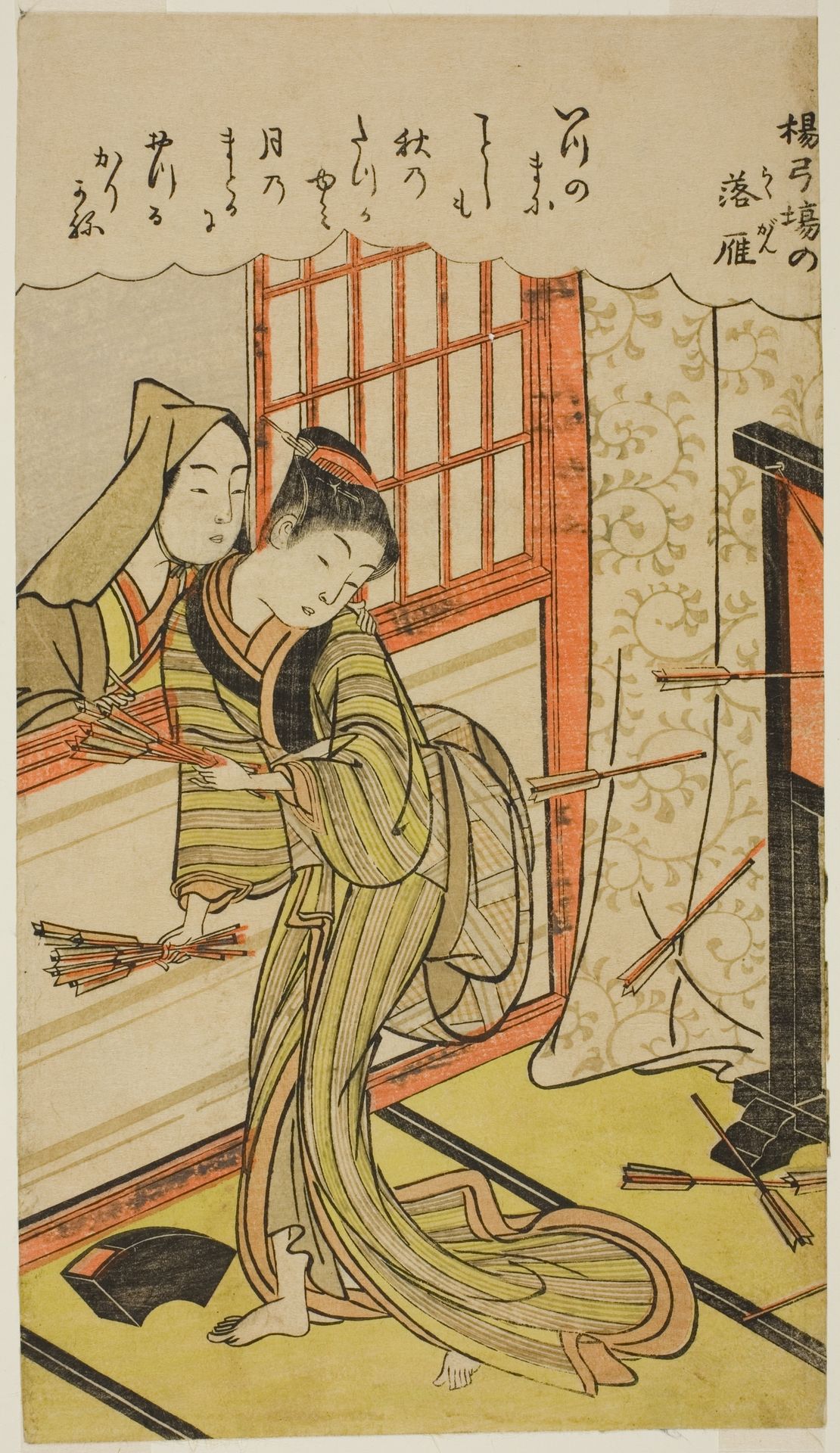
Kitao Shigemasa created this woodblock print, “Descending Geese in the Archery Gallery,” at an unknown date. The composition is dominated by vertical lines, from the window lattices to the figures' garments, creating a sense of ordered space. The light color palette evokes a feeling of tranquility, contrasting with the dynamic scene of stray arrows scattered on the floor. Consider how Shigemasa uses the formal structure to engage with social and artistic conventions of his time. The print destabilizes traditional gender roles by depicting women in an archery gallery, a space typically associated with men. Arrows function here as visual signs that challenge fixed notions of propriety. Notice the intricate patterns on the wall that serve not just as background, but to further disrupt any singular, fixed meaning, allowing for a richer interpretation of the scene. Shigemasa uses these formal qualities to invite a continuous re-evaluation of cultural norms, even today.
Descending Geese in the Archery Gallery (Yokyuba no Rakugan) c. 1770s


Artwork details
- Medium
- print, woodblock-print
- Dimensions
- 10 1/4 × 5 3/4 in.
- Location
- The Art Institute of Chicago
- Copyright
- Public Domain
Tags
ink painting
asian-art
ukiyo-e
japan
figuration
linocut print
woodblock-print
genre-painting
Comments
No comments
About this artwork
Kitao Shigemasa created this woodblock print, “Descending Geese in the Archery Gallery,” at an unknown date. The composition is dominated by vertical lines, from the window lattices to the figures' garments, creating a sense of ordered space. The light color palette evokes a feeling of tranquility, contrasting with the dynamic scene of stray arrows scattered on the floor. Consider how Shigemasa uses the formal structure to engage with social and artistic conventions of his time. The print destabilizes traditional gender roles by depicting women in an archery gallery, a space typically associated with men. Arrows function here as visual signs that challenge fixed notions of propriety. Notice the intricate patterns on the wall that serve not just as background, but to further disrupt any singular, fixed meaning, allowing for a richer interpretation of the scene. Shigemasa uses these formal qualities to invite a continuous re-evaluation of cultural norms, even today.
Comments
No comments