engraving
#
portrait
#
old engraving style
#
history-painting
#
engraving
#
calligraphy
Dimensions: height 218 mm, width 320 mm
Copyright: Rijks Museum: Open Domain
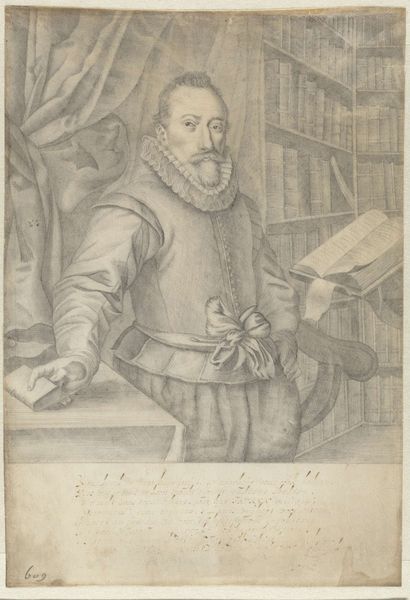
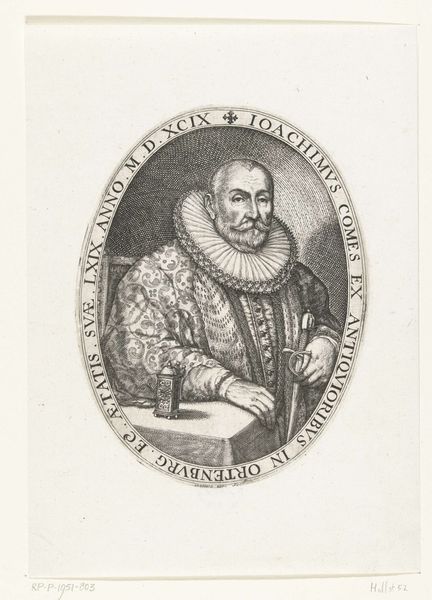
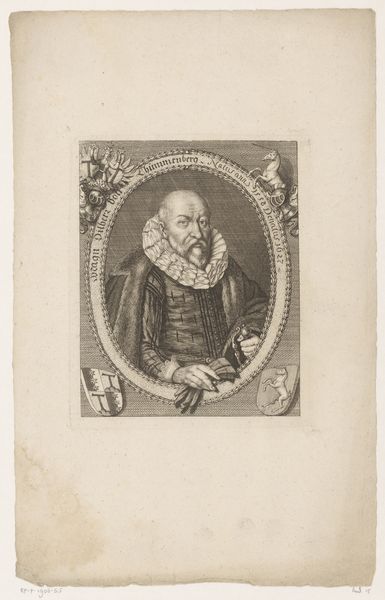
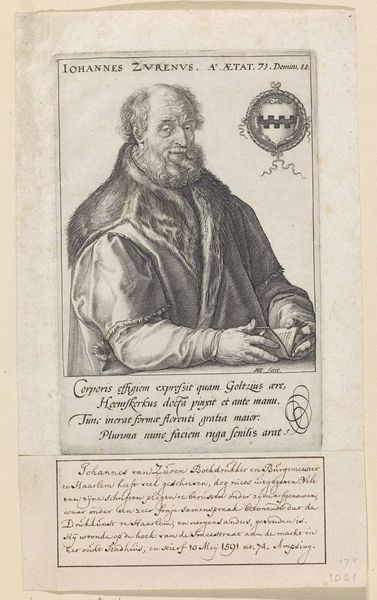
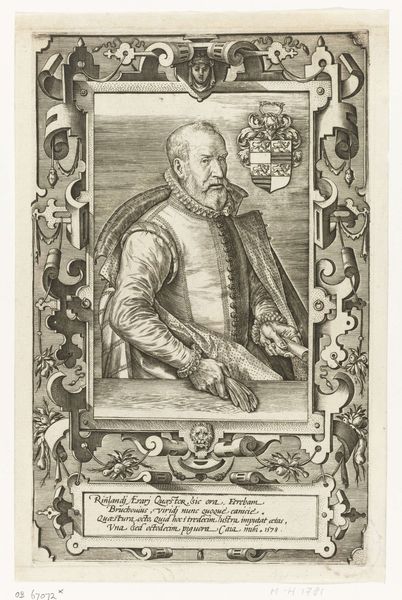
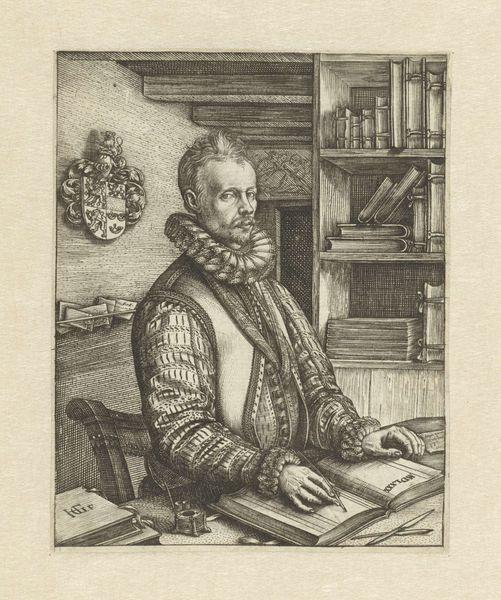
Curator: François Schillemans’ "Portrait of David Roelands at the Age of 44," created in 1616, showcases a prominent figure amidst intricate engraving work. It resides here at the Rijksmuseum, a testament to the skills of early 17th-century printmaking. Editor: My first impression is the contrast! There’s this very formal, almost stoic portrait, but then this wildly ornate calligraphy bursting all around him. It's almost playful, definitely draws the eye in several different directions. Curator: Indeed. The calligraphic flourishes served a dual purpose. While embellishing the portrait, the delicate pen strokes are simultaneously a statement about Roelands' social position. He seems like the literate member of a privileged class who possesses both learning and artistry. Editor: Exactly! And thinking about who had access to literacy and education back then shapes my perspective. Was it simply a celebration of his accomplishments, or was it intentionally exclusionary, showcasing knowledge as a privilege? The visual language really pushes forward questions about societal hierarchies. Curator: I'd say the calligraphy functions within established norms, actually. Lettering manuals and ornate script was valued during that period and are considered essential features of good typography, reflecting a broader humanist fascination with classical learning and aesthetic skill. His active pose, caught in the act of writing, reinforces this point about active literacy. Editor: That context helps! Thinking about these engraved portraits, circulating and reproduced, forming and informing public perception is helpful. Who gets remembered? And how are they remembered? We have access to this 17th-century person only via a depiction approved and propagated by particular socio-economic interests, not some "objective" or democratic act of artistic creation. Curator: Well put! These prints contributed to Roelands’ social presence in a very specific way. It reflects what and who Dutch society regarded. Editor: Absolutely. Looking at art in this light adds such depth. Curator: It offers ways to discuss the social structures, systems, and politics. A very compelling way to observe art.
Comments
No comments
Be the first to comment and join the conversation on the ultimate creative platform.
 Collect
 React
React Comment
More like this