

Possibly 1689 - 1746
Putti bij een monument voor landgoed Clingendael

Laurens Scherm
1671 - 1702Location
RijksmuseumListen to curator's interpretation
Curatorial notes
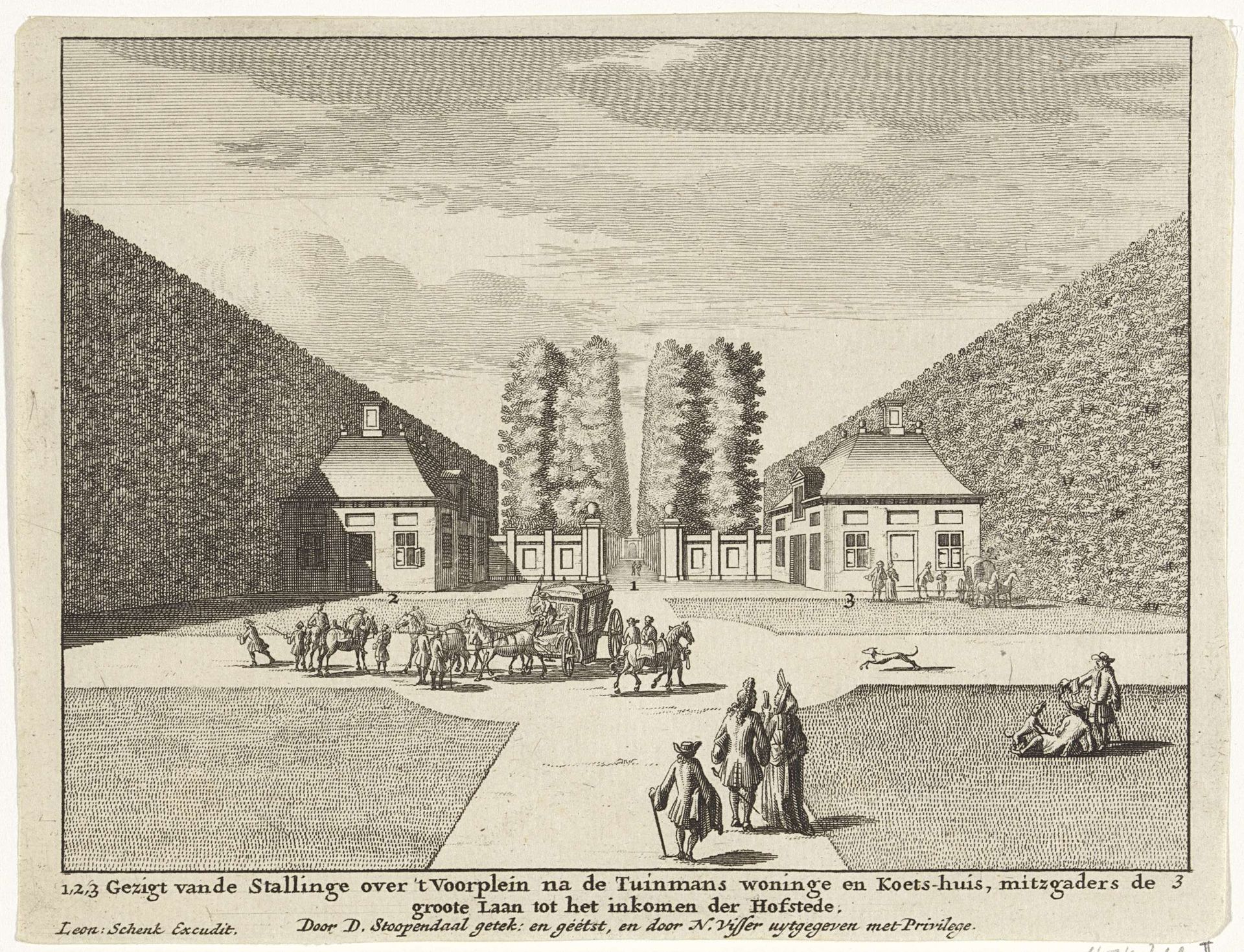
Editor: This engraving, "Putti bij een monument voor landgoed Clingendael," made sometime between 1689 and 1746, depicts what seems to be a very formal garden. It's quite precise, almost architectural in its detail. What catches your eye when you look at it? Curator: The precision is key. While seemingly documenting a space, it subtly reinforces societal hierarchies and control over nature. Think about the rigid geometry of the gardens – a complete contrast to untamed wilderness. What does this suggest about the relationship between the landowners and the environment, or perhaps even the working class who maintained it? Editor: It feels like the wealthy landowners are showcasing their power and wealth by taming nature itself. I hadn't really considered the people who would have maintained such manicured grounds! Curator: Exactly! These manicured spaces often depended on exploited labor. Also, consider the monument within the garden. Who gets memorialized and why? How does this visibility contribute to the construction of historical narratives? Are there voices being excluded from the image? Editor: That's a good point. It's so focused on the monument and perfect landscape, that the lives of the workers are absent. They were crucial to its creation. How do we ensure these untold stories get included when studying this? Curator: By questioning the dominant narrative. Researching the socio-economic conditions, and looking at how marginalized communities may have resisted these imposed structures of power is a good starting point. Even in the absence of direct representation, absences speak volumes. Editor: I never thought about landscape art holding such critical socio-political messages. Curator: It’s often where we least expect it! The artistic choices made – what is included, what is excluded, how it’s represented – these are all reflections of the values of a particular culture and era. Understanding that unlocks so much. Editor: This makes me see these seemingly simple landscapes in a totally new light. There is so much to learn from simply questioning what's right in front of you!