1963
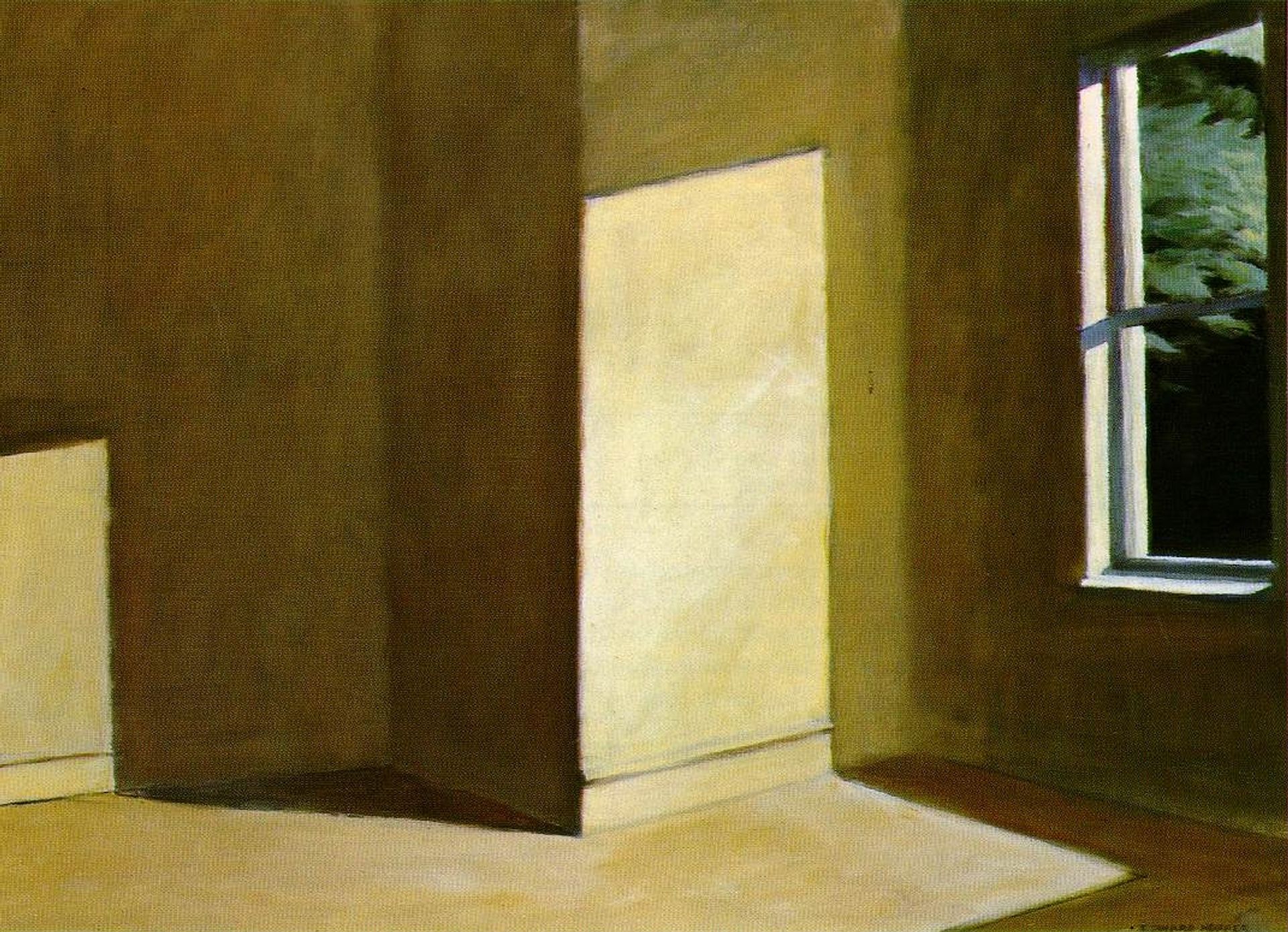
Sun in an Empty Room

Edward Hopper
1882 - 1967Location
Private CollectionListen to curator's interpretation
Curatorial notes
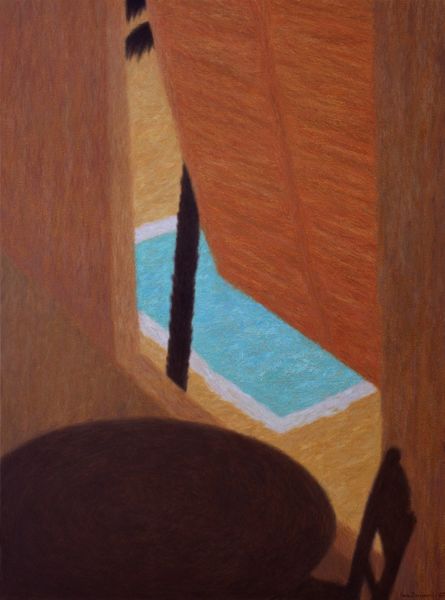
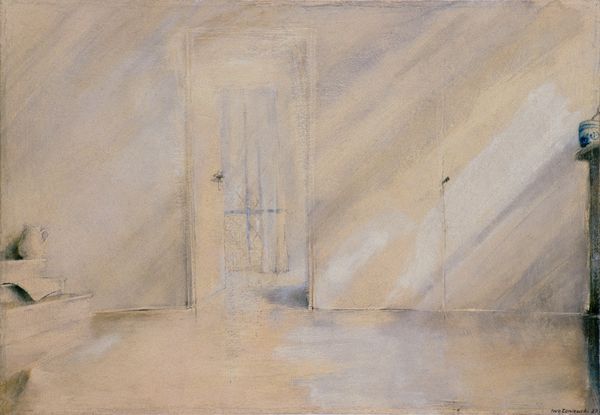
Editor: We are looking at Edward Hopper's "Sun in an Empty Room," created in 1963, using oil paint. It’s stark. The light seems almost harsh in such a bare setting. What do you see in this piece, beyond just an empty room? Curator: Well, aren't empty rooms the greatest stage for light and shadow? Hopper’s love affair with light isn't just about illuminating a space; it's about revealing something hidden within it – the melancholy of the overlooked, the beauty in the mundane. Look at the way the sun falls on the back wall; it almost feels like a spotlight on loneliness. Makes you wonder what happened in that room, or what *didn't* happen. What do you make of that shadowed corner? Editor: It feels ominous, like a secret’s being kept there, even though it’s just… shadow. It’s really making me think about perspective. The emptiness somehow creates a strong emotional space. Curator: Exactly! It's about Hopper's unique view of modernity – isolated, but with an enduring beauty. I always think there is also a bit of theater; it almost feels like a stage. Like a play is just about to begin. What "play" would you stage here? Editor: Oh, wow. Now I’m imagining a play about unspoken words and missed connections. The room itself becomes a character, bearing witness. I had just thought of an empty space before, a passive canvas for light and form, but you're making me realize it has the capacity to signify much more. Curator: Art has the power to transform our mundane view of everyday objects, right? Hopper, I think, was a master of making his audience understand what the walls in our own homes have seen, can feel and, perhaps, remember. Editor: Definitely! It’s given me a lot to think about - that everyday things are not simple things and are more alive and important than one might realize.