About this artwork
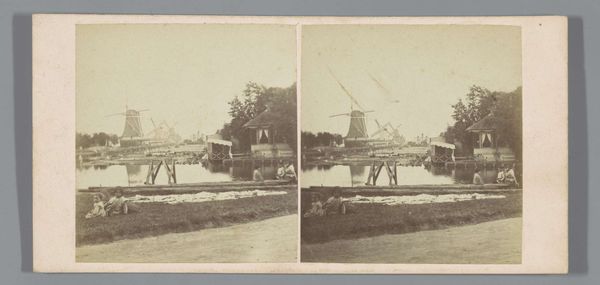
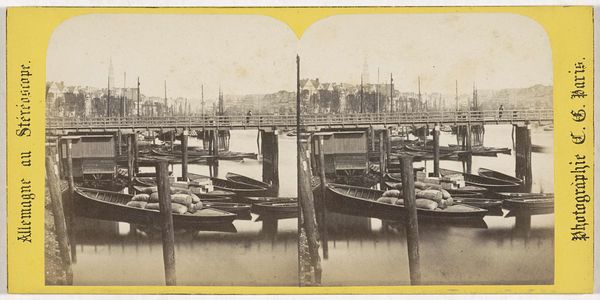
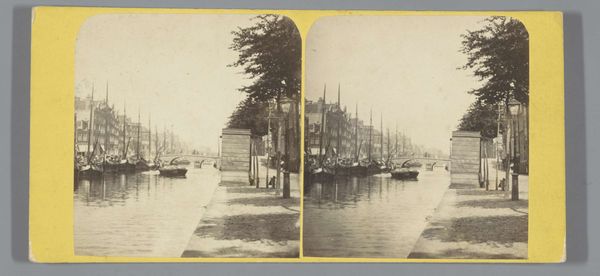
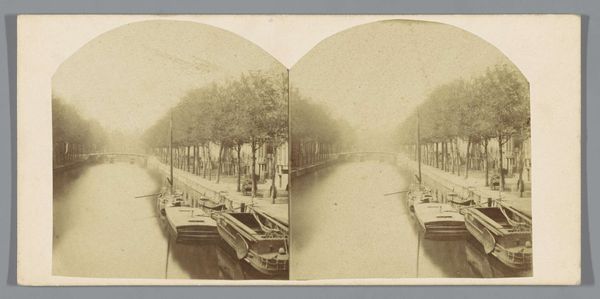
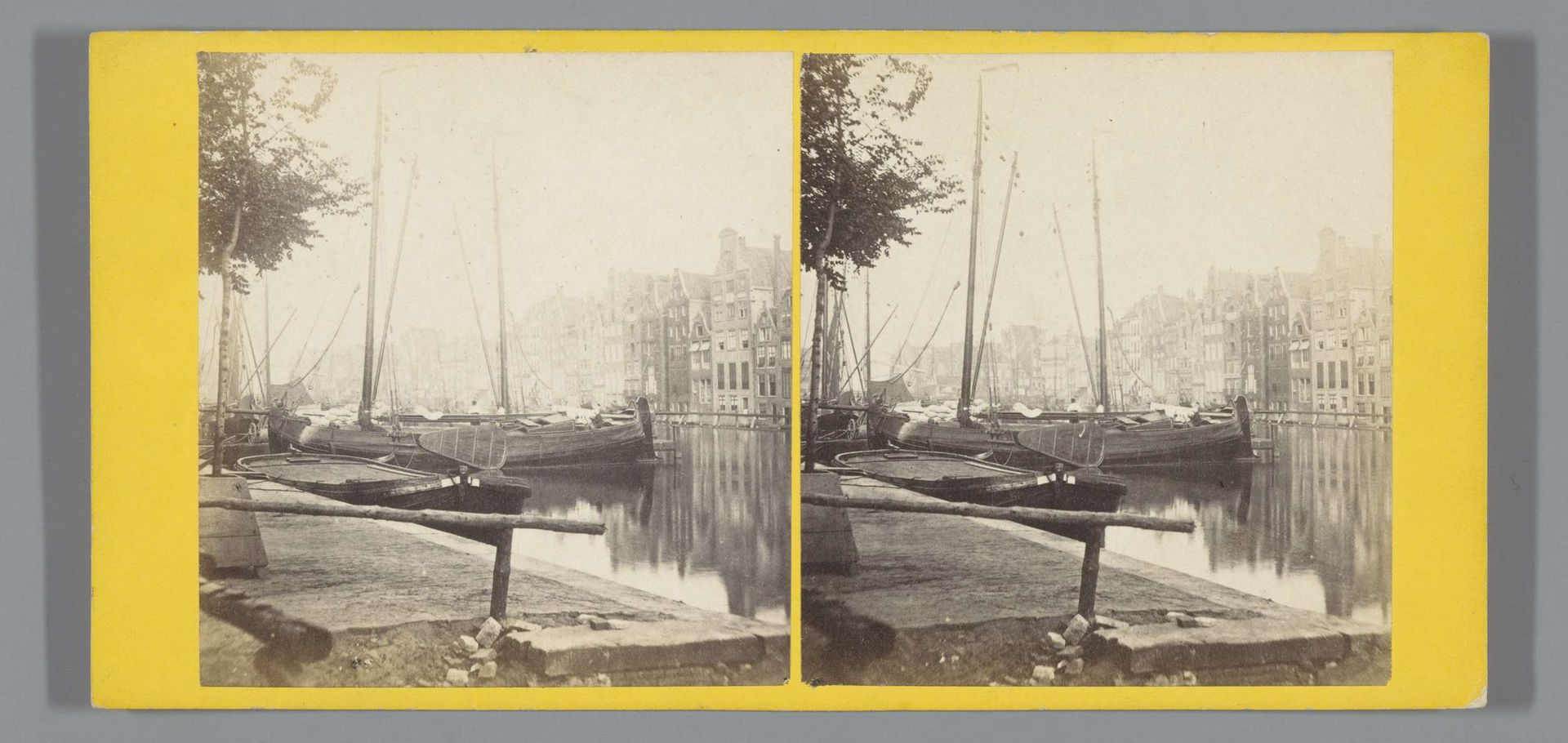
Editor: This is Pieter Oosterhuis’s photograph, *Gezicht op het Damrak in Amsterdam*, taken sometime between 1860 and 1885. It's a gelatin silver print. It has this almost dreamlike quality, because everything is so still. It also makes me think about how long ago it was taken. What strikes you when you look at it? Curator: The stillness really gets to me as well. And it’s no accident, I think! Oosterhuis seems intent on capturing a tranquil slice of Amsterdam life, right? You have these beautiful reflections of the buildings shimmering on the water, anchored by the solid presence of those boats. What do you think that balance suggests about Amsterdam at that moment in time? Editor: Maybe that the city was at a peaceful moment, growing steadily, not too turbulent. There's an interesting relationship here between this really new medium, photography, and the Dutch Golden Age style. Do you think that Oosterhuis intentionally echoed painters from centuries earlier? Curator: Absolutely. You know, Dutch Golden Age paintings weren't just about pretty pictures. They were about capturing the essence of Dutch identity – their connection to the sea, their prosperity, and their pride. And Oosterhuis, through this modern lens of photography, is re-interpreting those themes. I almost feel like he's winking at us across the decades. Doesn't that give you goosebumps? Editor: It does a little! So, it’s like he’s updating a classic story, reminding people of their history. It really makes you think about what elements of city life are worth documenting. Curator: Exactly! And isn't that precisely what art should do, after all? To capture, question, and keep the conversation alive across the ages. I love that!
Gezicht op het Damrak in Amsterdam
1860 - 1885

Pieter Oosterhuis
1816 - 1885Location
RijksmuseumArtwork details
- Medium
- photography, gelatin-silver-print
- Dimensions
- height 83 mm, width 170 mm
- Location
- Rijksmuseum
- Copyright
- Rijks Museum: Open Domain
Tags
dutch-golden-age
landscape
photography
coloured pencil
gelatin-silver-print
cityscape
realism
Comments
Be the first to share your thoughts about this work.
About this artwork
Editor: This is Pieter Oosterhuis’s photograph, *Gezicht op het Damrak in Amsterdam*, taken sometime between 1860 and 1885. It's a gelatin silver print. It has this almost dreamlike quality, because everything is so still. It also makes me think about how long ago it was taken. What strikes you when you look at it? Curator: The stillness really gets to me as well. And it’s no accident, I think! Oosterhuis seems intent on capturing a tranquil slice of Amsterdam life, right? You have these beautiful reflections of the buildings shimmering on the water, anchored by the solid presence of those boats. What do you think that balance suggests about Amsterdam at that moment in time? Editor: Maybe that the city was at a peaceful moment, growing steadily, not too turbulent. There's an interesting relationship here between this really new medium, photography, and the Dutch Golden Age style. Do you think that Oosterhuis intentionally echoed painters from centuries earlier? Curator: Absolutely. You know, Dutch Golden Age paintings weren't just about pretty pictures. They were about capturing the essence of Dutch identity – their connection to the sea, their prosperity, and their pride. And Oosterhuis, through this modern lens of photography, is re-interpreting those themes. I almost feel like he's winking at us across the decades. Doesn't that give you goosebumps? Editor: It does a little! So, it’s like he’s updating a classic story, reminding people of their history. It really makes you think about what elements of city life are worth documenting. Curator: Exactly! And isn't that precisely what art should do, after all? To capture, question, and keep the conversation alive across the ages. I love that!
Comments
Be the first to share your thoughts about this work.