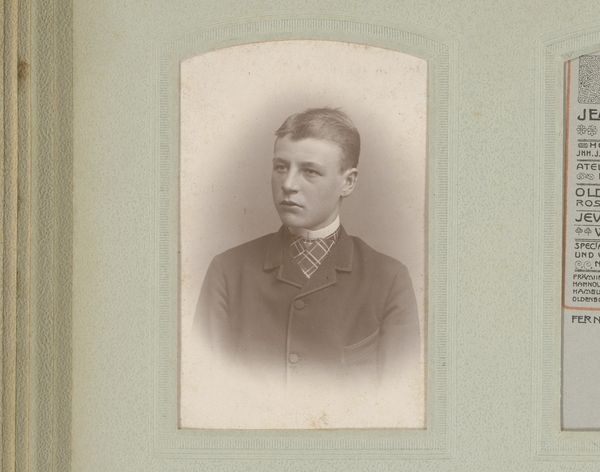
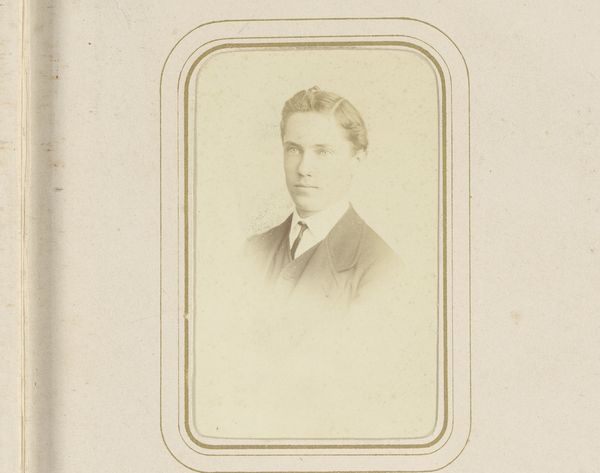
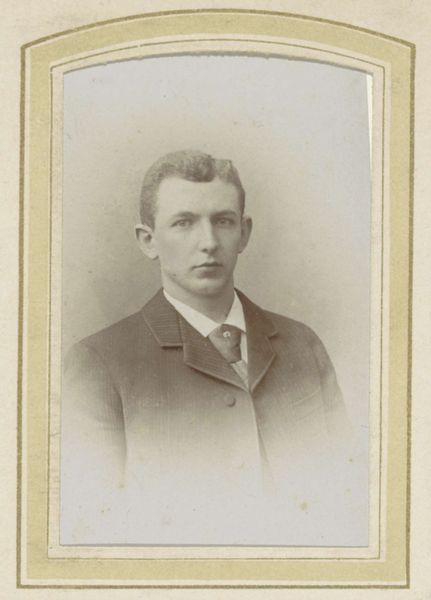
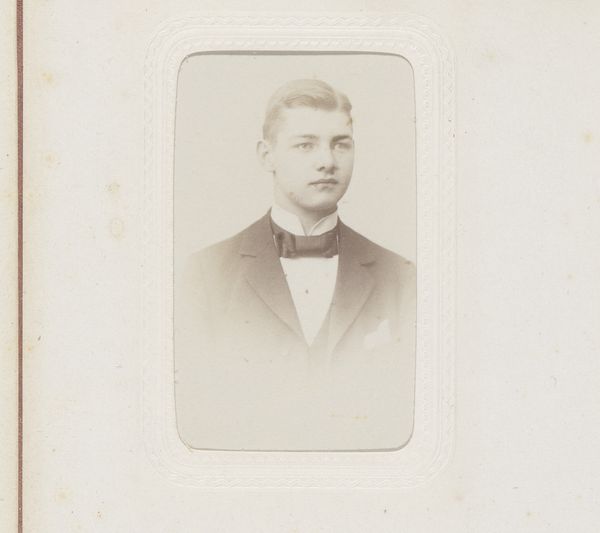
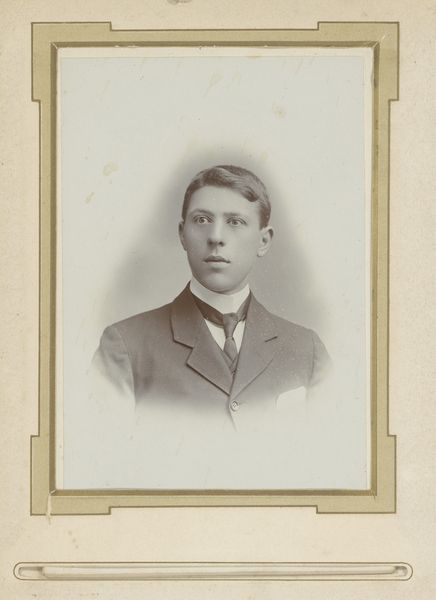
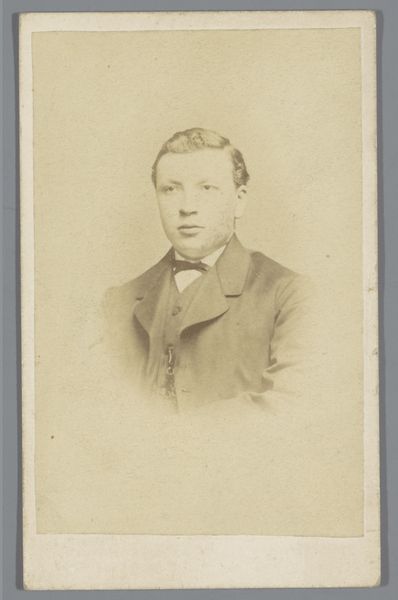
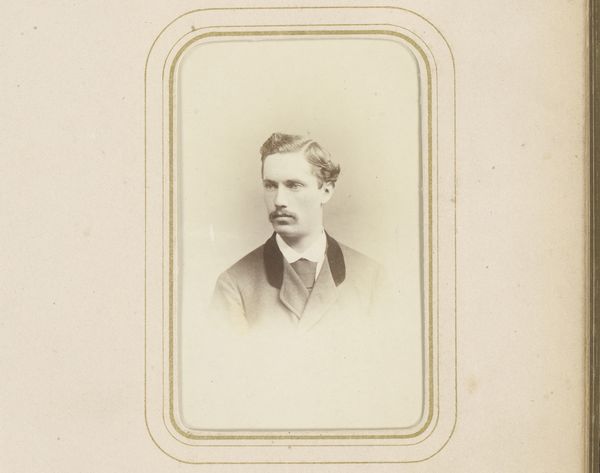
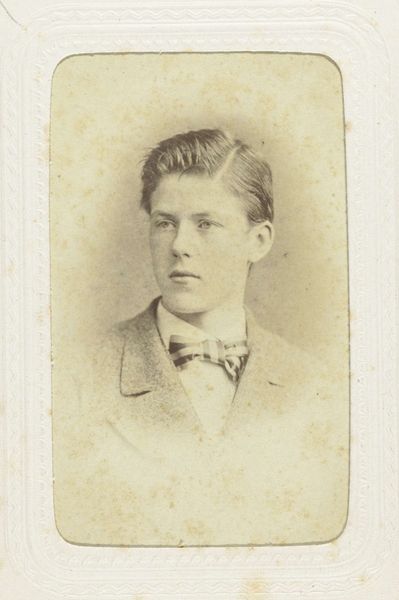
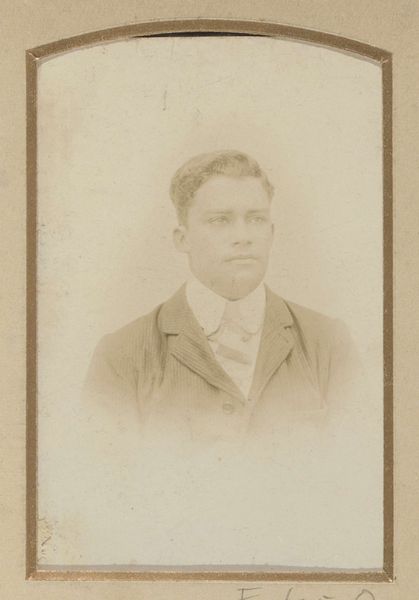
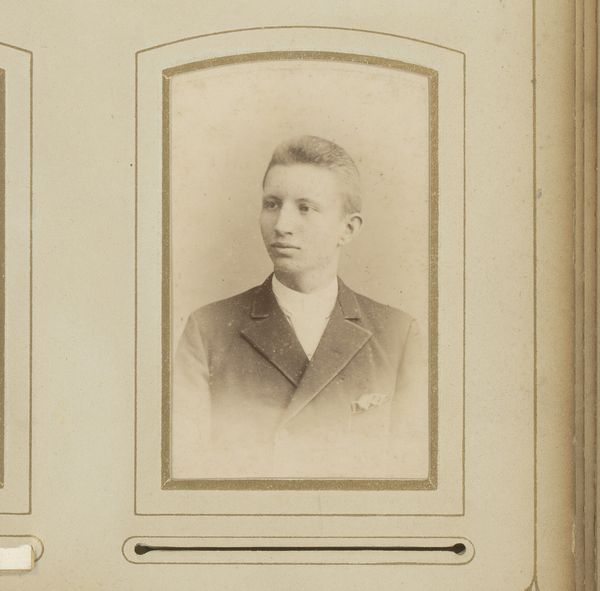
Dimensions: height 92 mm, width 62 mm, height 105 mm, width 65 mm
Copyright: Rijks Museum: Open Domain
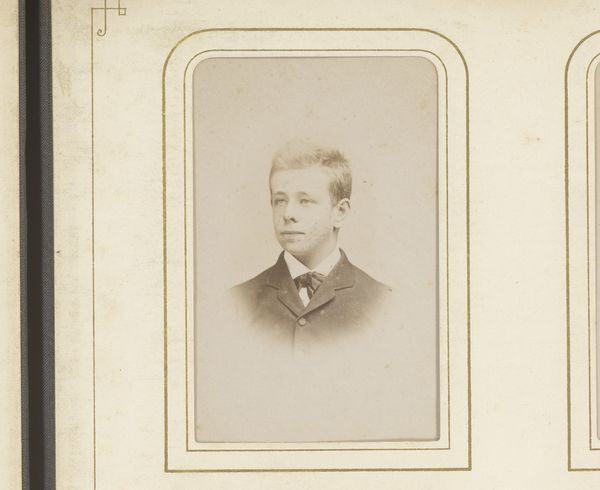
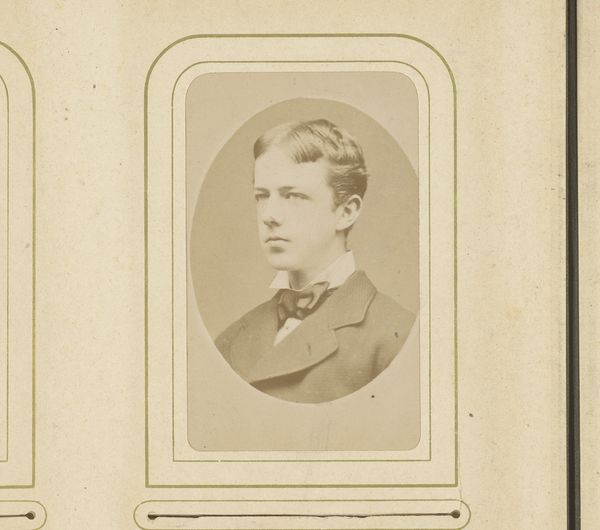
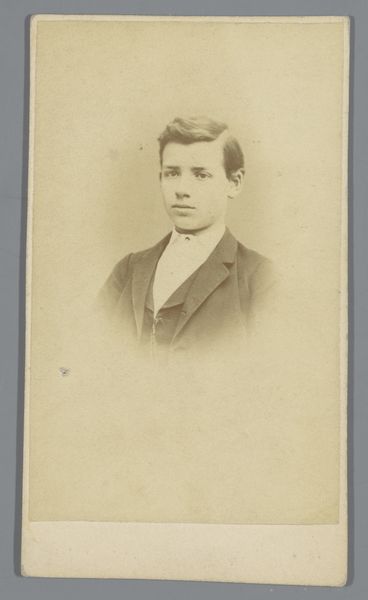
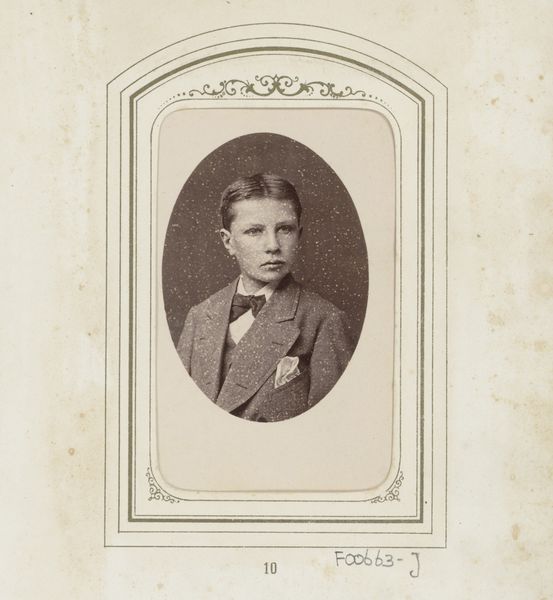
This photographic portrait of H. Ligtenberg was made by Adolphe Zimmermans, likely around 1890, using the wet collodion process. This technique involved coating a glass plate with a light-sensitive emulsion, exposing it in the camera, and then developing it immediately. This process demanded speed and expertise, as the plate had to remain wet throughout. The resulting image, printed on paper, captures a moment in time with remarkable clarity and detail. Look closely, and you’ll notice the soft tonal range and subtle textures, characteristic of early photographic prints. These material qualities speak to the era's technological advancements, marking a shift towards mass-produced imagery and a new kind of visual culture. Consider the labor involved, not just in making the portrait, but also in preparing the chemicals, operating the camera, and printing the final image. The photograph serves as a reminder of photography's role in shaping our understanding of identity, representation, and the changing social landscape.
Comments
No comments
Be the first to comment and join the conversation on the ultimate creative platform.
 Collect
 React
React Comment
More like this