carving, bronze, sculpture
statue
carving
sculpture
bronze
sculptural image
figuration
sculpture
symbolism
nude
sitting
statue
Copyright: Public domain
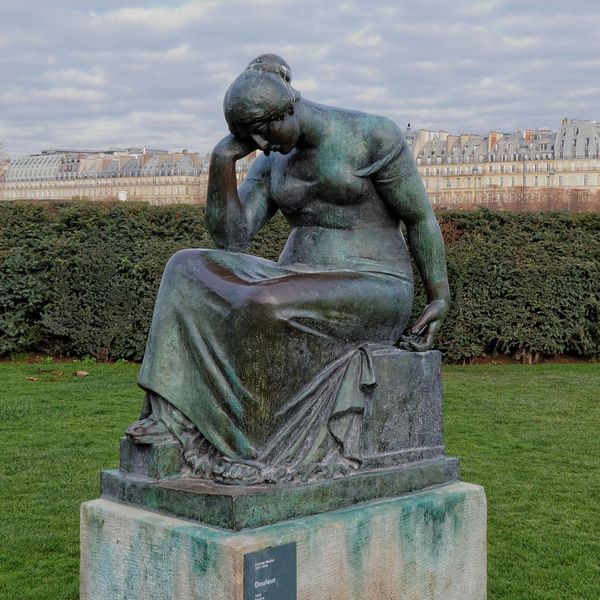
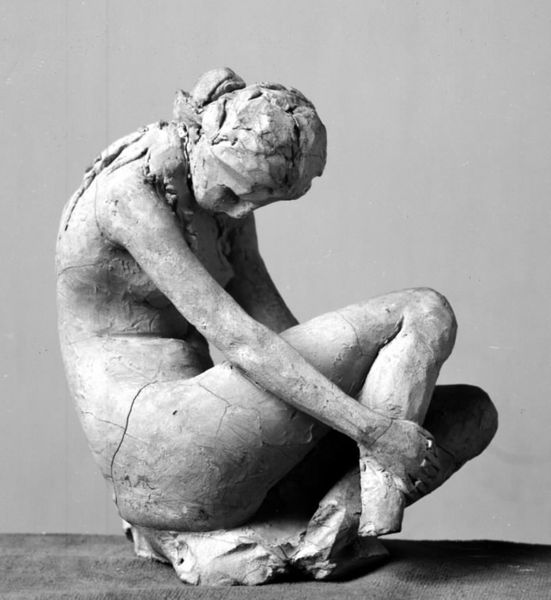
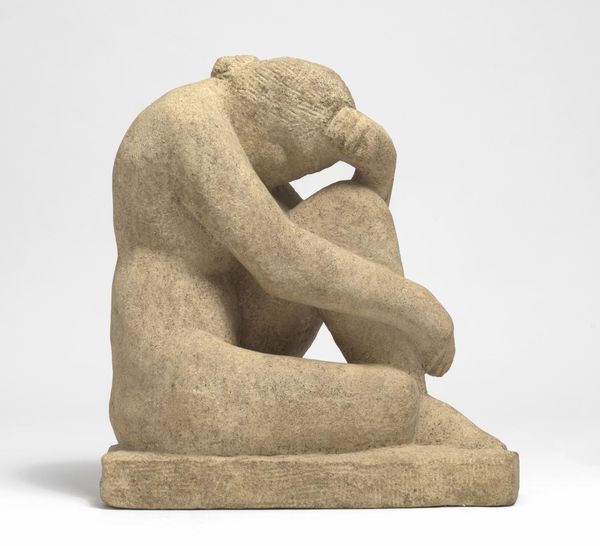
Editor: Here we have Aristide Maillol’s “La Nuit,” created around 1902. It’s a bronze sculpture of a seated, nude woman with her head resting on her arms. I find her posture so evocative of grief or despair. What strikes you most about this piece? Curator: It is interesting how Maillol distills universal emotions through form. Do you notice how the figure’s self-embracing pose acts as a protective shield? Consider the long history of the 'sleeping Ariadne' and reclining female nudes in the Western canon. How does Maillol use and depart from these archetypes? Editor: I see the resemblance to the "sleeping Ariadne" you mentioned! But unlike those serene figures, there's a tension here, a withdrawing inward. The lack of direct engagement with the viewer amplifies the feeling of isolation. Curator: Precisely! The face is hidden, absent, allowing the viewer to project their own emotions onto the figure. Does this absence then create a mirror? Editor: That's a powerful thought! The smooth bronze surface also seems to emphasize the timeless quality of sorrow and its connection to human experience. I wonder, does the title “La Nuit”, The Night, suggest the darkness is internal? Curator: Perhaps it evokes the nocturnal landscapes of the soul, times when one battles private anguish and loss. It reminds us that grief and introspection are as much a part of life as daylight. What new understanding of "La Nuit" are you taking away today? Editor: I will remember that its power lies not just in depicting sadness but in inviting empathy. Thanks, that was truly insightful!
Comments
No comments
Be the first to comment and join the conversation on the ultimate creative platform.
 React
React Comment