About this artwork
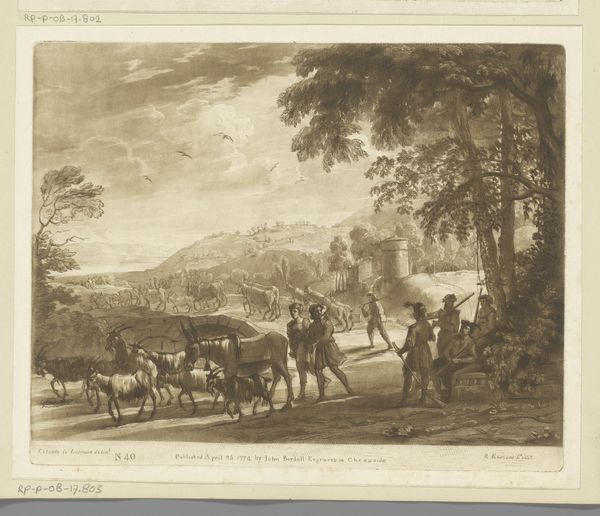
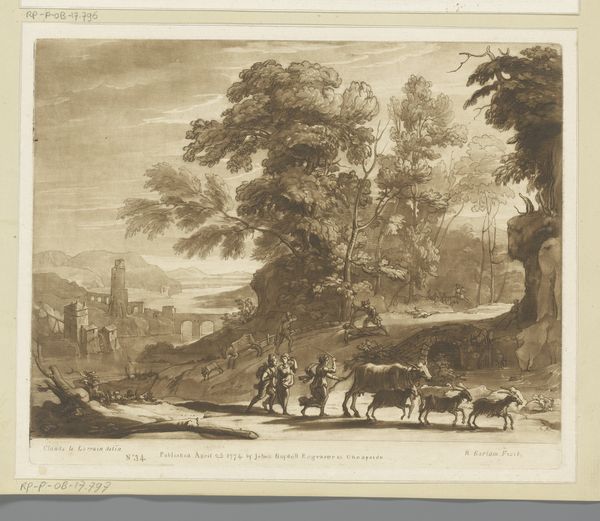
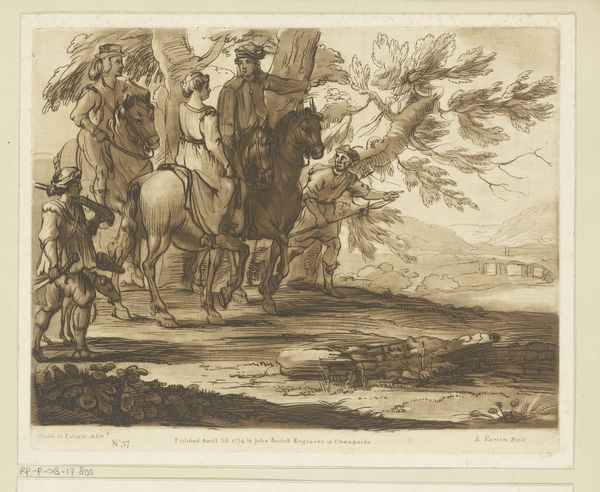
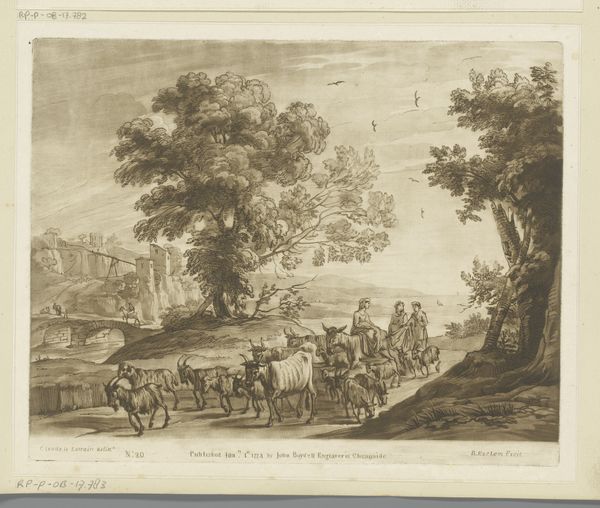
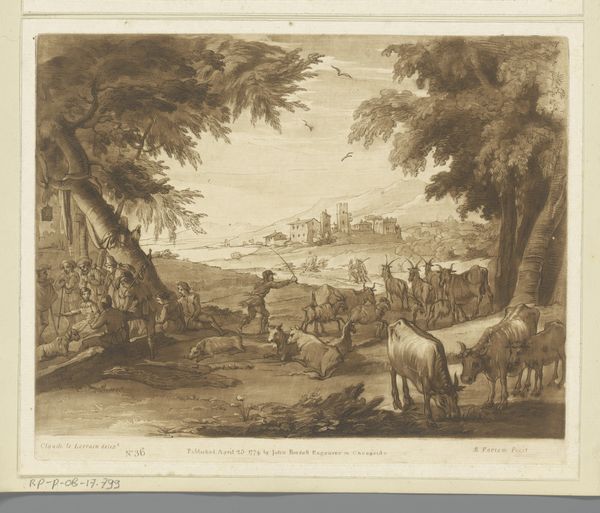
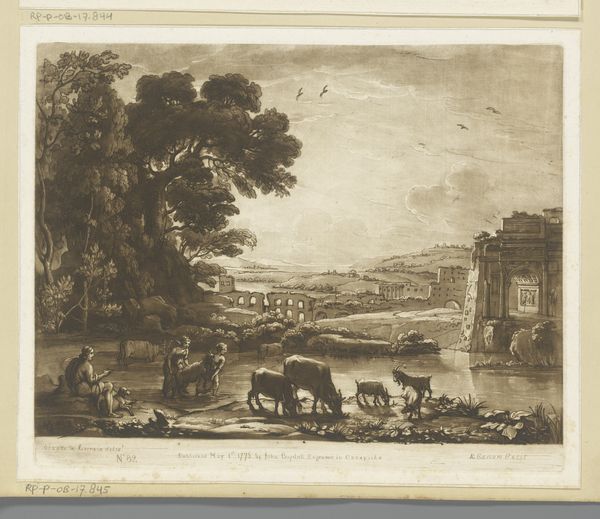
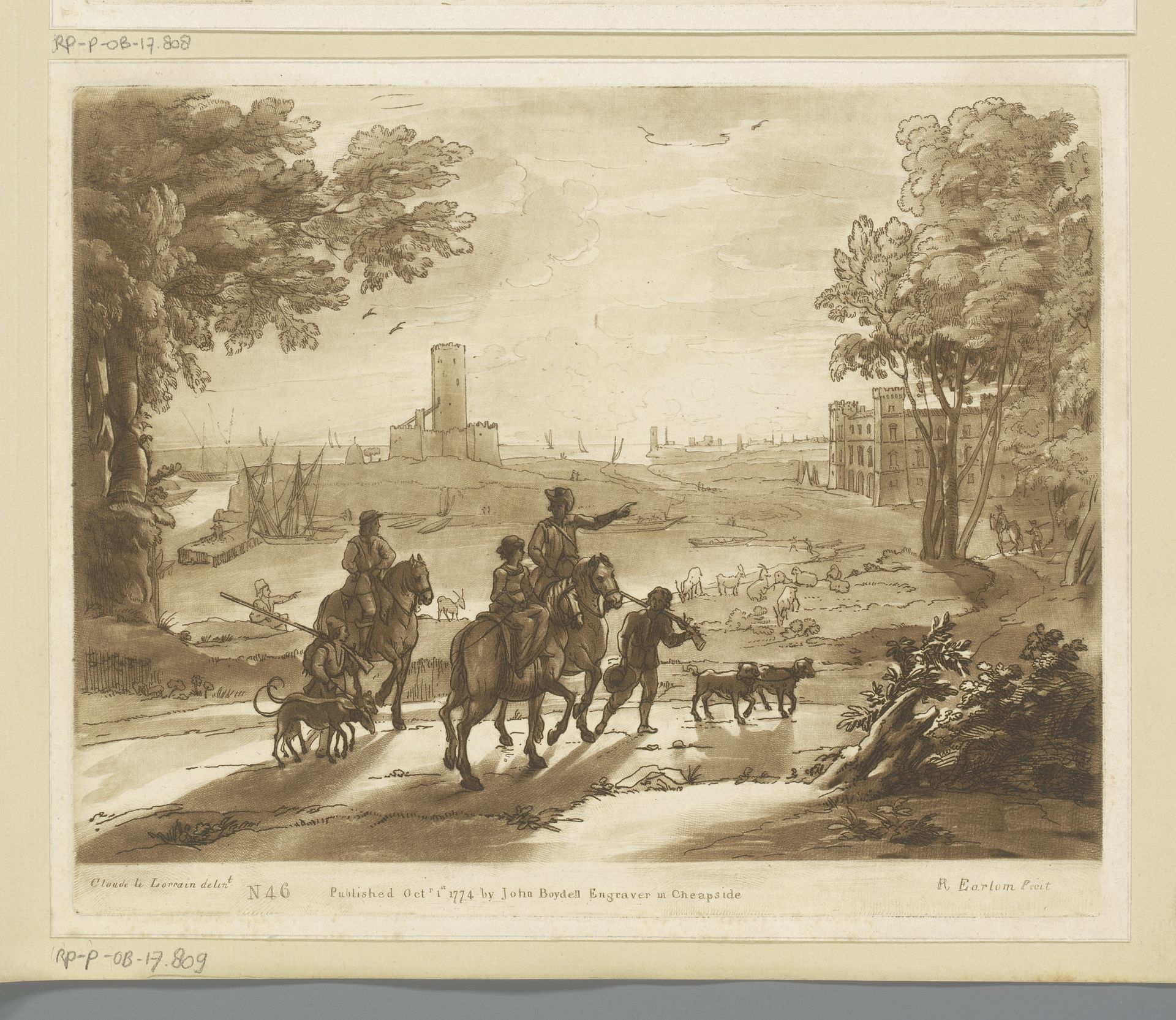
This is Richard Earlom's 'Coastal Landscape with Three Hunters on Horses,' made around 1774. The sepia drawing presents a scene where nature and humanity intertwine under a pale sky. The initial impression is one of balance; the composition is neatly divided between dark, detailed foreground elements and lighter, more expansive background vistas. Earlom masterfully employs the interplay of light and shadow to draw the eye through the landscape. The foreground, anchored by the figures and animals, leads to a central scene dotted with a flock of sheep. The presence of architecture, with towers and buildings in the background, suggests human attempts to control and structure the environment. The drawing prompts questions about our relationship with the natural world. The hunters, poised at the edge of the landscape, embody a complex dynamic of dominion and integration. The formal organization and subdued palette invite us to contemplate the structures that govern our perceptions and interactions. By juxtaposing the pastoral with the architectural, Earlom hints at underlying tensions.
Kustlandschap met drie jagers op paarden
Possibly 1774

Richard Earlom
1743 - 1822Location
RijksmuseumArtwork details
- Medium
- print, engraving
- Dimensions
- height 208 mm, width 258 mm
- Location
- Rijksmuseum
- Copyright
- Rijks Museum: Open Domain
Tags
Comments
Share your thoughts
About this artwork
This is Richard Earlom's 'Coastal Landscape with Three Hunters on Horses,' made around 1774. The sepia drawing presents a scene where nature and humanity intertwine under a pale sky. The initial impression is one of balance; the composition is neatly divided between dark, detailed foreground elements and lighter, more expansive background vistas. Earlom masterfully employs the interplay of light and shadow to draw the eye through the landscape. The foreground, anchored by the figures and animals, leads to a central scene dotted with a flock of sheep. The presence of architecture, with towers and buildings in the background, suggests human attempts to control and structure the environment. The drawing prompts questions about our relationship with the natural world. The hunters, poised at the edge of the landscape, embody a complex dynamic of dominion and integration. The formal organization and subdued palette invite us to contemplate the structures that govern our perceptions and interactions. By juxtaposing the pastoral with the architectural, Earlom hints at underlying tensions.
Comments
Share your thoughts