About this artwork
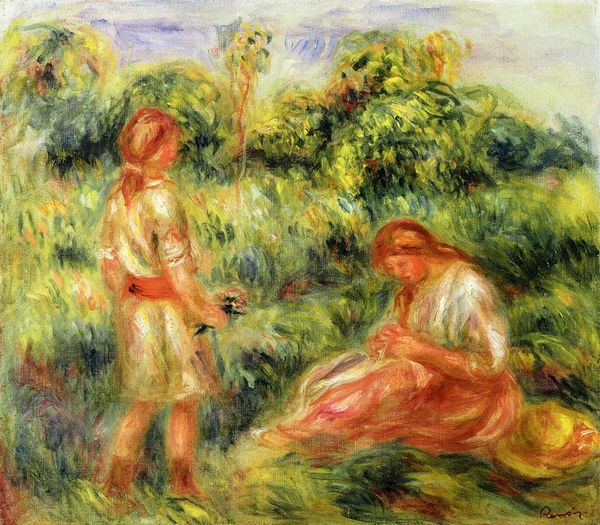
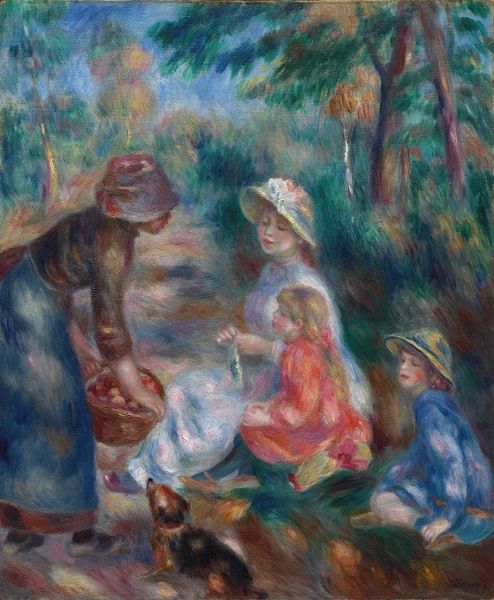
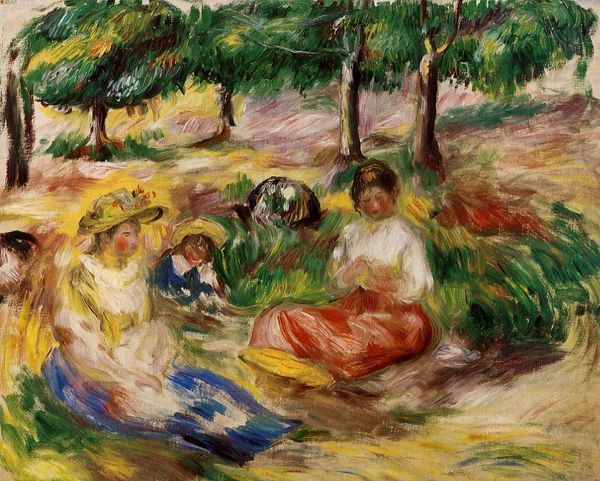
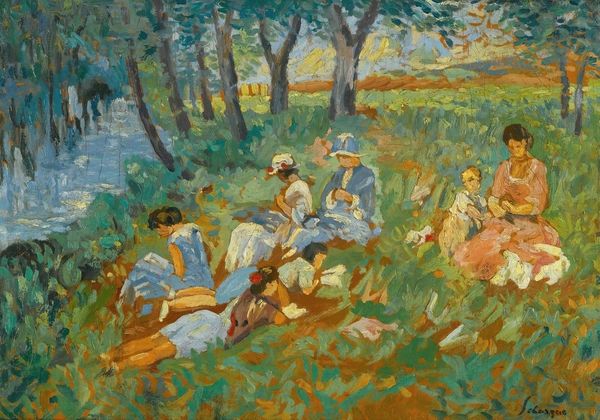
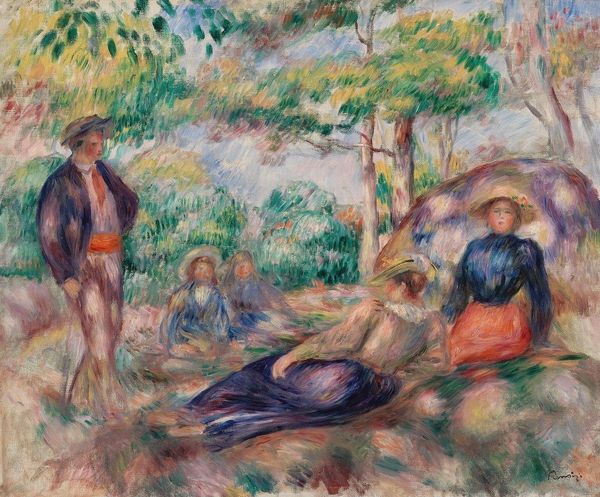
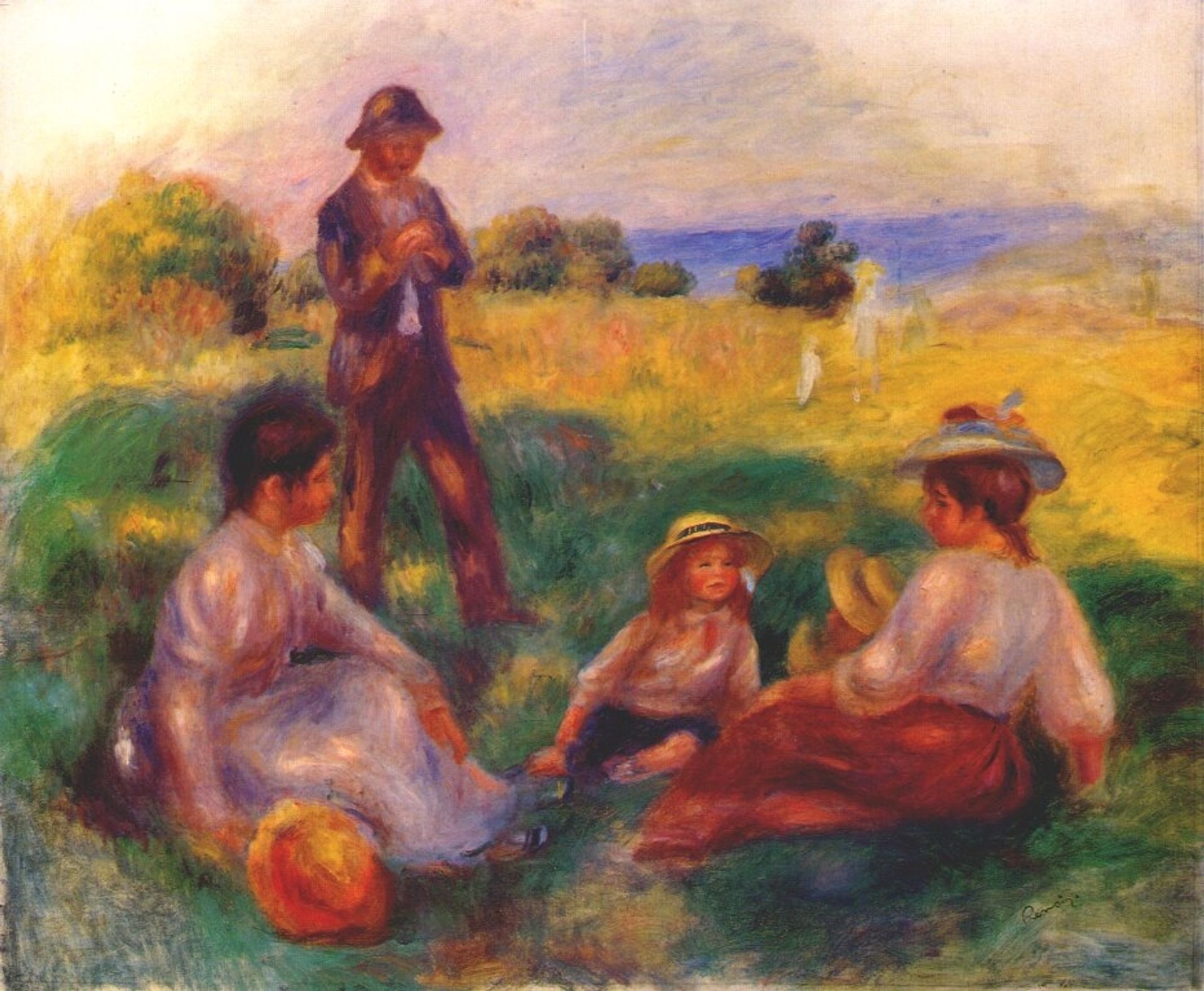
Pierre-Auguste Renoir created this pastoral scene of leisure, "Party in the Country at Berneval," using oil on canvas during a time of significant social change. Renoir was part of the Impressionist movement that sought to capture fleeting moments of everyday life. What I find striking here is how Renoir’s work reflects a certain class dimension. We’re invited into the intimate sphere of middle-class leisure. There’s an interesting tension between the relaxed poses of the figures and the implied social norms they inhabit. It is hard not to consider how gender roles are subtly woven into this tableau. The women are depicted in repose, their attire suggesting a life of comfort and ease, while the men, though present, are more ambiguous figures on the periphery. Renoir has said: "The pain passes, but the beauty remains." This painting certainly captures a moment of serene beauty, yet it also hints at the social structures that framed the lives of these figures. "Party in the Country at Berneval" offers not only an aesthetic experience but also a mirror reflecting the values and social dynamics of its time.
Party in the Country at Berneval
1898

Pierre-Auguste Renoir
1841 - 1919
The State Hermitage Museum
Hermitage Museum, Saint Petersburg, RussiaArtwork details
- Location
- Hermitage Museum, Saint Petersburg, Russia
- Copyright
- Public domain
Comments
Share your thoughts
About this artwork
Pierre-Auguste Renoir created this pastoral scene of leisure, "Party in the Country at Berneval," using oil on canvas during a time of significant social change. Renoir was part of the Impressionist movement that sought to capture fleeting moments of everyday life. What I find striking here is how Renoir’s work reflects a certain class dimension. We’re invited into the intimate sphere of middle-class leisure. There’s an interesting tension between the relaxed poses of the figures and the implied social norms they inhabit. It is hard not to consider how gender roles are subtly woven into this tableau. The women are depicted in repose, their attire suggesting a life of comfort and ease, while the men, though present, are more ambiguous figures on the periphery. Renoir has said: "The pain passes, but the beauty remains." This painting certainly captures a moment of serene beauty, yet it also hints at the social structures that framed the lives of these figures. "Party in the Country at Berneval" offers not only an aesthetic experience but also a mirror reflecting the values and social dynamics of its time.
Comments
Share your thoughts