print, engraving
#
baroque
# print
#
landscape
#
cityscape
#
engraving
Dimensions: height 146 mm, width 219 mm
Copyright: Rijks Museum: Open Domain
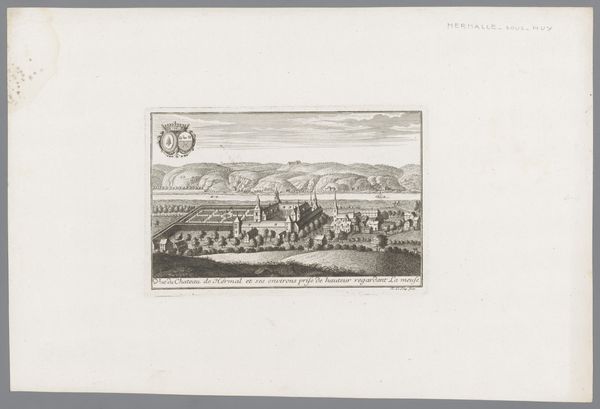
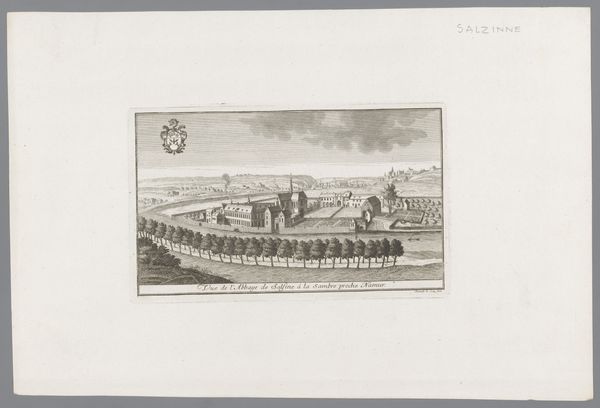
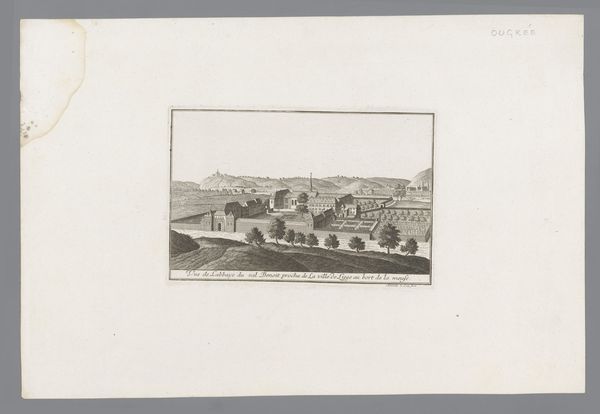
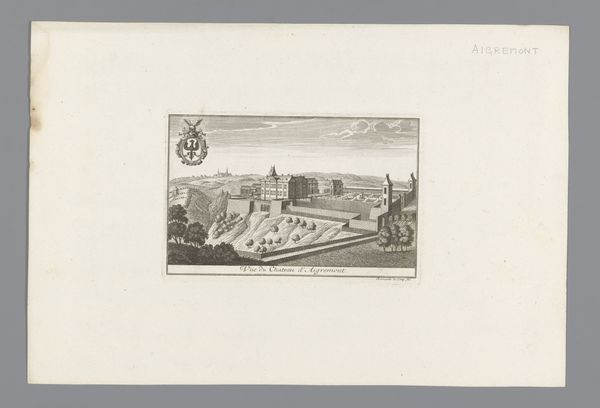
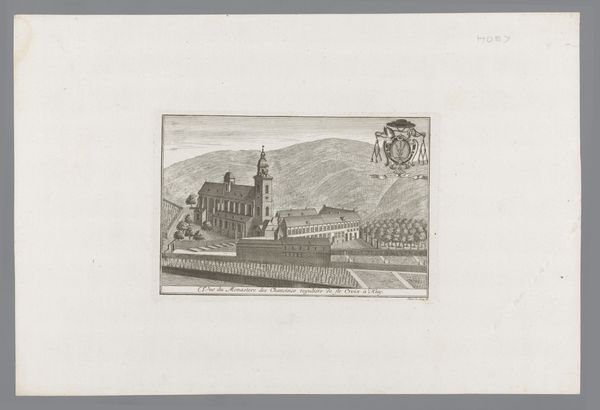
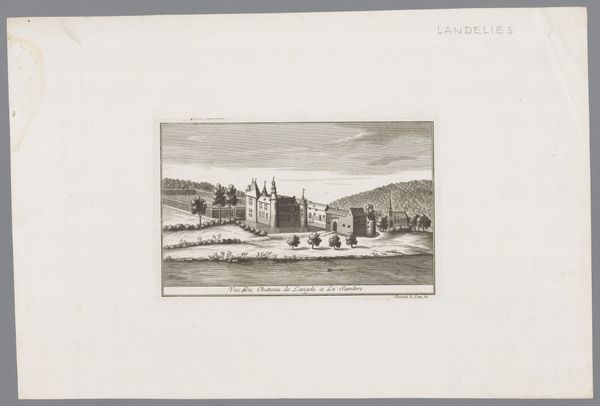
Editor: Here we have an engraving from between 1738 and 1744, titled "Gezicht op een kasteel bij Tihange", or "View of a Castle near Tihange". It presents this orderly, almost rigidly designed estate. What do you see in this piece beyond the obvious display of wealth? Curator: I see more than just wealth; I see power meticulously constructed and visually asserted. Baroque landscapes, particularly those depicting estates, are rarely just about aesthetics. They’re about control – control over nature, over the gaze of the viewer, and, by extension, over the socio-political landscape. Look at the relationship between the castle and its grounds; it’s a deliberate statement of dominance, isn't it? Who do you think this message was intended for? Editor: Perhaps for the local population or even rival aristocrats, demonstrating the owner's importance? Curator: Exactly. The carefully manicured gardens aren't just pretty; they’re symbols of labor and resources being funneled into a single point. Now, consider the period – pre-revolutionary Europe. These images played a critical role in maintaining a specific social order. Do you notice anything in the composition that suggests social hierarchy? Editor: Yes, I see that the castle is placed above all of the land, at the top. The eye goes there directly, making it the center of attention. Curator: Precisely. These images functioned as visual propaganda, normalizing inequality. Even today, reflecting on images like this is important for unpacking the visual rhetoric of power. Editor: That’s a really powerful interpretation, I never thought of landscape art in this way. It really makes you consider who art served and what messages it was sending. Curator: It challenges us to consider whose stories are being told, and whose are being left out of the frame, then and now.
Comments
No comments
Be the first to comment and join the conversation on the ultimate creative platform.
 Collect
 React
React Comment
More like this