metal, sculpture, wood
#
weapon
#
baroque
#
metal
#
sculpture
#
sculpture
#
wood
Dimensions: length 50.6 cm, height 16.5 cm, depth 5.5 cm, length 33.4 cm, diameter 15.5 mm
Copyright: Rijks Museum: Open Domain
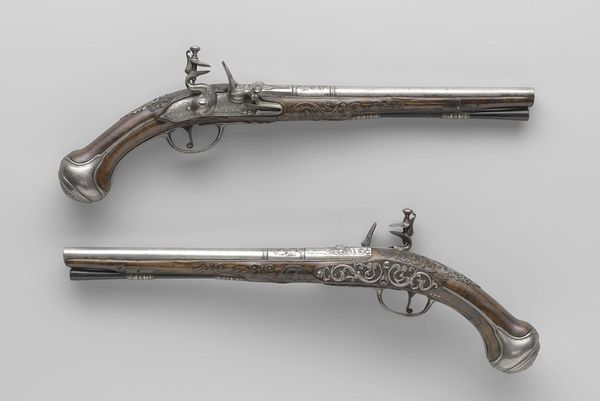
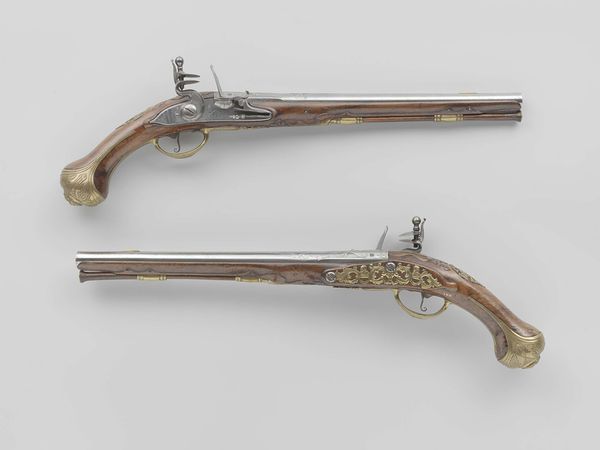
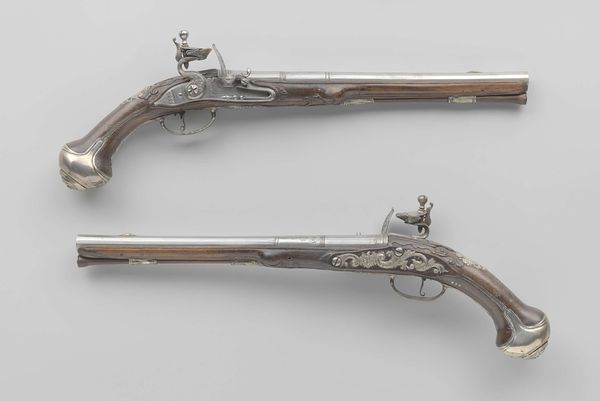
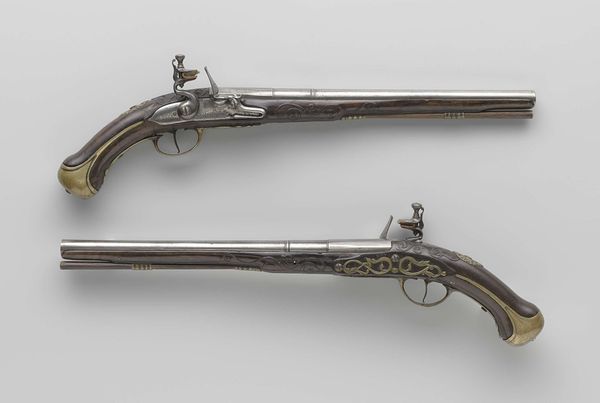
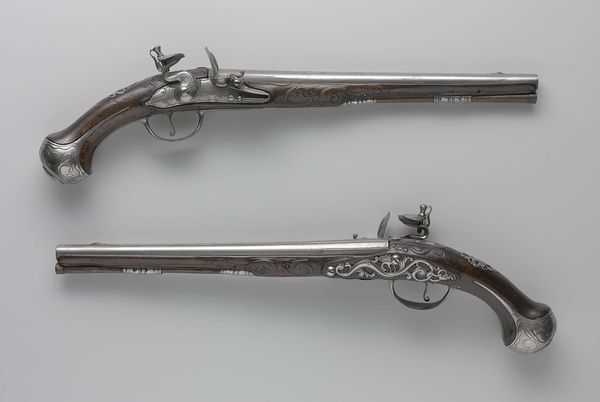
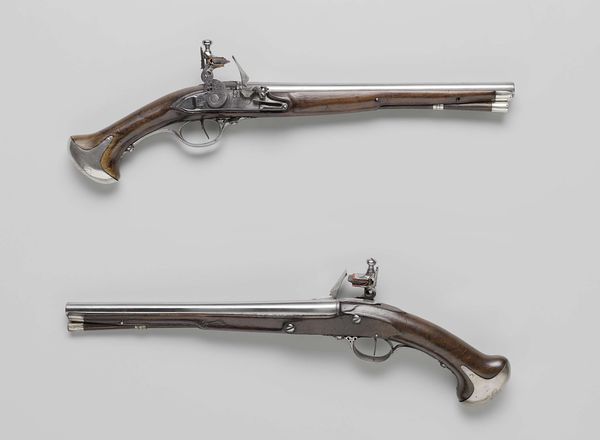
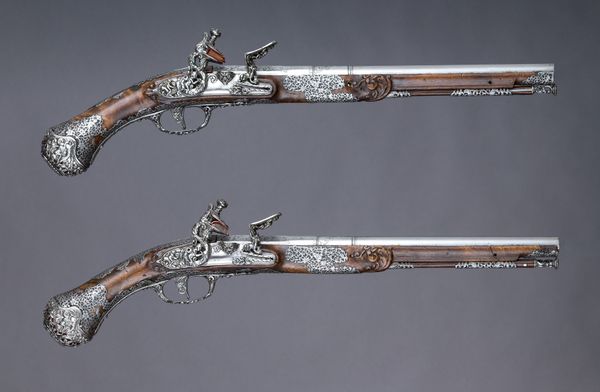
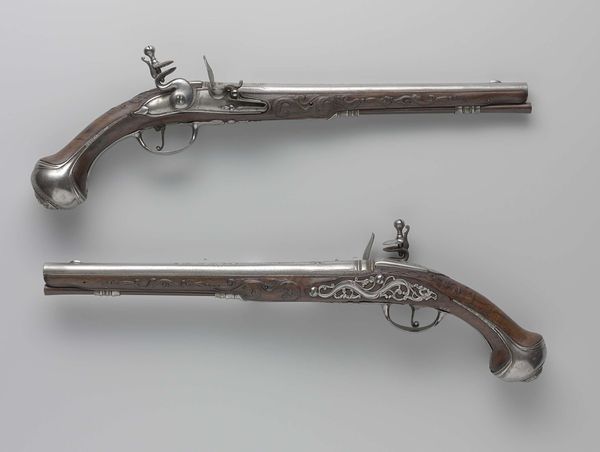
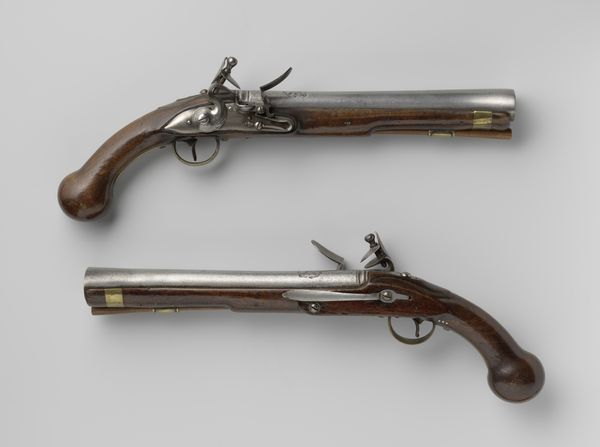
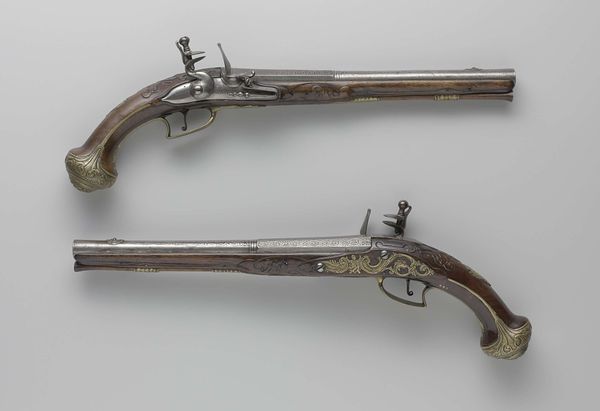
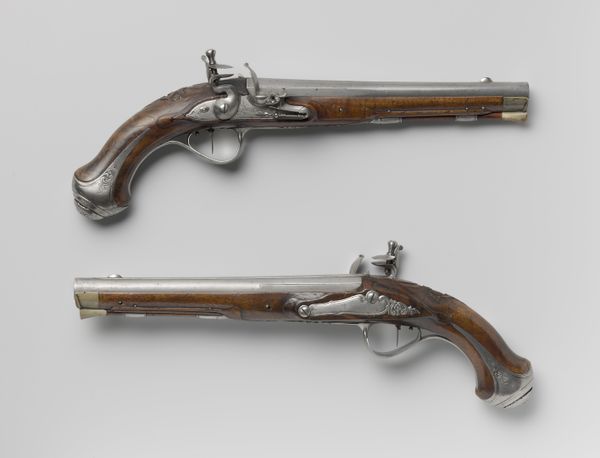
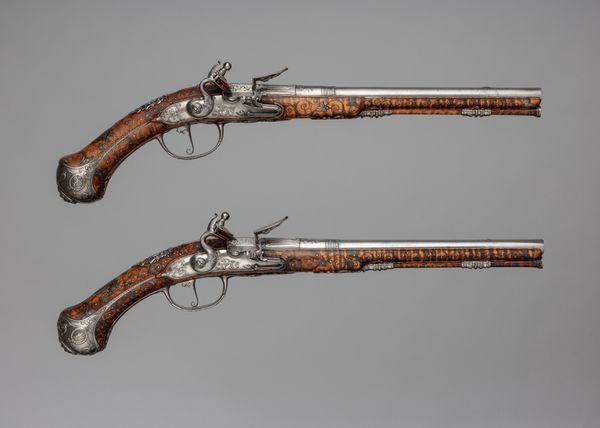
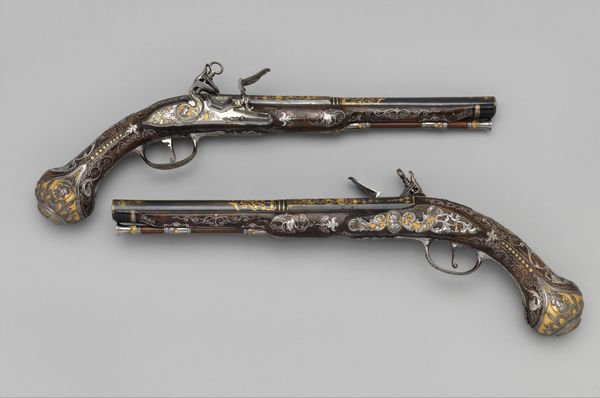
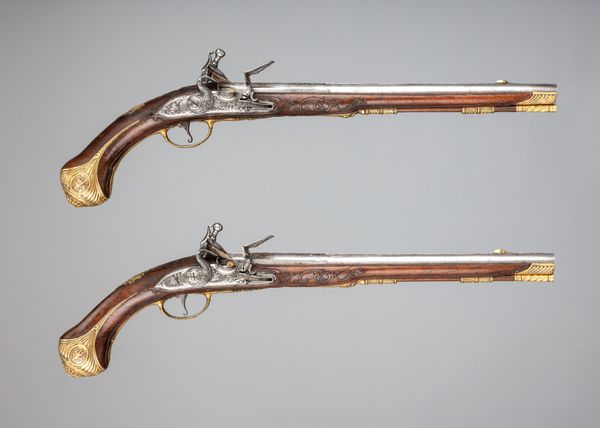
These flintlock pistols are made from a combination of steel, wood, and inlaid silver. The metal was forged and the wooden stocks were likely carved by hand. These materials speak volumes about production and consumption during the period. Steel production was labor-intensive, requiring skilled smiths and access to raw materials. The wooden stocks, often made from walnut, demonstrate a knowledge of woodworking techniques. The application of silver indicates luxury and status. Firearms in general represented a globalized economy: the trade of raw materials, skilled labor, and political power. Their manufacture involved gunsmiths, stock makers, engravers, and assemblers, each contributing their expertise to the final product. The existence of beautifully crafted weapons speaks to a culture where violence was ever-present. Ultimately, the Vuursteenpistool serves as a reminder of the complex relationship between art, technology, and society. It challenges traditional distinctions between fine art and craft, inviting us to consider the social and political implications embedded within the objects we create and consume.
Comments
No comments
Be the first to comment and join the conversation on the ultimate creative platform.
 Collect
 React
React Comment
More like this