About this artwork
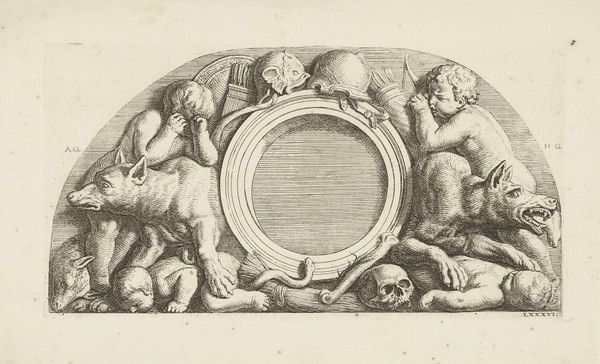
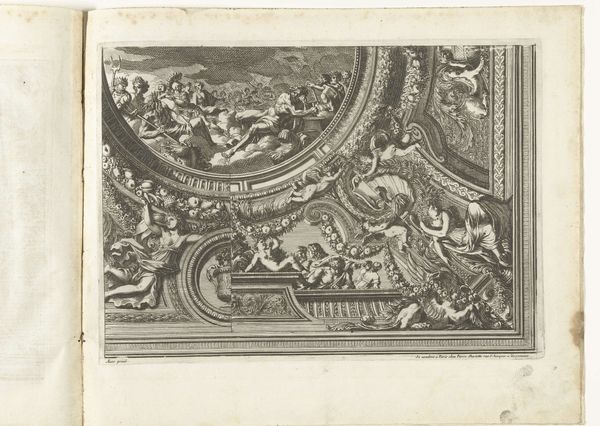
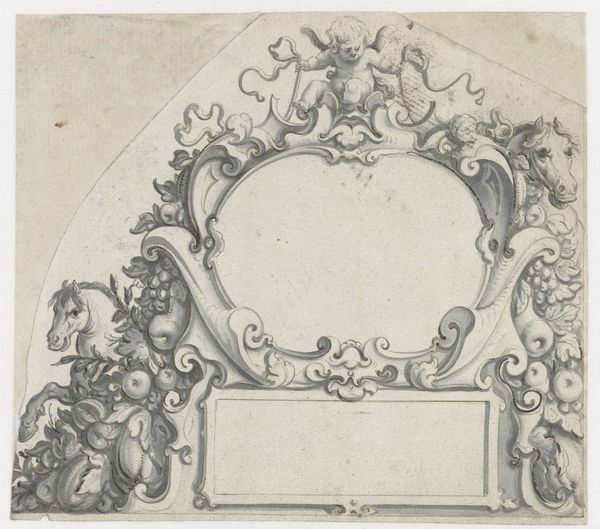
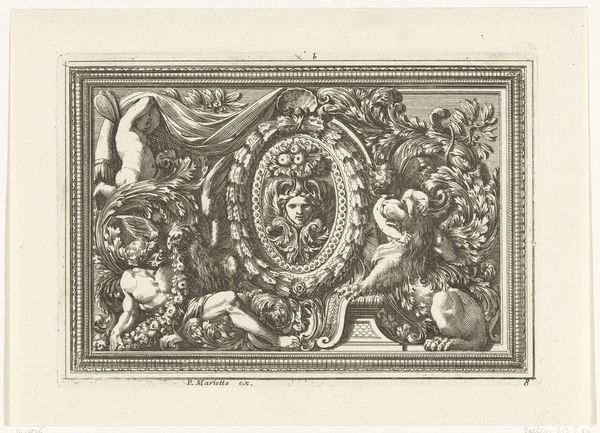
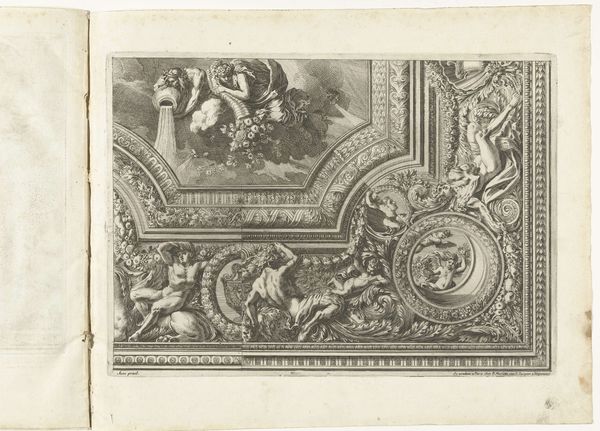
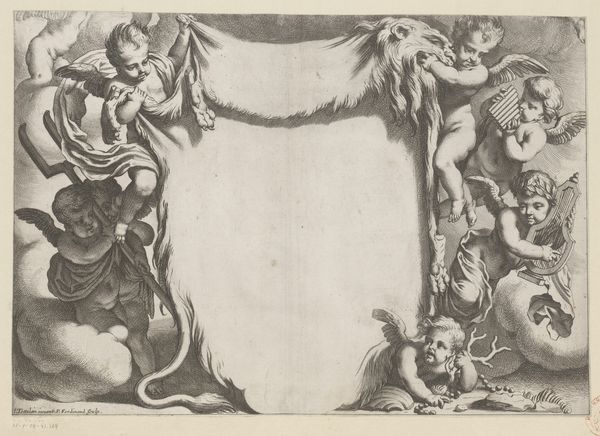
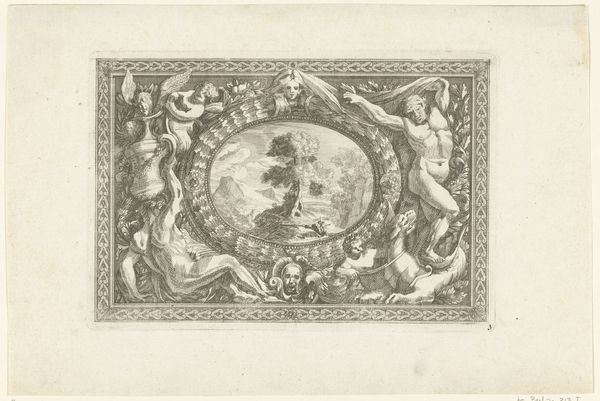
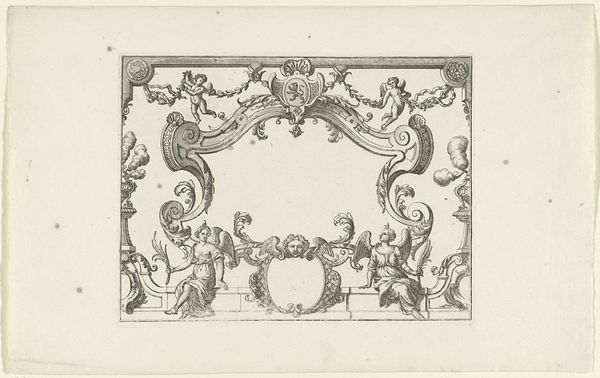
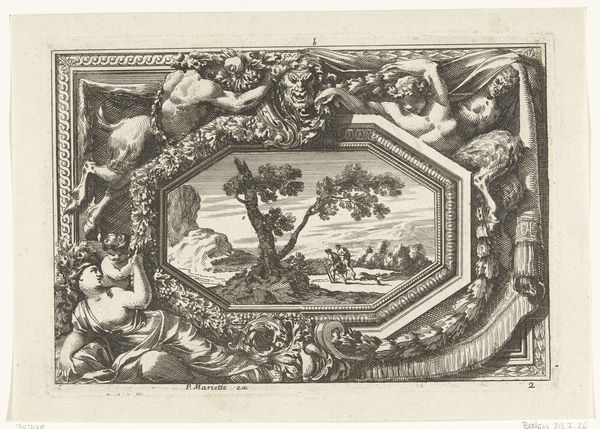
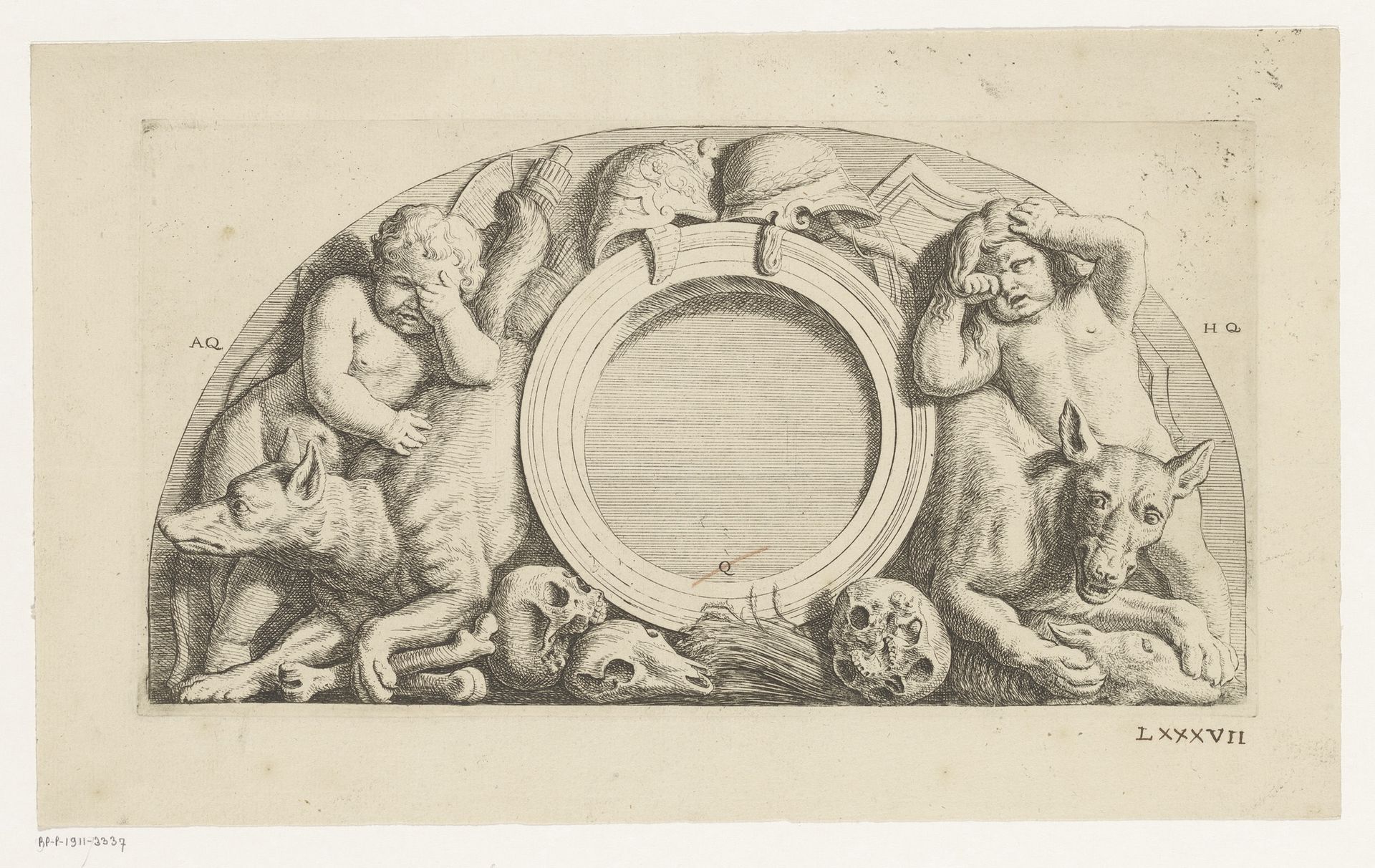
Hubert Quellinus made this etching, "Lunette met putti, wolven en wapenuitrusting in de westelijke galerij van het Stadhuis op de Dam," during the Dutch Golden Age. It represents a lunette, or a semi-circular space, filled with symbolic figures and objects. What's fascinating is how Quellinus uses classical motifs to convey civic ideals. We see putti, or cherubic figures, wolves that allude to Romulus and Remus, founders of Rome, and weaponry, all rendered with the precision that was characteristic of Dutch printmaking. It forms part of the decorative program of Amsterdam's Town Hall, now the Royal Palace, built during a period of immense economic and cultural growth. The Town Hall itself was intended to project Amsterdam's power. To understand the print fully, we can turn to period documents, architectural plans, and histories of Amsterdam’s civic identity. These sources reveal how art was consciously deployed to shape the city's public image. Art historians thus play a vital role in uncovering the social and institutional contexts that give these images their deeper meaning.
Lunette met putti, wolven en wapenuitrusting in de westelijke galerij van het Stadhuis op de Dam 1655 - 1665

Hubert Quellinus
1619 - 1687Location
RijksmuseumArtwork details
- Medium
- print, etching, engraving
- Dimensions
- height 152 mm, width 286 mm
- Location
- Rijksmuseum
- Copyright
- Rijks Museum: Open Domain
Tags
pencil drawn
allegory
baroque
etching
pencil sketch
figuration
pencil drawing
line
history-painting
engraving
Comments
No comments
About this artwork
Hubert Quellinus made this etching, "Lunette met putti, wolven en wapenuitrusting in de westelijke galerij van het Stadhuis op de Dam," during the Dutch Golden Age. It represents a lunette, or a semi-circular space, filled with symbolic figures and objects. What's fascinating is how Quellinus uses classical motifs to convey civic ideals. We see putti, or cherubic figures, wolves that allude to Romulus and Remus, founders of Rome, and weaponry, all rendered with the precision that was characteristic of Dutch printmaking. It forms part of the decorative program of Amsterdam's Town Hall, now the Royal Palace, built during a period of immense economic and cultural growth. The Town Hall itself was intended to project Amsterdam's power. To understand the print fully, we can turn to period documents, architectural plans, and histories of Amsterdam’s civic identity. These sources reveal how art was consciously deployed to shape the city's public image. Art historians thus play a vital role in uncovering the social and institutional contexts that give these images their deeper meaning.
Comments
No comments