About this artwork
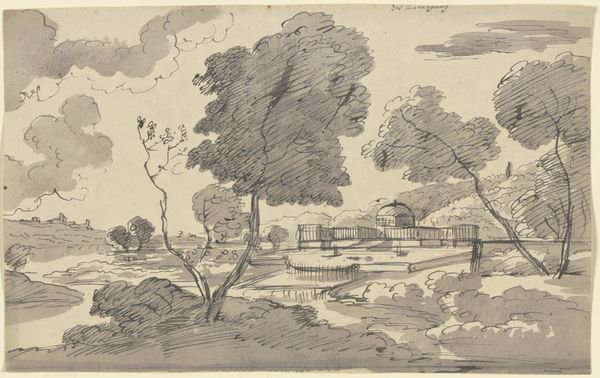
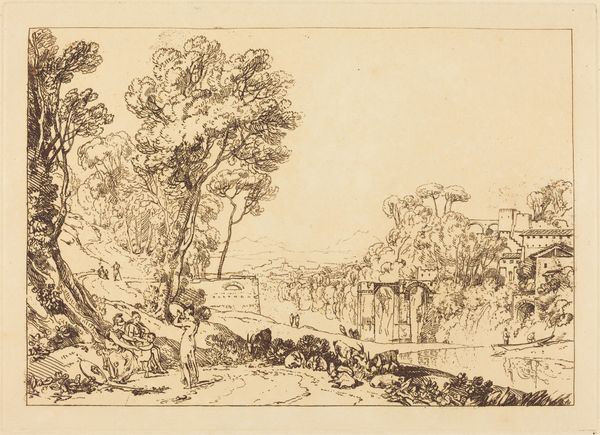
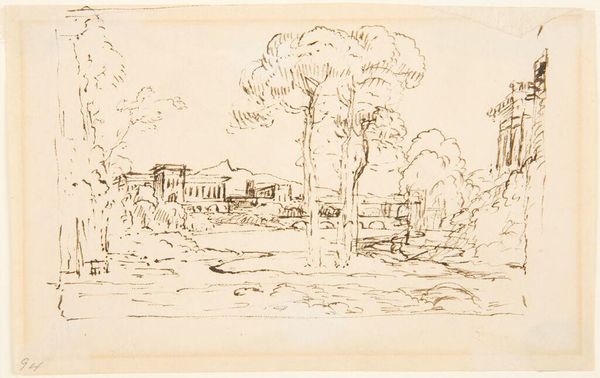
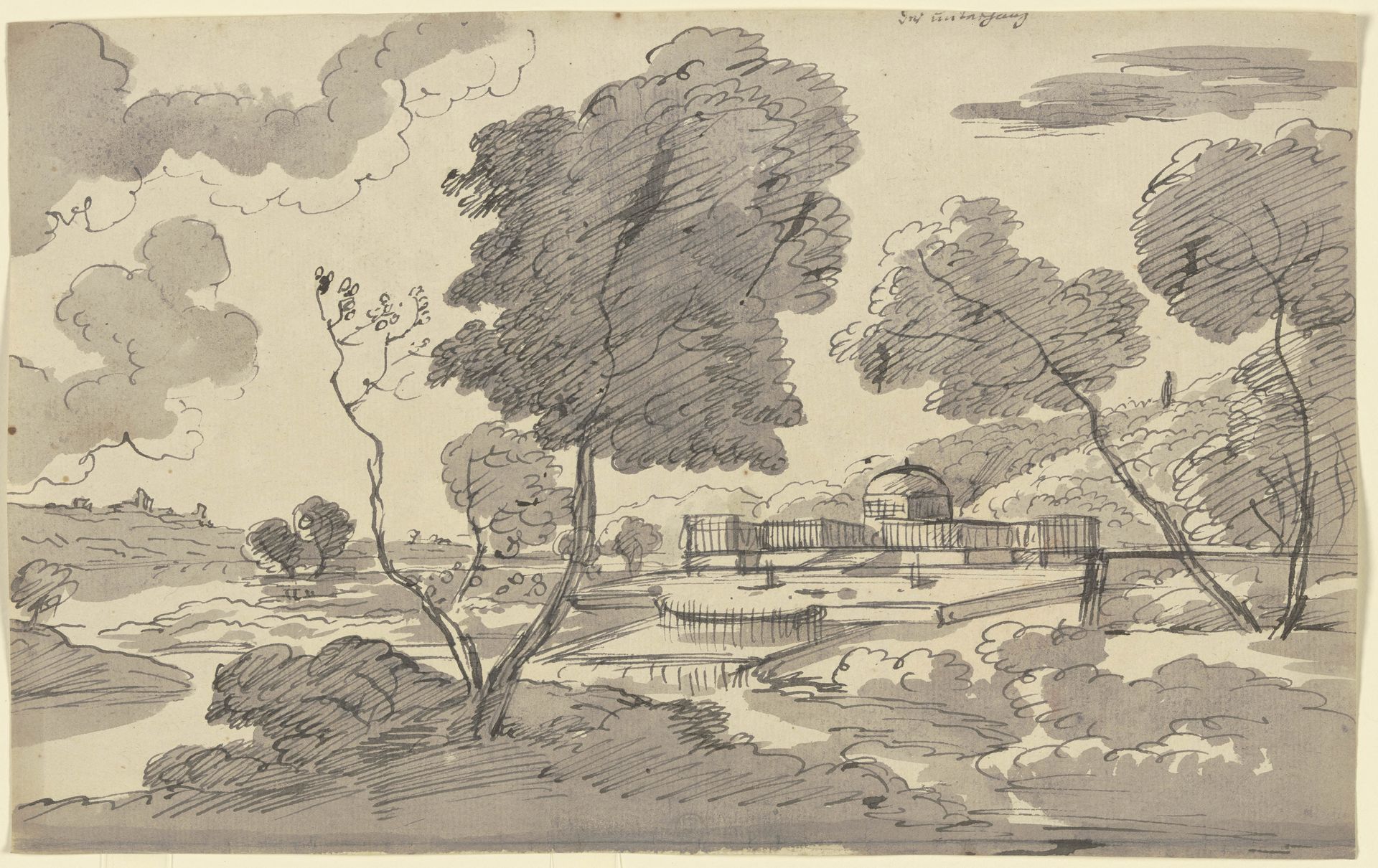
Franz Kobell drew this "Ideal Landscape with Temple-like Architectural Structure" with pen and gray ink in the late 18th or early 19th century. Born in Mannheim, Germany, Kobell experienced a tumultuous period marked by political upheavals. His romantic landscapes are often interpreted as a response to the anxieties of his time. This drawing, with its ruined architecture, evokes a sense of melancholy and reflection on the transience of human achievement. Though classical in style, the crumbling temple suggests a critique of established power structures. This romantic landscape speaks to the era’s fascination with ruins as symbols of lost civilizations, reflecting a deeper meditation on history, power, and the inevitability of decline. The artwork invites us to contemplate the passage of time and the fragility of human endeavors, reminding us that even the most grandiose structures are subject to decay and oblivion.
Ideale Landschaft mit tempelartiger Architekturanlage (_Der Untergang_)


Artwork details
- Medium
- drawing, ink
- Location
- Städel Museum
- Copyright
- Public Domain
Tags
Comments
Share your thoughts
About this artwork
Franz Kobell drew this "Ideal Landscape with Temple-like Architectural Structure" with pen and gray ink in the late 18th or early 19th century. Born in Mannheim, Germany, Kobell experienced a tumultuous period marked by political upheavals. His romantic landscapes are often interpreted as a response to the anxieties of his time. This drawing, with its ruined architecture, evokes a sense of melancholy and reflection on the transience of human achievement. Though classical in style, the crumbling temple suggests a critique of established power structures. This romantic landscape speaks to the era’s fascination with ruins as symbols of lost civilizations, reflecting a deeper meditation on history, power, and the inevitability of decline. The artwork invites us to contemplate the passage of time and the fragility of human endeavors, reminding us that even the most grandiose structures are subject to decay and oblivion.
Comments
Share your thoughts