About this artwork
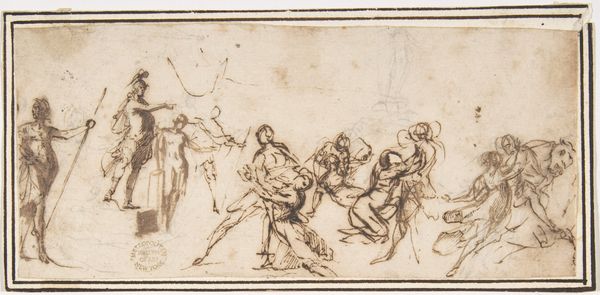
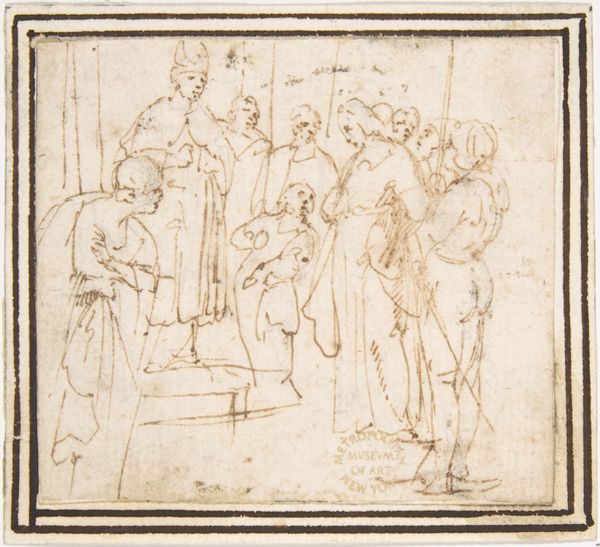
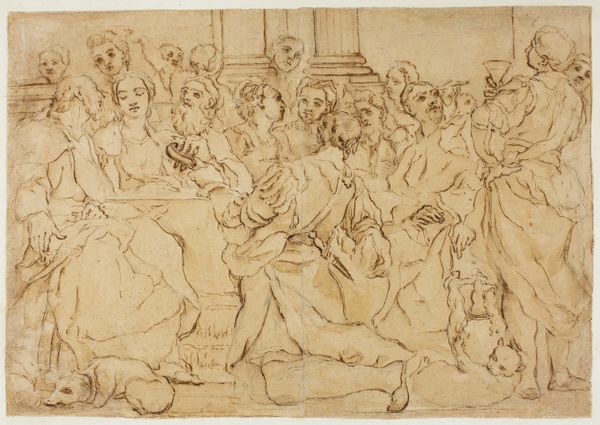
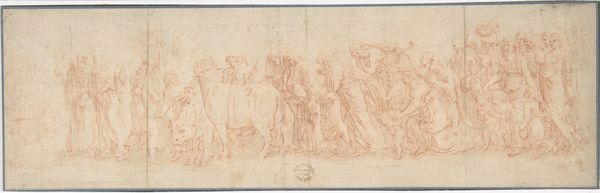
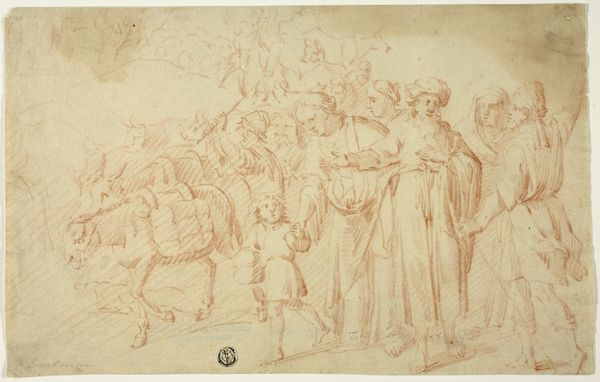
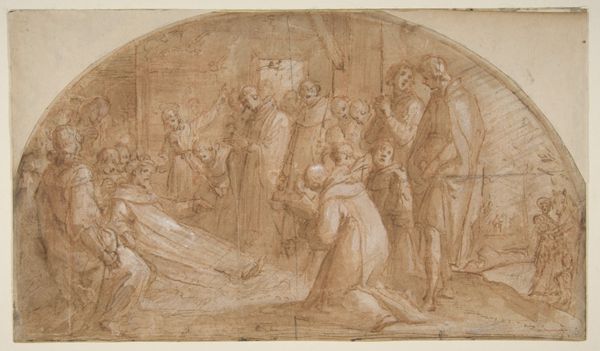
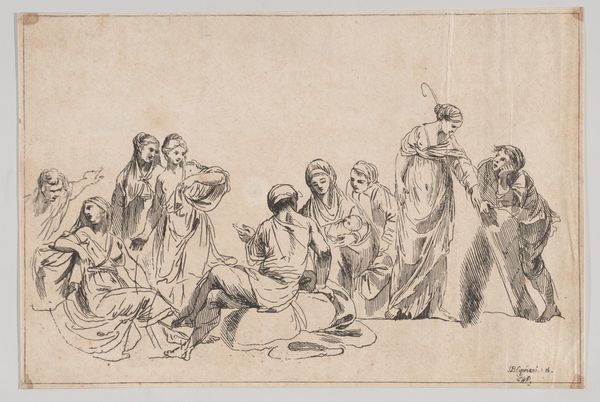
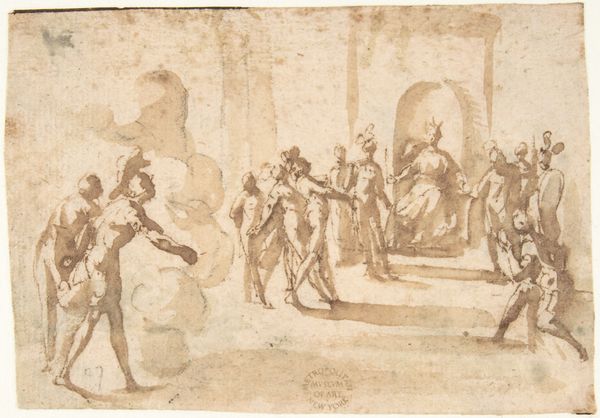
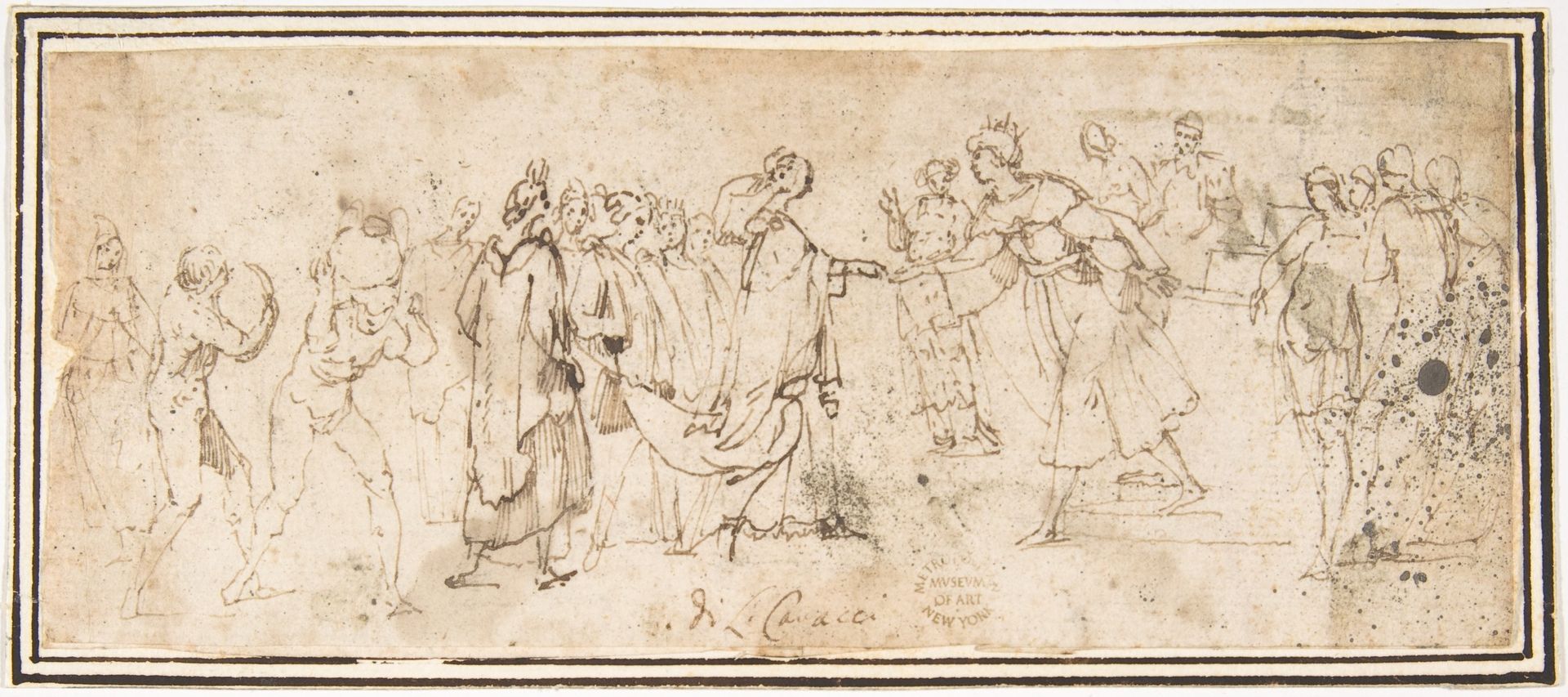
Francesco Allegrini rendered this ink drawing of King Solomon Receiving the Queen of Sheba in the 17th century. The composition is dominated by the figures of Solomon and Sheba, each adorned with crowns signifying their royal status, emblems of power and divine right. The Queen of Sheba extends her hand to Solomon in a gesture that embodies diplomacy, respect, and perhaps even a hint of mutual recognition. This gesture echoes across time and cultures. Consider the Roman tradition of 'dextrarum iunctio,' the joining of right hands in marriage, symbolizing alliance and agreement. We also see it in ancient Egyptian depictions of pharaohs receiving tribute. Such gestures transcend mere politeness; they resonate with deep, collective memories of human interaction. The subconscious desire for connection is a powerful force, engaging viewers on a level that words often cannot capture. Thus, this act of offering a hand resurfaces continually, evolving from a sign of peace to one of loyalty, ultimately reflecting our eternal yearning for understanding, a yearning that resurfaces and adapts in each new age.
King Solomon Receiving the Queen of Sheba
1624 - 1663

Francesco Allegrini
1615 - 1679
The Metropolitan Museum of Art
Metropolitan Museum of Art, New York, NYArtwork details
- Medium
- drawing, coloured-pencil, print
- Dimensions
- 2-15/16 x 7-5/16 in. (7.5 x 18.6 cm)
- Location
- Metropolitan Museum of Art, New York, NY
- Copyright
- Public Domain
Tags
drawing
coloured-pencil
narrative-art
figuration
coloured pencil
history-painting
italian-renaissance
Comments
Be the first to share your thoughts about this work.
About this artwork
Francesco Allegrini rendered this ink drawing of King Solomon Receiving the Queen of Sheba in the 17th century. The composition is dominated by the figures of Solomon and Sheba, each adorned with crowns signifying their royal status, emblems of power and divine right. The Queen of Sheba extends her hand to Solomon in a gesture that embodies diplomacy, respect, and perhaps even a hint of mutual recognition. This gesture echoes across time and cultures. Consider the Roman tradition of 'dextrarum iunctio,' the joining of right hands in marriage, symbolizing alliance and agreement. We also see it in ancient Egyptian depictions of pharaohs receiving tribute. Such gestures transcend mere politeness; they resonate with deep, collective memories of human interaction. The subconscious desire for connection is a powerful force, engaging viewers on a level that words often cannot capture. Thus, this act of offering a hand resurfaces continually, evolving from a sign of peace to one of loyalty, ultimately reflecting our eternal yearning for understanding, a yearning that resurfaces and adapts in each new age.
Comments
Be the first to share your thoughts about this work.