before 1902
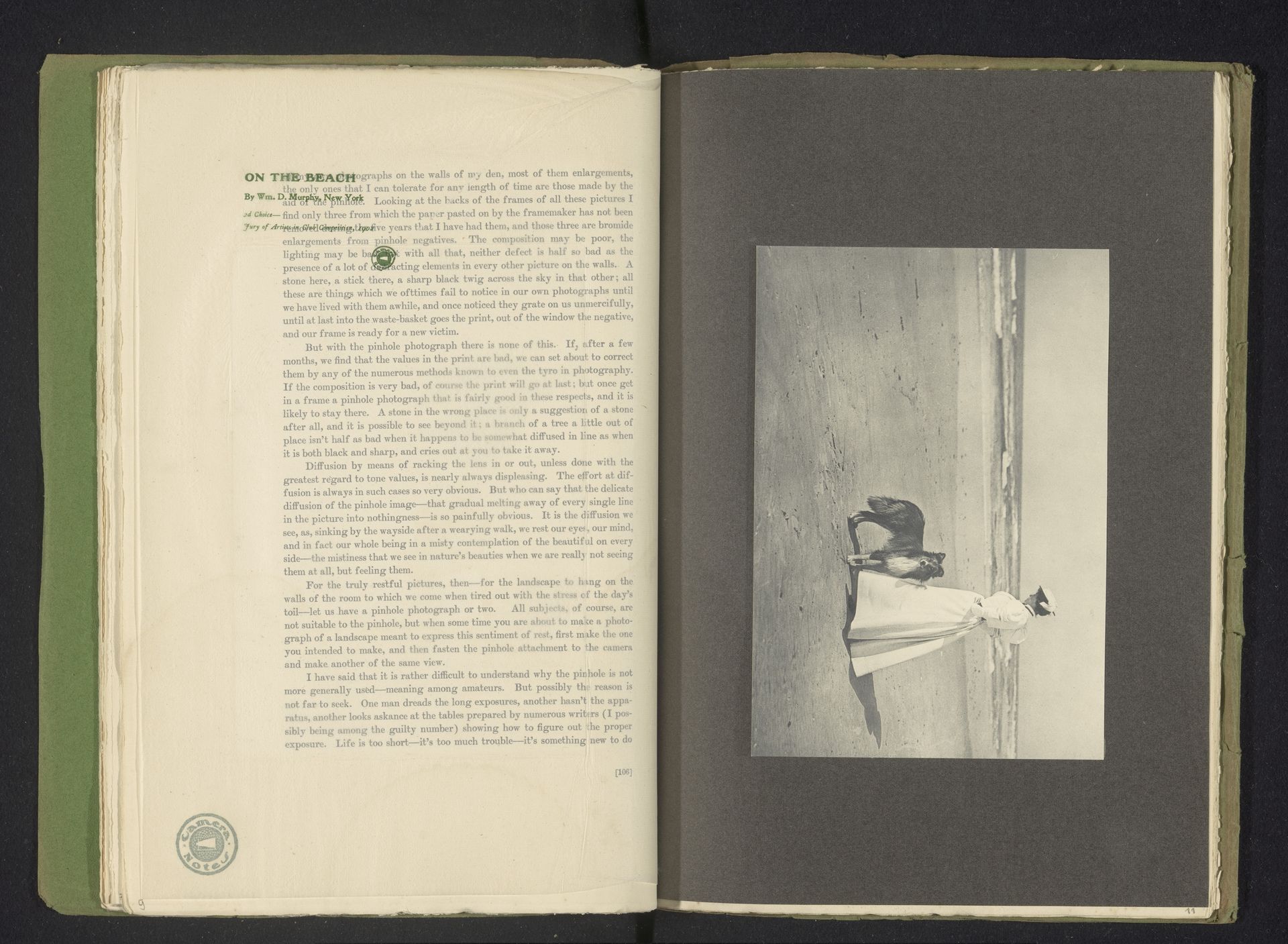
Vrouw met een hond op het strand

Listen to curator's interpretation
Curatorial notes
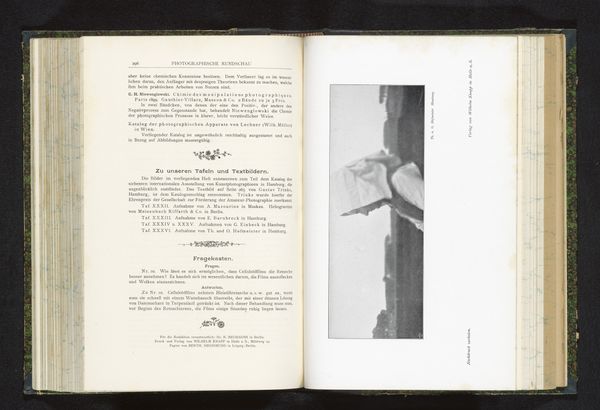
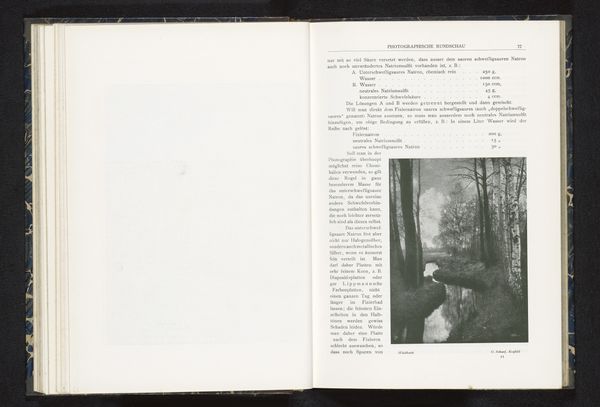
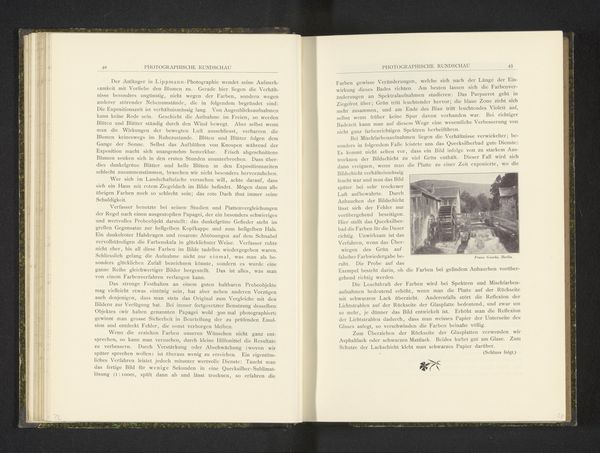
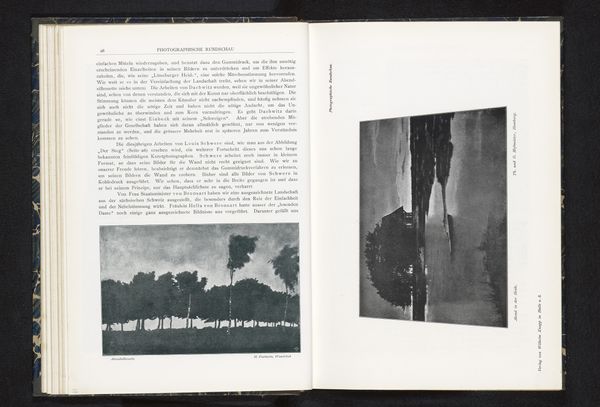
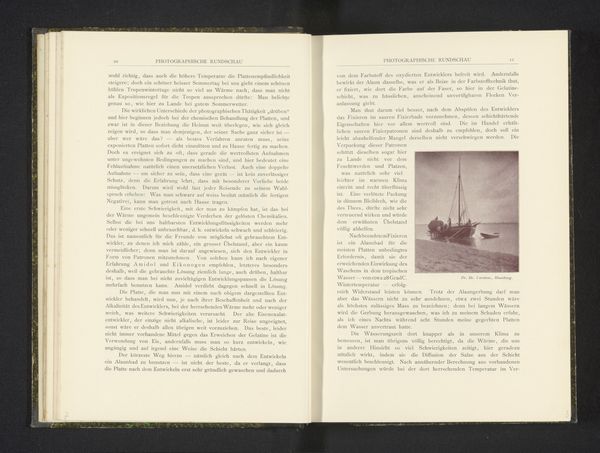
Editor: Here we have "Vrouw met een hond op het strand," or "Woman with a Dog on the Beach," captured before 1902 by William D. Murphy. It’s an albumen print showcased within a bound volume. I’m immediately drawn to the photograph’s unusual composition; it’s positioned almost as if floating in space within the book's pages. What strikes you about its form and structure? Curator: I am captivated by the photograph's internal arrangement of shapes, lines, and textures. Note the juxtaposition of the smooth, seemingly boundless expanse of the beach against the textured grain of what appears to be a weathered wall. The verticality of the wall section sharply contrasts with the horizontal stretch of the beach itself. Does that contrast interest you? Editor: It does! Especially the tension between those distinct textures— the smooth beach and the rough wall. And it feels so deliberate, a way to draw attention to the materiality of the print itself, versus its function as a mere representation of a scene. The tonal range in monochrome—is that significant? Curator: The photograph’s limited tonal range is critical to its formalism, yes. Murphy uses delicate gradations of light to suggest depth and texture, a subtle visual tool to underscore the essence of pictorialist aesthetics. This restrained palette enables us to appreciate the subtle modulations within the scene. Observe how the interplay between shadow and light articulates both the subject and the space it inhabits, each influencing the other within the picture’s structure. Editor: That’s fascinating! It really shifts my perspective. I was initially focused on trying to “read” the scene and the woman's narrative, but seeing it as a formal arrangement— it encourages a completely different level of looking, about seeing light and shadow rather than “what’s happening”. Curator: Precisely. The strength of pictorialism is found less in what it represents and more in how it represents it through composition and form. I see that you're starting to see the structural underpinnings more acutely. Editor: Definitely! I appreciate seeing how focusing on formal elements really unlocks new ways of interpreting, or maybe appreciating, the photograph’s construction, beyond just its subject.