1576 - 1618
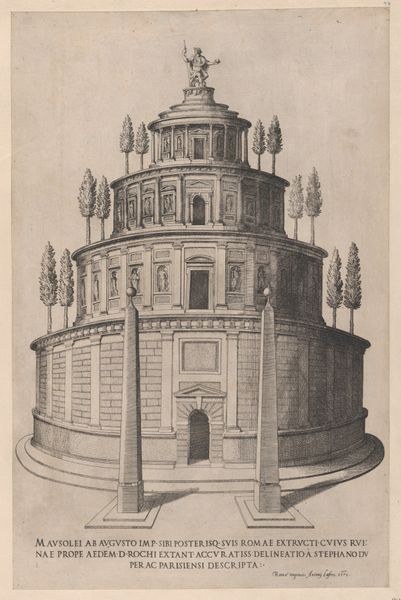
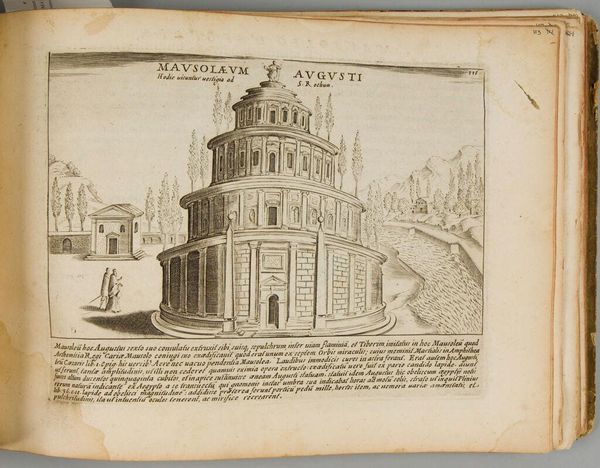
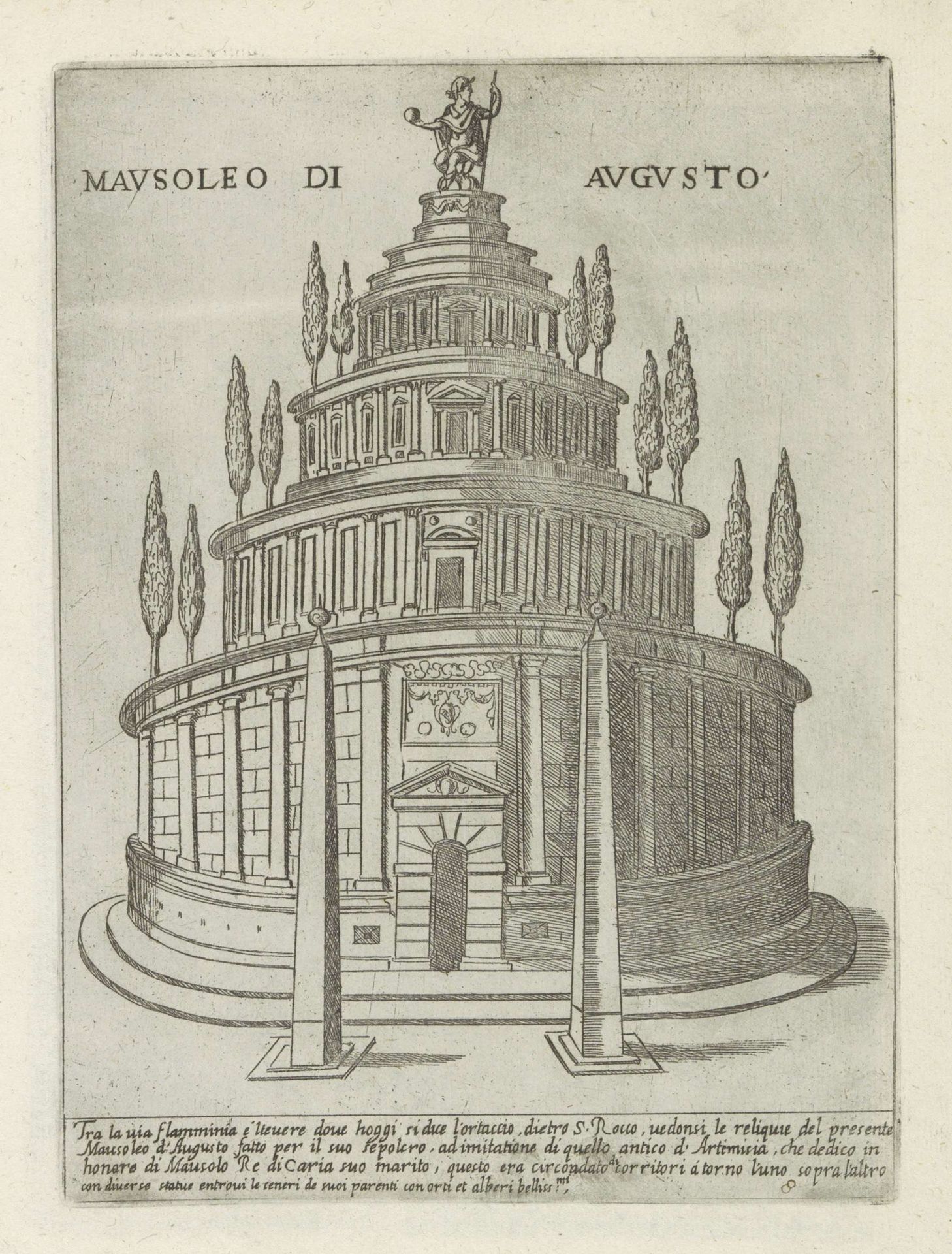
Mausoleum van Augustus te Rome

Giovanni Maggi
1566 - 1618Location
RijksmuseumListen to curator's interpretation
Curatorial notes
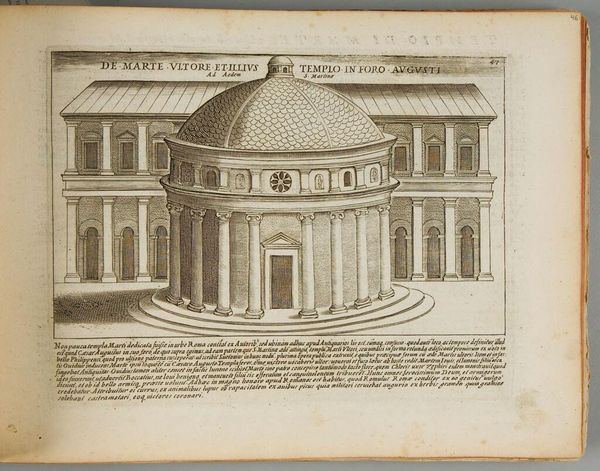
Giovanni Maggi’s engraving depicts the Mausoleum of Augustus in Rome, capturing its tiered structure and the statue atop. The Mausoleum itself is an architectural echo, referencing earlier monumental tombs and reflecting a desire to emulate and surpass past grandeur. Note the obelisks framing the entrance. These are ancient Egyptian symbols of the sun god Ra, appropriated by the Romans to signify power and divine authority. Obelisks recur throughout history, like potent memories resurfacing in stone. They reappear in Renaissance art and city planning, demonstrating the cyclical nature of cultural symbols. Consider the emotional resonance of this funerary monument. It evokes a sense of mortality and remembrance, reflecting a profound awareness of time's passage. This structure embodies Augustus' ambition to leave an enduring mark, engaging viewers on a deep, subconscious level. The Mausoleum is not just a tomb; it's a stage for collective memory. This image reminds us that cultural symbols are not static; they evolve and transform, echoing through time, continually reinterpreted across generations.