About this artwork
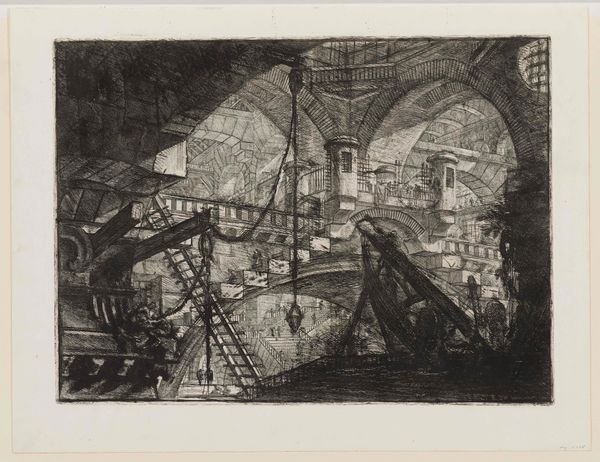
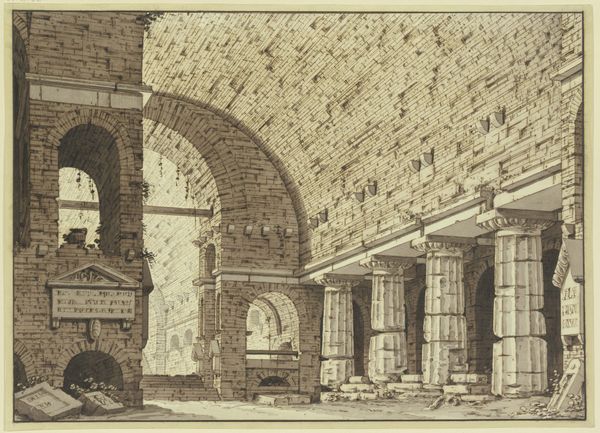
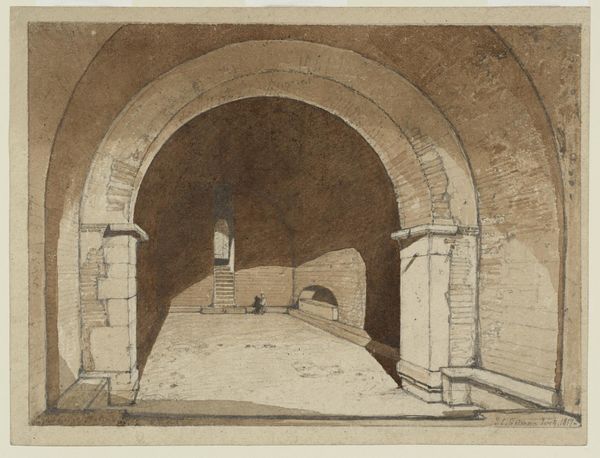
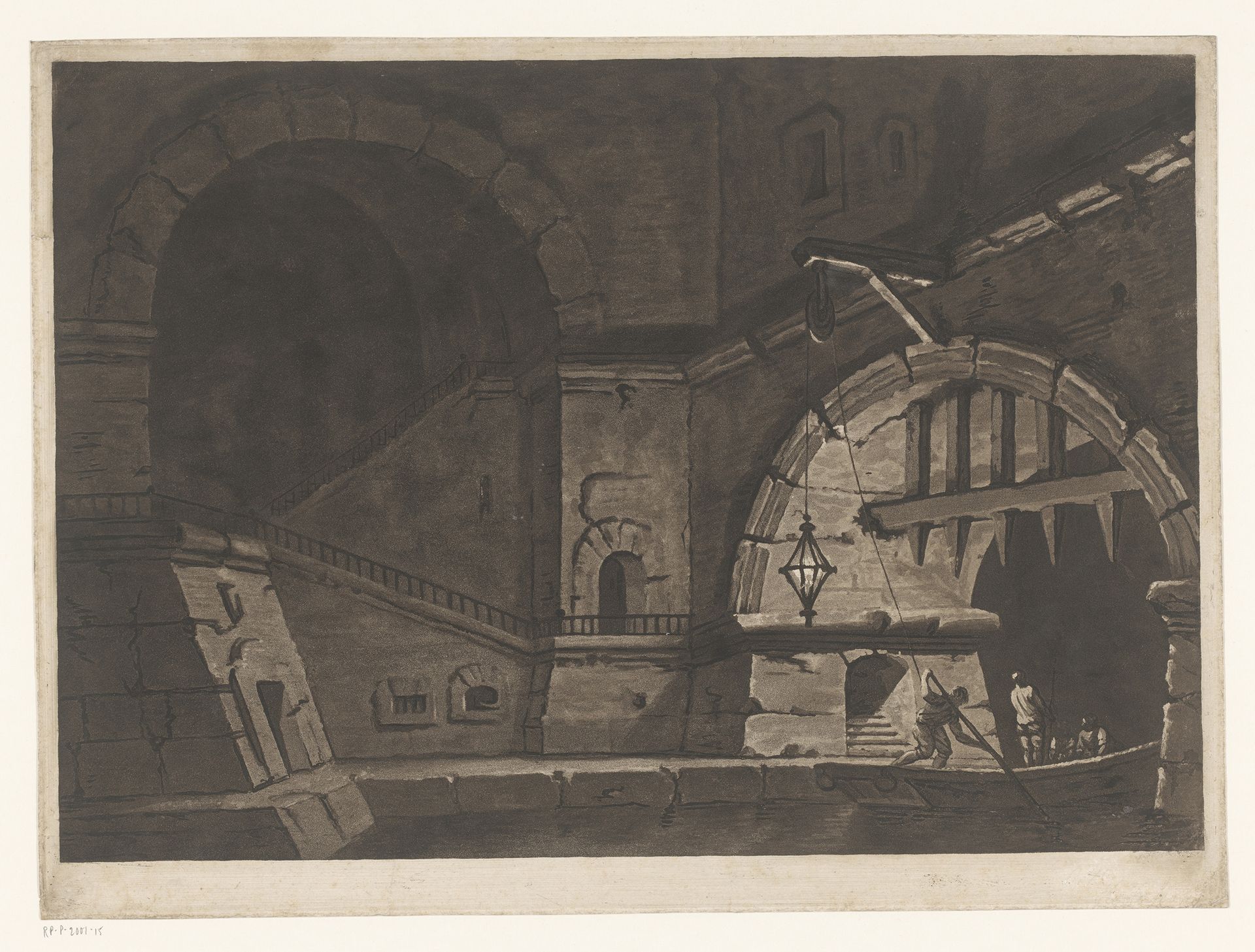
Abel Schlicht created this wash drawing, "Underground Prison," in the late 18th or early 19th century. The eye is immediately drawn into a somber, cavernous space, evoked through stark contrasts of light and shadow. The architecture dominates, with massive arches and stone structures rendered in muted tones, creating a palpable sense of confinement. The composition employs a rigorous geometry, yet the uneven textures of the stone and the fluid washes soften its severity. This interplay creates a tension, a visual paradox. The artwork destabilizes established meanings by evoking both the rational order of architectural design and the chaotic, irrational emotions associated with imprisonment. The subtle semiotic details – the distant figures in a boat, the hanging lantern – hint at stories and histories, yet these are subsumed by the overwhelming sense of enclosure. Ultimately, the drawing challenges us to look beyond surface representation. Schlicht uses the formal elements of light and shadow to evoke not just a place, but a state of mind, reflecting broader artistic and philosophical concerns about freedom, confinement, and the human condition.

Artwork details
- Medium
- drawing, ink, pen
- Dimensions
- height 315 mm, width 424 mm
- Location
- Rijksmuseum
- Copyright
- Rijks Museum: Open Domain
Tags
Comments
Share your thoughts
About this artwork
Abel Schlicht created this wash drawing, "Underground Prison," in the late 18th or early 19th century. The eye is immediately drawn into a somber, cavernous space, evoked through stark contrasts of light and shadow. The architecture dominates, with massive arches and stone structures rendered in muted tones, creating a palpable sense of confinement. The composition employs a rigorous geometry, yet the uneven textures of the stone and the fluid washes soften its severity. This interplay creates a tension, a visual paradox. The artwork destabilizes established meanings by evoking both the rational order of architectural design and the chaotic, irrational emotions associated with imprisonment. The subtle semiotic details – the distant figures in a boat, the hanging lantern – hint at stories and histories, yet these are subsumed by the overwhelming sense of enclosure. Ultimately, the drawing challenges us to look beyond surface representation. Schlicht uses the formal elements of light and shadow to evoke not just a place, but a state of mind, reflecting broader artistic and philosophical concerns about freedom, confinement, and the human condition.
Comments
Share your thoughts