

c. 1651s
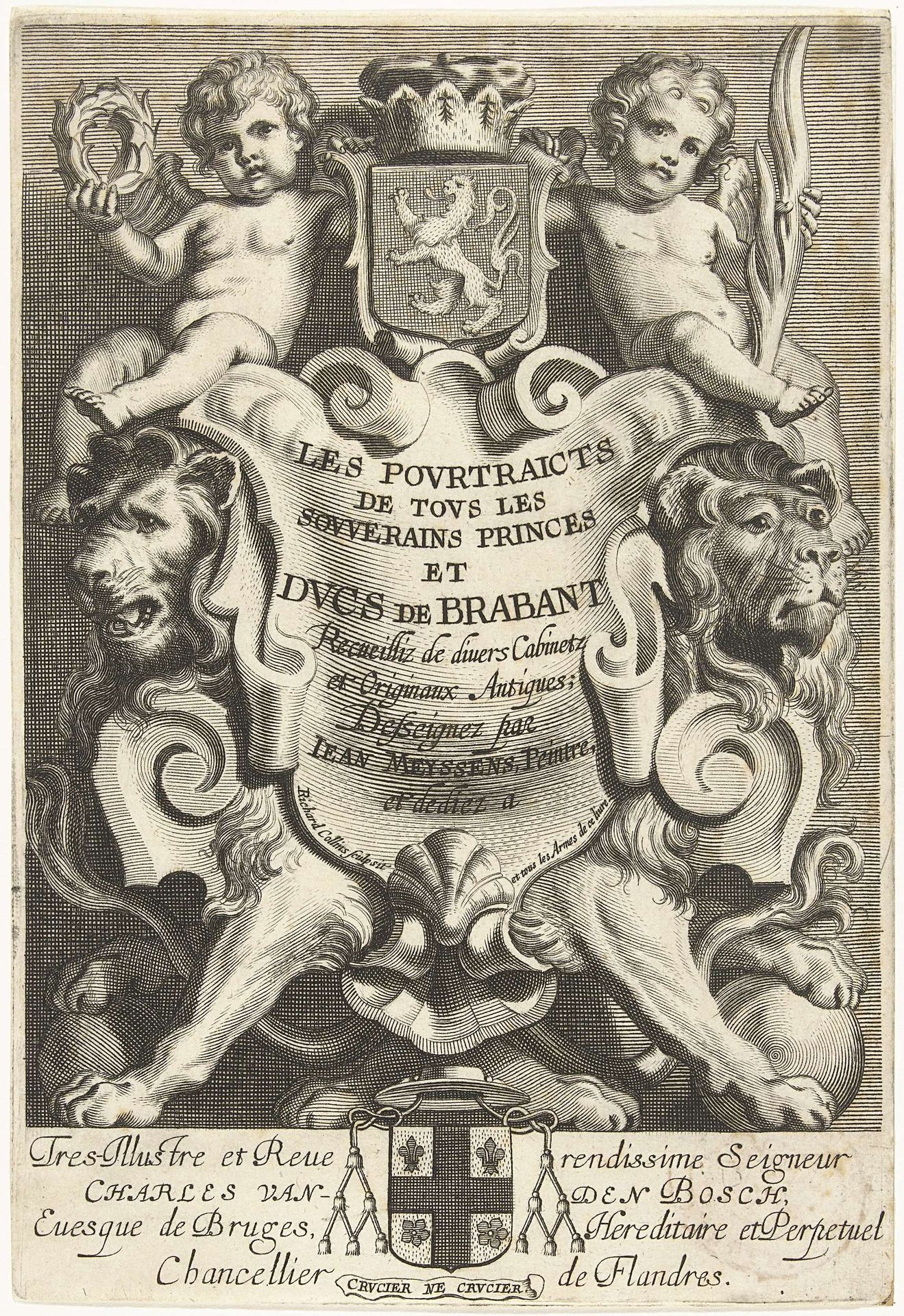
Titelprent voor: Les portraits de tous les Souverains, Princes et Ducs de Brabant

Richard Collin
1627 - 1697Location
RijksmuseumListen to curator's interpretation
Curatorial notes
Curator: This is the title print for "Les portraits de tous les Souverains, Princes et Ducs de Brabant," created around the 1650s by Richard Collin. It's an engraving, currently held at the Rijksmuseum. Editor: It’s imposing, even intimidating. All those heraldic symbols, the lions, and chubby angels… there's definitely a sense of power being conveyed here, almost like a proclamation. Curator: Exactly. Collin was a master engraver, and here you can see the precision of the lines, the texture he coaxes out of the metal plate. The paper itself would have been carefully chosen, perhaps even watermarked, demonstrating its quality and reinforcing the value of the images within. Editor: Absolutely, and the accumulation of these details contributes to our understanding of it being used by the elites to circulate symbolic power. Given the title, what specific messages would this print have been communicating? Curator: Well, Brabant was a key region, historically a source of conflict and power struggles in the Netherlands. These portraits, collected from various sources, become a visual representation of that lineage. It's a constructed history, certainly, carefully curated and presented. Editor: A history with a purpose, of course. I wonder how Collin's own social positioning influenced this piece? Being commissioned, as an artist, always brings considerations of political dynamics to the forefront. Was this artwork created as a vehicle for social advancement or potentially just another form of economic subsistence for the engraver? Curator: It would likely have served both functions. As for the material and cost involved, access to materials such as metal plates, inks, and a printing press would limit production and grant power to its handler, potentially reinforcing wealth disparity at the time. The act of creating these images both immortalized these rulers and solidified the power structures that kept them in place. Editor: The contrast between the serious, stern lions and those almost comical cherubs really emphasizes that complexity, doesn't it? Even in this single title page, we're getting a condensed narrative about power, authority, and the way it’s performed. Curator: I agree. There is a playful, flamboyant element that stops it being po-faced. Examining how artists balanced their aesthetic impulses within such rigid social structures offers so much insight into the lived experience of the period. Editor: For me, this is another layer in exploring the political messages present in seemingly simple works. Looking beyond its aesthetic beauty brings a sharper view of history. Curator: Agreed. The artist would not have been an impartial conveyor of messages but rather, an active shaper of reality, contributing to its construction through conscious choices and techniques.