c. 18th century
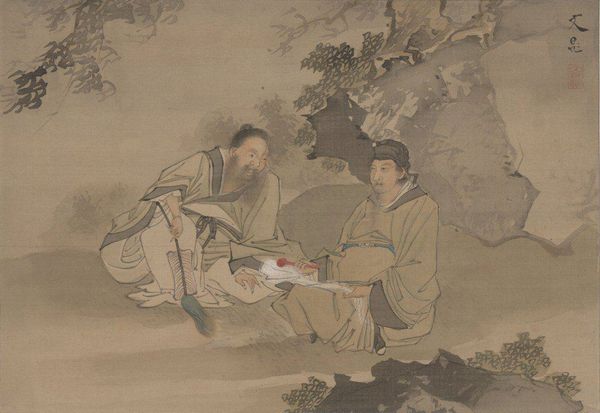
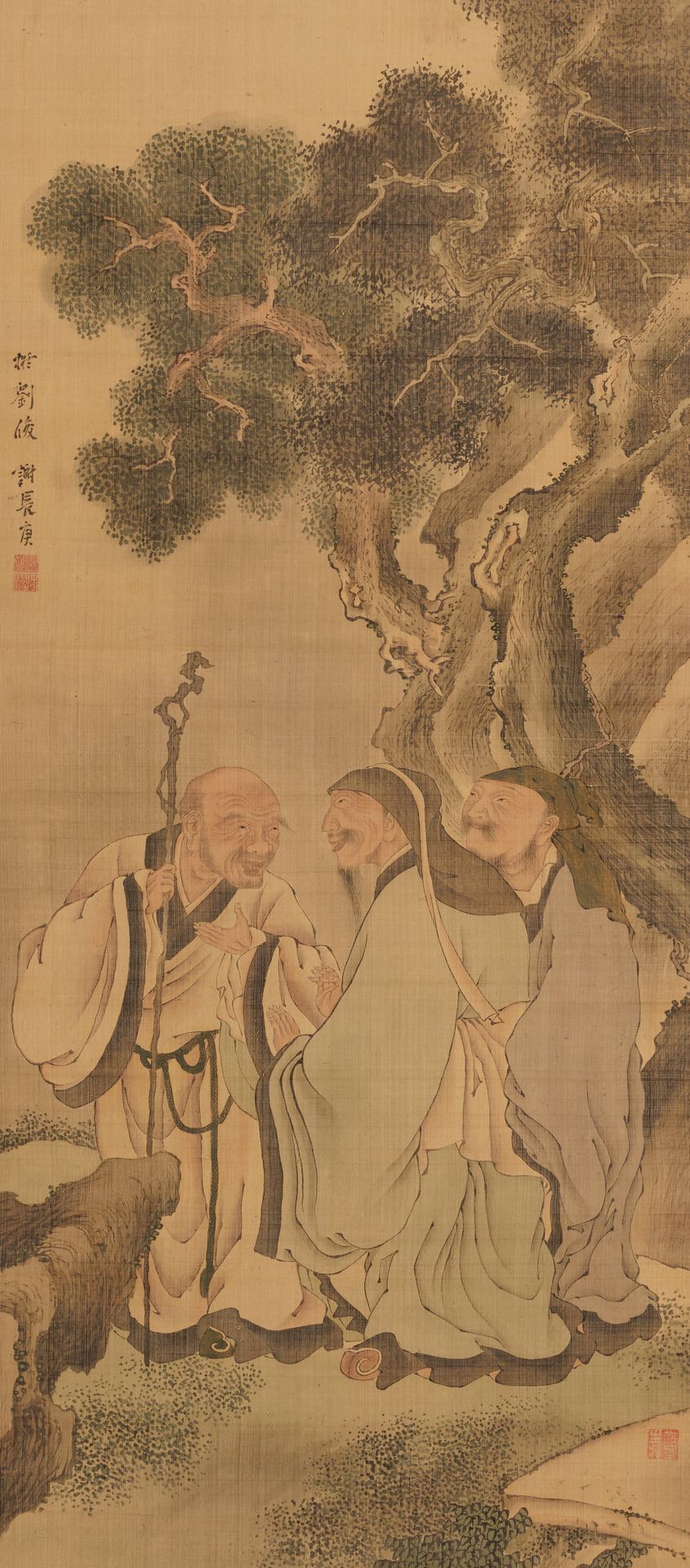
Three Laughers of Tiger Ravine


Listen to curator's interpretation
Curatorial notes
"Three Laughers of Tiger Ravine" was painted by Yosa Buson. At first glance this painting might seem like a peaceful depiction of friendship, but it also provides commentary on cultural and religious identity during Buson’s time. The three figures, each representing a different religious tradition, are depicted together in harmony. We see Taoism in the figure of Tao Yuanming, Buddhism in the monk Huiyuan, and Confucianism in Lu Xiujing. Traditionally, the story ends with the monk Huiyuan not wanting to cross a certain boundary out of the temple, as he wasn’t allowed to leave the temple's grounds. As the story goes, when the three men were so caught up in conversation that Huiyuan unknowingly crossed the boundary, they all burst into laughter together. Buson’s depiction of these three figures might suggest a unity that transcends religious boundaries. It is thought that the artist is highlighting a moment of shared humanity, and perhaps even critiquing the strict religious divisions of the time. Buson uses the figures and the setting to invite us to consider the possibilities of understanding and acceptance beyond perceived differences. It reflects the artist’s own personal and emotional desires for social unity, and the universality of laughter.