About this artwork
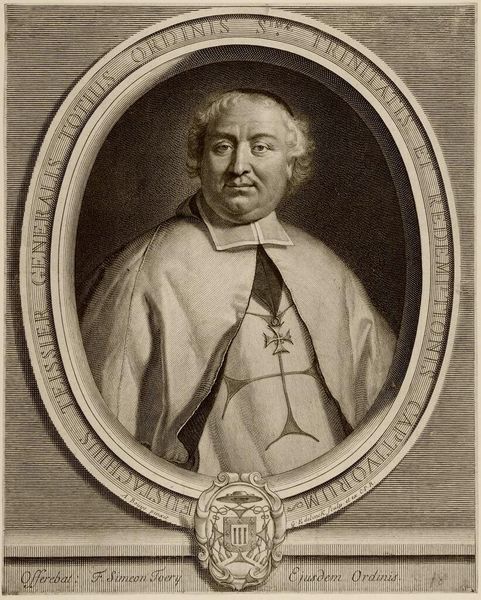
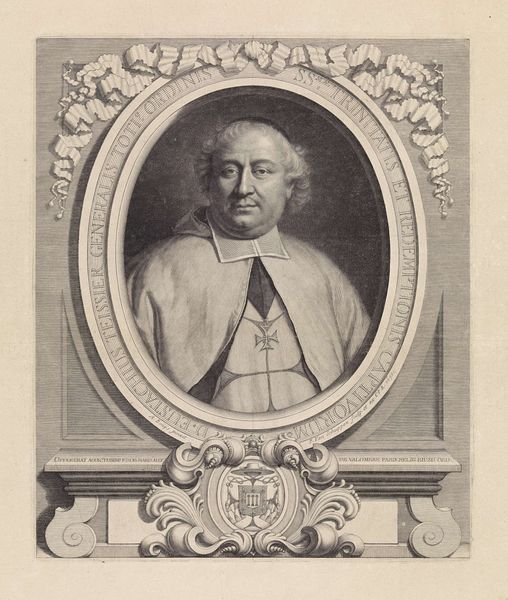
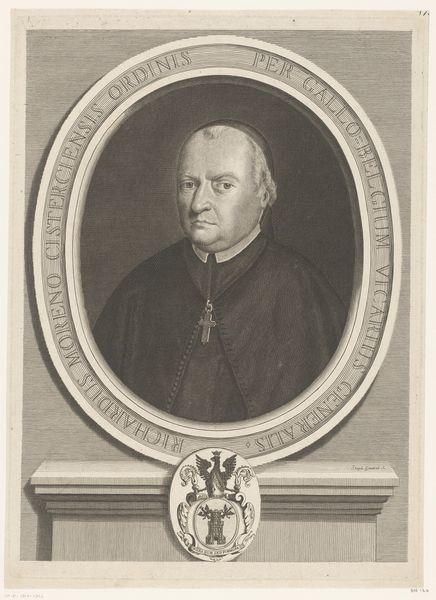
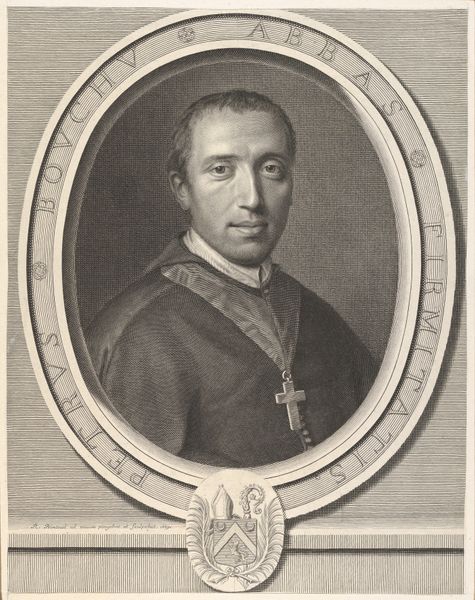
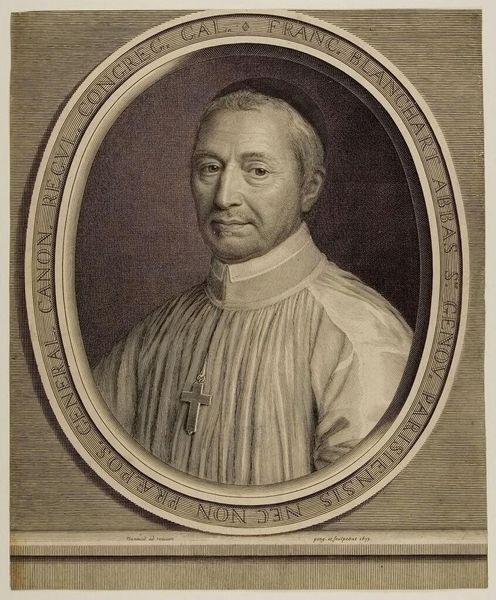
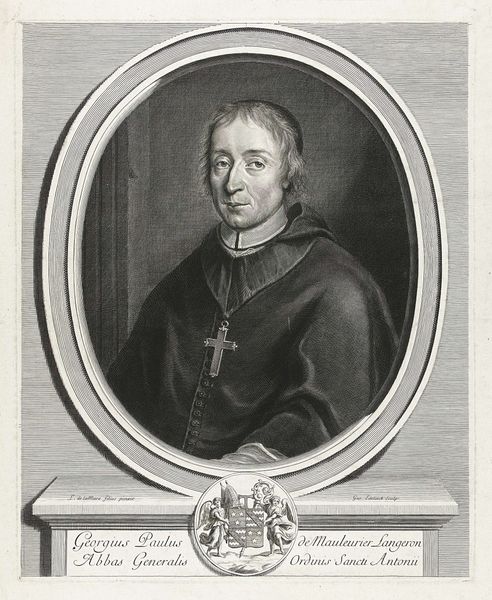
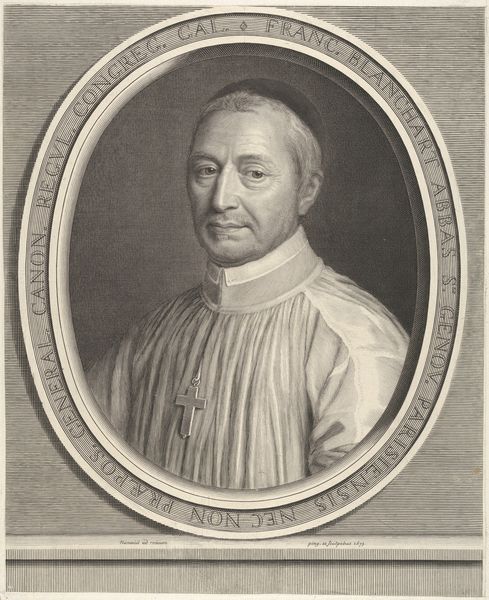
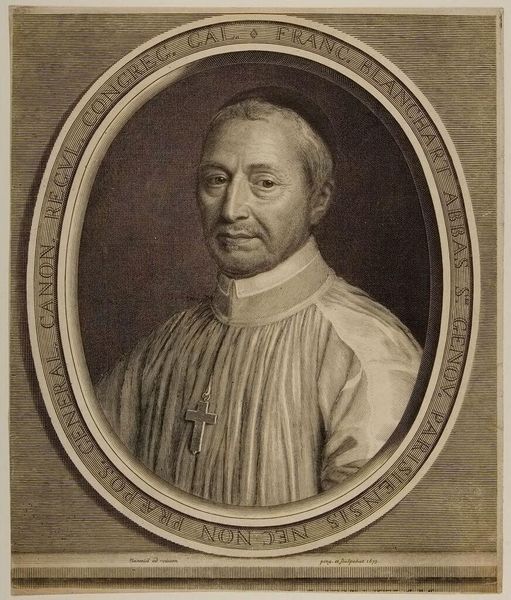
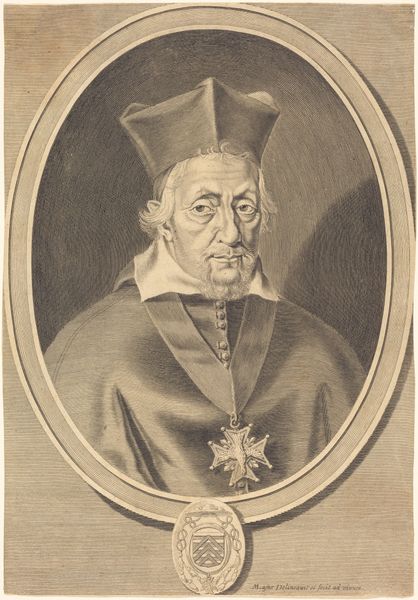
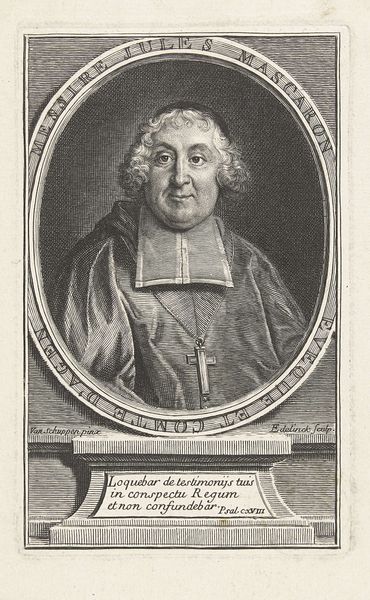
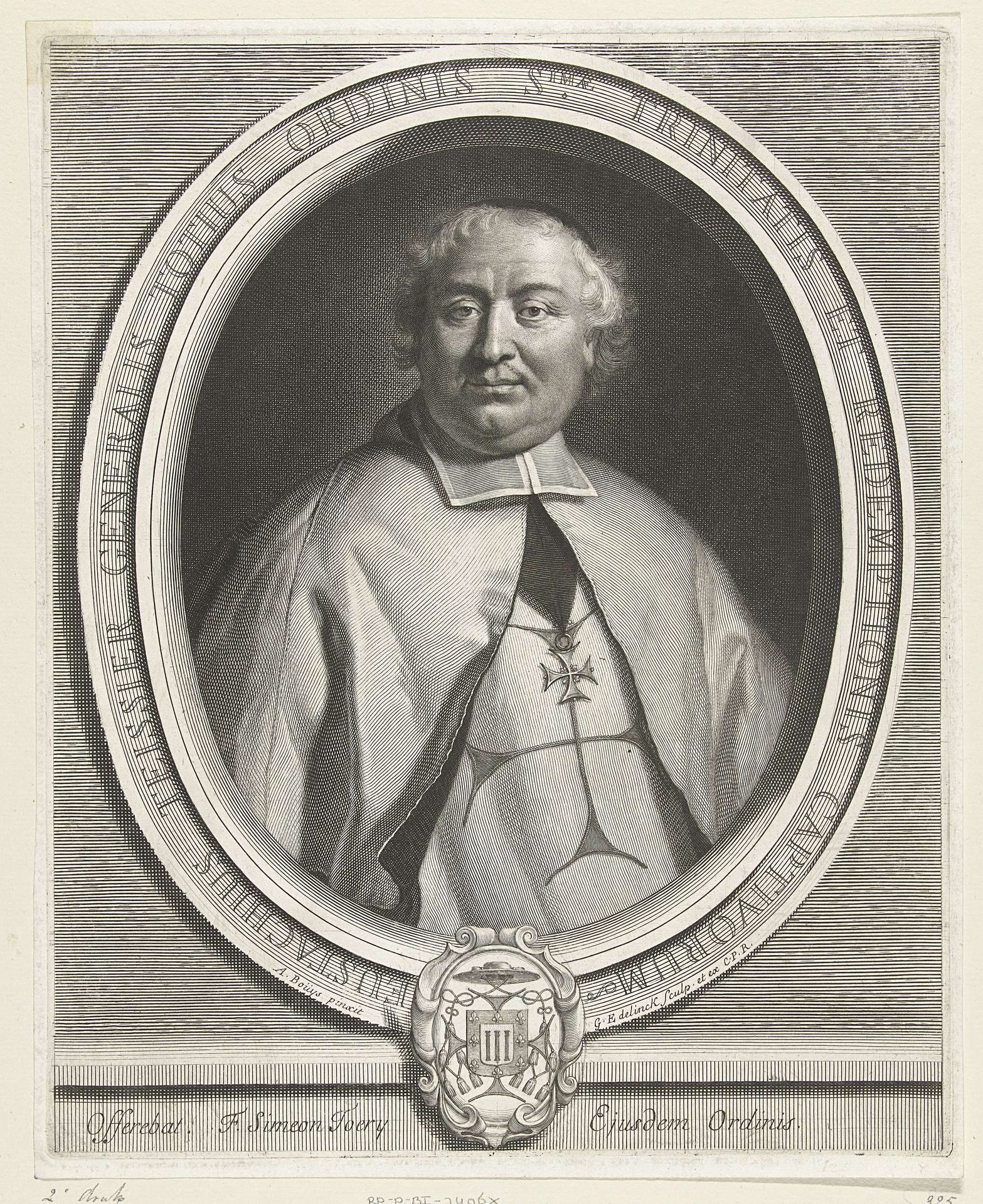
Curator:Editor: So, this is a portrait of Eustache Teissier, engraved sometime between 1666 and 1707 by Gérard Edelinck. It’s currently held in the Rijksmuseum. What I find most striking is the incredible detail achieved just through lines. What’s your take? Curator: Indeed! Edelinck's control of line is superb. He creates volume, texture, and even personality, simply through the density and direction of those little grooves he cut into the metal. I see a man of presence and maybe, a bit of…well, contemplation. But the rigid Latin inscription around the oval – that adds another layer, doesn’t it? What does that make you think of? Editor: It feels formal, important… like solidifying his status, I guess? All those weighty words kind of contrast with the more human portrayal of his face. Curator: Precisely! It's the Baroque love of drama in play! We've got the fleshy, almost intimate portrait set against the rigid structure of the Church. It’s a visual tug-of-war. The cross prominently displayed on his vestments tells us he's a man devoted to the Holy Trinity, dedicated to the redemption of captives. See the small heraldic crest at the bottom? What do you imagine its significance to be? Editor: Probably some important family emblem? Proof of his noble background, perhaps? Curator: Very likely! This engraving becomes more than just a likeness, doesn't it? It's a declaration of identity, piety, and belonging in a hierarchical world. Even the crispness of the lines – what do they say to you? Editor: That the engraver was crazy talented? It does speak of prestige – this wouldn’t be something quick or cheap, right? Curator: Absolutely. Printmaking in this era was a means of disseminating power and influence. Copies of portraits like this one would have circulated widely, solidifying Teissier's reputation amongst his peers. A well-crafted image could be just as powerful as the man himself. Editor: Wow, I didn’t expect there to be so much going on under the surface of one portrait! I’ll never look at an old engraving the same way.

Artwork details
- Medium
- print, engraving
- Dimensions
- height 341 mm, width 276 mm
- Location
- Rijksmuseum
- Copyright
- Rijks Museum: Open Domain
Tags
Comments
Share your thoughts
About this artwork
Curator:Editor: So, this is a portrait of Eustache Teissier, engraved sometime between 1666 and 1707 by Gérard Edelinck. It’s currently held in the Rijksmuseum. What I find most striking is the incredible detail achieved just through lines. What’s your take? Curator: Indeed! Edelinck's control of line is superb. He creates volume, texture, and even personality, simply through the density and direction of those little grooves he cut into the metal. I see a man of presence and maybe, a bit of…well, contemplation. But the rigid Latin inscription around the oval – that adds another layer, doesn’t it? What does that make you think of? Editor: It feels formal, important… like solidifying his status, I guess? All those weighty words kind of contrast with the more human portrayal of his face. Curator: Precisely! It's the Baroque love of drama in play! We've got the fleshy, almost intimate portrait set against the rigid structure of the Church. It’s a visual tug-of-war. The cross prominently displayed on his vestments tells us he's a man devoted to the Holy Trinity, dedicated to the redemption of captives. See the small heraldic crest at the bottom? What do you imagine its significance to be? Editor: Probably some important family emblem? Proof of his noble background, perhaps? Curator: Very likely! This engraving becomes more than just a likeness, doesn't it? It's a declaration of identity, piety, and belonging in a hierarchical world. Even the crispness of the lines – what do they say to you? Editor: That the engraver was crazy talented? It does speak of prestige – this wouldn’t be something quick or cheap, right? Curator: Absolutely. Printmaking in this era was a means of disseminating power and influence. Copies of portraits like this one would have circulated widely, solidifying Teissier's reputation amongst his peers. A well-crafted image could be just as powerful as the man himself. Editor: Wow, I didn’t expect there to be so much going on under the surface of one portrait! I’ll never look at an old engraving the same way.
Comments
Share your thoughts