About this artwork
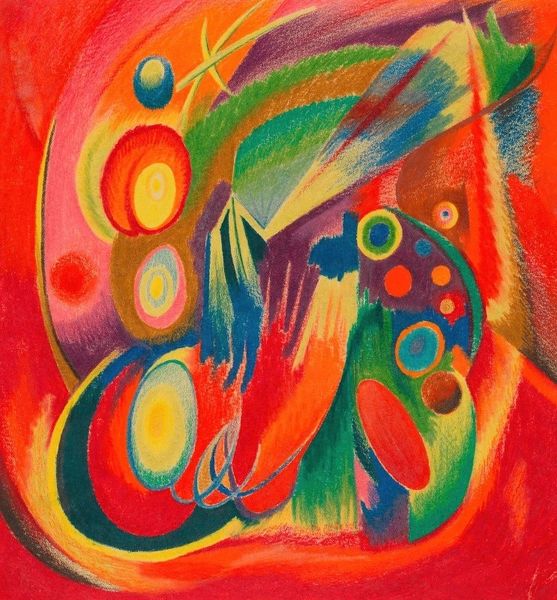
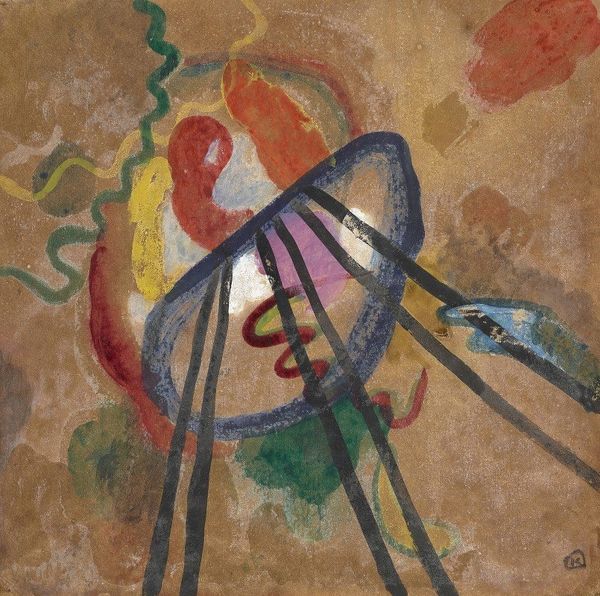
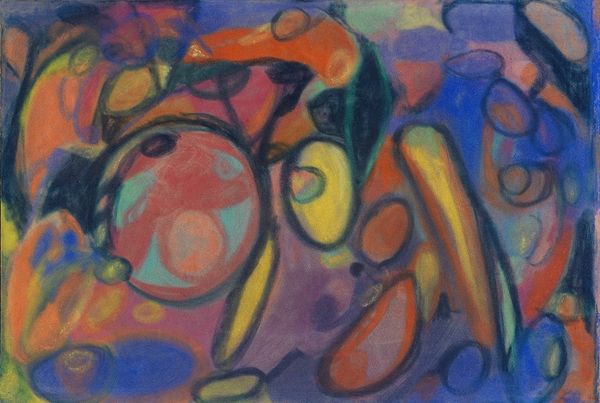
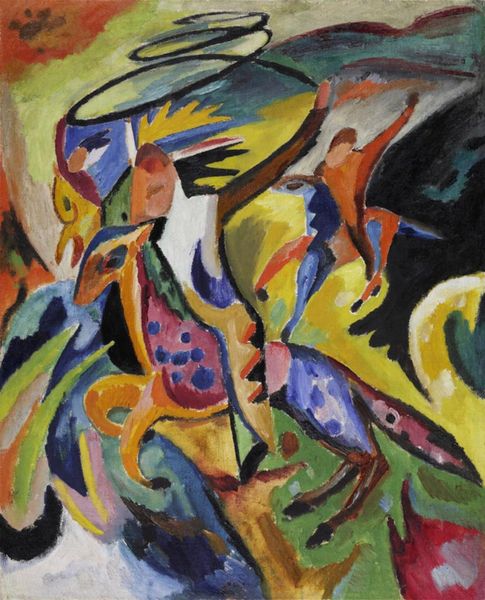
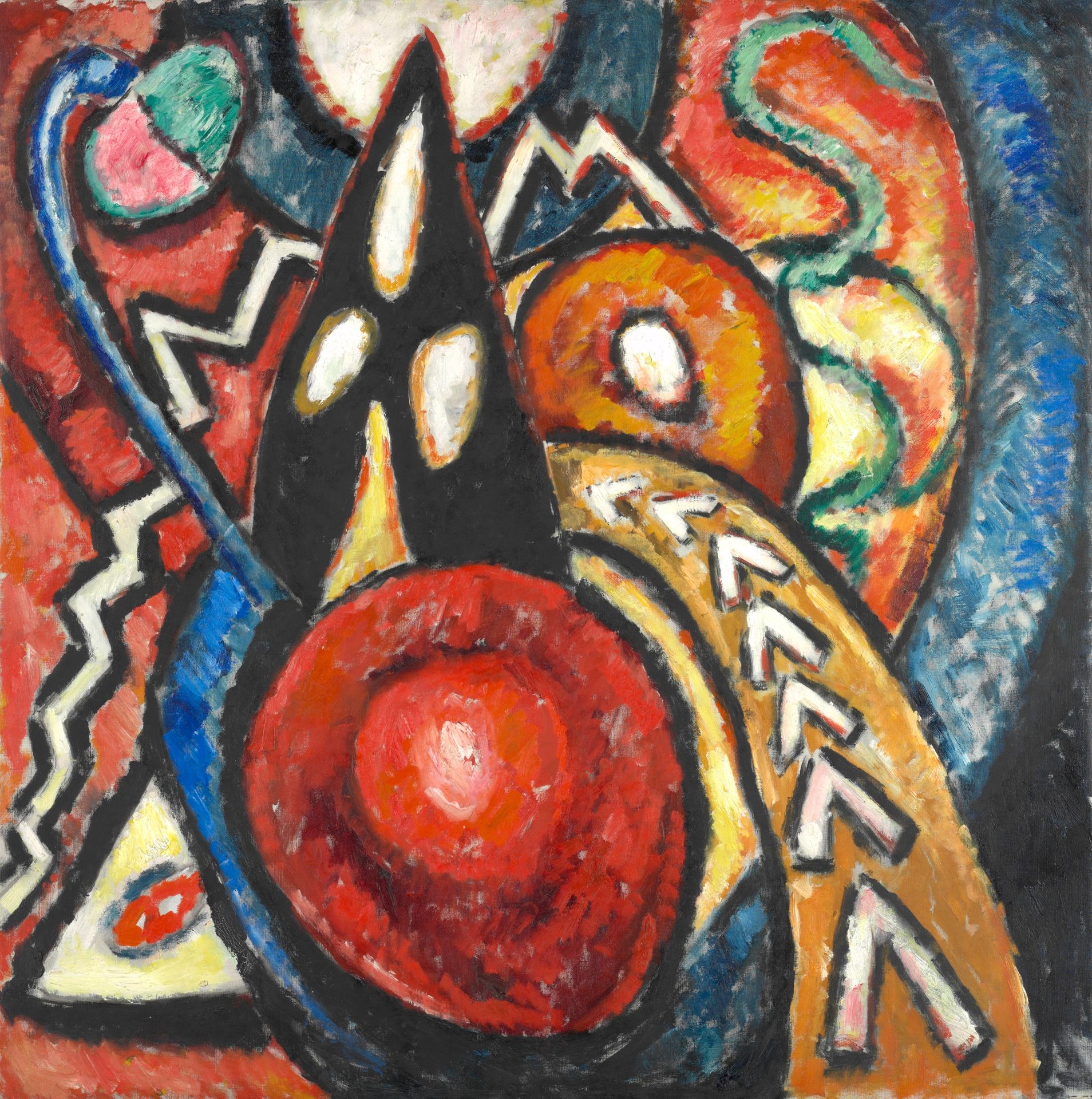
Marsden Hartley made this painting, Movements, with oil on canvas, and there is an intriguing push-pull of shapes, colours and ambiguous forms. Hartley doesn't conceal his process; the brushwork is direct and loaded with feeling. The physicality of the paint is really important here; it’s thick in places, creating a tangible surface. The red circle, slightly off-center, pulsates with energy, achieved through layers of short, directional strokes. The black form looming above it, punctuated by white openings, almost looks like a mask. This contrast—the raw, almost crude application of paint versus the symbolic potential of the shapes—creates a powerful tension. Hartley's pursuit of abstraction, like that of his contemporary, Georgia O’Keeffe, was deeply personal, a way of distilling emotion and experience into pure form. Like his, this work is an ongoing conversation about what it means to see and feel. There’s no definitive meaning here, just a space for our own interpretations to move.
Movements
1913


Artwork details
- Dimensions
- 119.5 × 119 cm (47 × 46 7/8 in.)
- Location
- The Art Institute of Chicago
- Copyright
- Public Domain
Comments
Share your thoughts
About this artwork
Marsden Hartley made this painting, Movements, with oil on canvas, and there is an intriguing push-pull of shapes, colours and ambiguous forms. Hartley doesn't conceal his process; the brushwork is direct and loaded with feeling. The physicality of the paint is really important here; it’s thick in places, creating a tangible surface. The red circle, slightly off-center, pulsates with energy, achieved through layers of short, directional strokes. The black form looming above it, punctuated by white openings, almost looks like a mask. This contrast—the raw, almost crude application of paint versus the symbolic potential of the shapes—creates a powerful tension. Hartley's pursuit of abstraction, like that of his contemporary, Georgia O’Keeffe, was deeply personal, a way of distilling emotion and experience into pure form. Like his, this work is an ongoing conversation about what it means to see and feel. There’s no definitive meaning here, just a space for our own interpretations to move.
Comments
Share your thoughts