Dimensions: height 104 mm, width 165 mm
Copyright: Rijks Museum: Open Domain
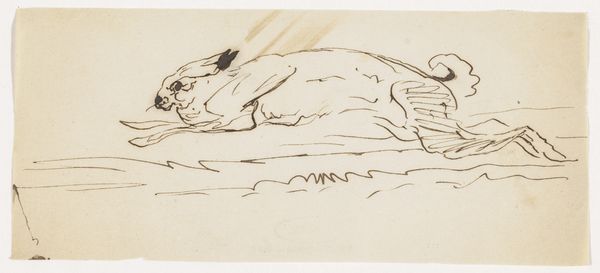
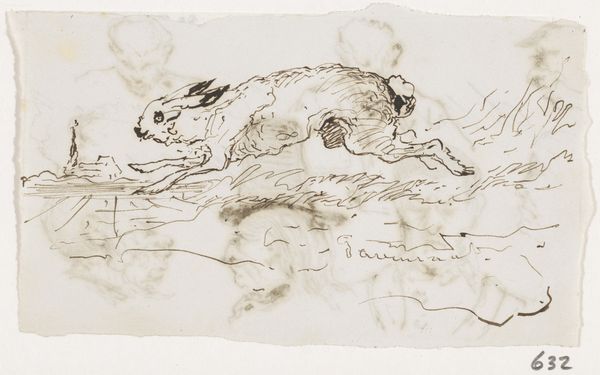
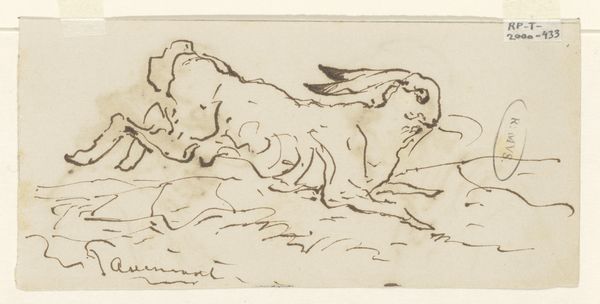
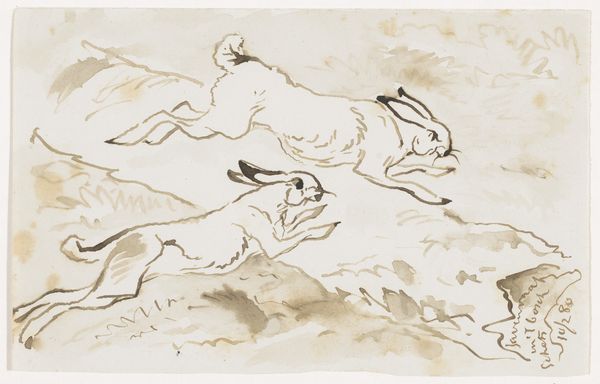
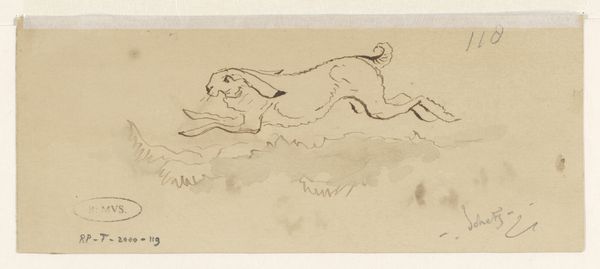
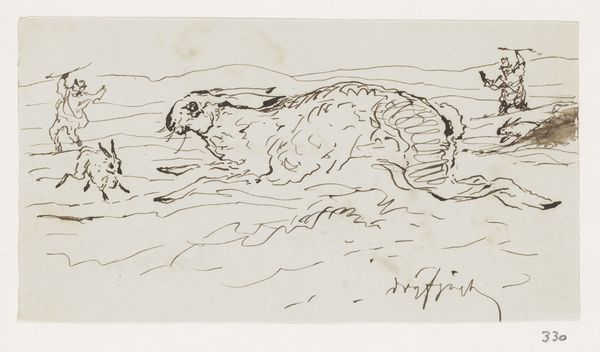
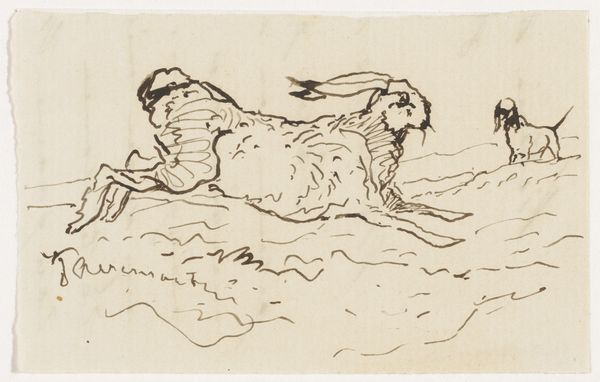
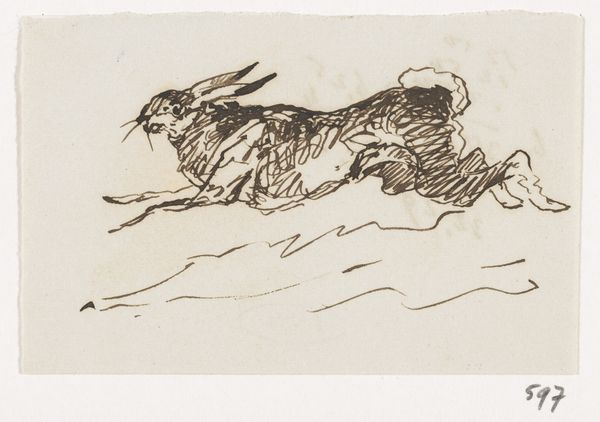
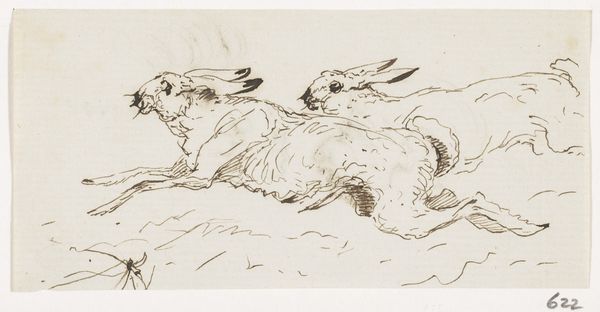
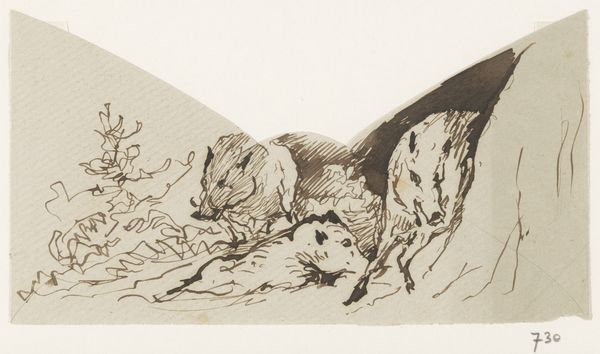
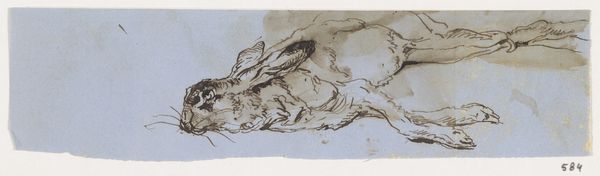
Editor: Here we have "in't bosch - schets," an ink drawing, possibly from 1880-1882, by Johannes Tavenraat. It's a dynamic sketch of a rabbit in motion. I’m really drawn to the artist’s use of line to convey movement. What do you see in this piece? Curator: I appreciate your observation regarding the use of line. Indeed, Tavenraat's sketch highlights the formal qualities of the work: the energetic strokes, the economical use of ink to suggest form and space. Notice how the varying densities of the ink create tonal contrasts. Are these contrasts deployed randomly? Editor: No, I think the darker ink is used to ground the rabbit, giving it weight, whereas the lighter areas suggest speed and lightness. Is that something you agree with? Curator: Precisely! The application of the medium emphasizes the illusion of depth and movement. Observe how the rabbit's body is rendered with a series of parallel lines. This technique not only defines its form but also contributes to the overall sense of dynamism. Editor: It’s interesting how a simple drawing can be so expressive through these formal choices. I hadn't thought about how much the line work contributed. Curator: Line is everything here. The deliberate variations, in both weight and direction, construct not just a rabbit, but the feeling of a rabbit in full flight, and by focusing on how line dictates representation, our interpretation avoids external historical information. Editor: So, by looking closely at the formal elements, like line and contrast, we can unlock so much meaning. Thanks for pointing that out. Curator: It's through this formal examination that we begin to appreciate the intentionality of the artist's choices, independent of external references. That’s how art truly speaks.
Comments
No comments
Be the first to comment and join the conversation on the ultimate creative platform.
 Collect
 React
React Comment
More like this